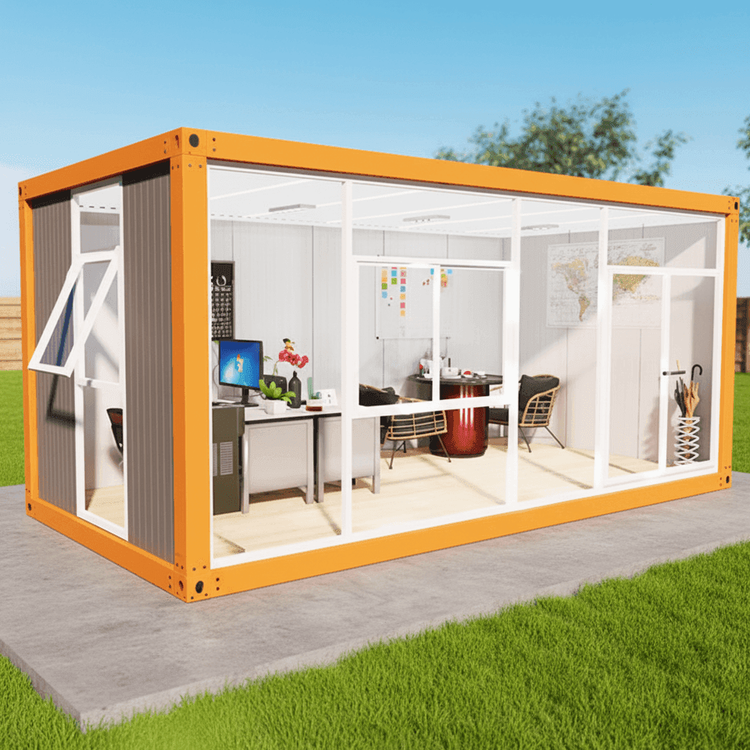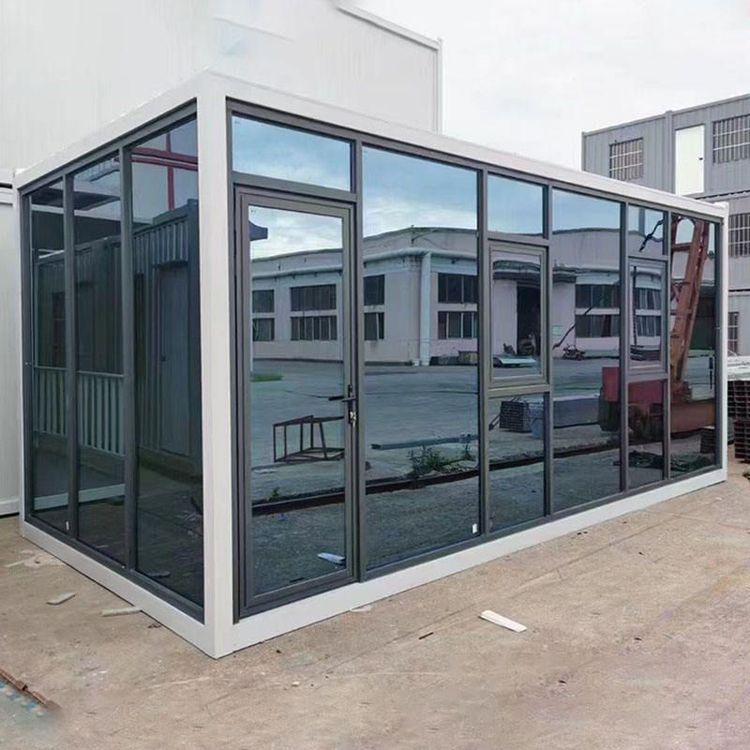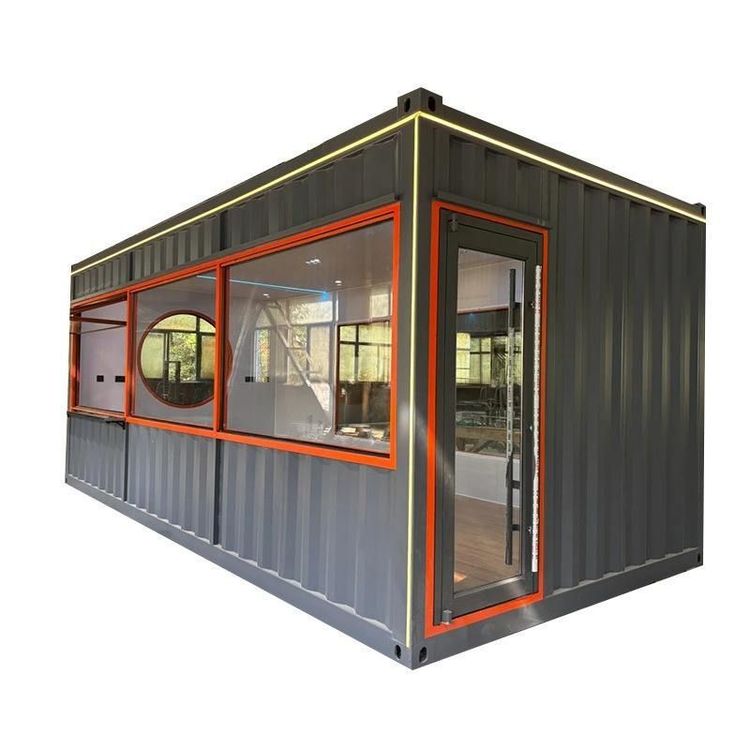
Outer Drainage Container House
An outer drainage container house refers to a container-modified building that achieves effective drainage of rainwater or sewage through specific design, with the core being the adaptability between the drainage system and the container structure. The following elaborates on it from four aspects: design principles, structural characteristics, application scenarios, and precautions.

Design Principles
The outer drainage system of container houses is usually designed based on the principle of gravity flow. By reasonably planning the roof slope, the position of drainage pipes, and the layout of outlets, it ensures that rainwater or sewage can naturally flow to the designated discharge points. For example, a unidirectional slope (usually ≥2%) can be set on the roof, allowing rainwater to flow into gutters or drainage troughs along the slope and then be directed to the ground or underground drainage system through vertical pipes. Some designs also integrate rainwater collection devices to combine drainage with resource reuse.
Structural Characteristics
- Modular Adaptation: The standard sizes of containers (such as 20-foot and 40-foot) limit the internal space, so the drainage system needs to be compactly designed. For example, PVC or galvanized steel pipes are used as drainage pipes, which are laid along the corners of the container or inside the walls to reduce space occupation.
- Enhanced Sealing: The seams of containers are prone to leakage and need to be reinforced with waterproofing measures such as welding, sealant, or rubber gaskets. For example, a double-sealing process is adopted at the connection between the roof and the walls to prevent rainwater infiltration.
- Corrosion-Resistant Materials: Drainage pipes and metal components need to be made of corrosion-resistant materials (such as hot-dip galvanized steel pipes) to adapt to humid environments and extend their service life.
Application Scenarios
- Temporary Buildings: Such as construction site dormitories and wild research stations, the outer drainage design can quickly solve the problem of domestic sewage discharge, avoiding water accumulation that may cause container corrosion or ground subsidence.
- Disaster Emergency Response: After earthquakes or floods, container houses serve as temporary shelters, and the outer drainage system can quickly drain rainwater to ensure the dryness inside.
- Commercial Use: Container cafes and bookstores, through outer drainage design, achieve rainwater and sewage separation, meeting environmental protection requirements.
Precautions
- Slope Control: A too-small roof slope will lead to poor drainage, while a too-large one will increase construction difficulty. It needs to be adjusted according to local rainfall (for example, a slope of ≥5% is recommended in rainy areas).
- Pipe Fixing: Drainage pipes need to be firmly fixed to the container to prevent detachment due to vibration or wind.
- Regular Maintenance: Check whether the drainage outlets are blocked and whether the seals are aging, especially after extreme weather conditions, and clean them in a timely manner.