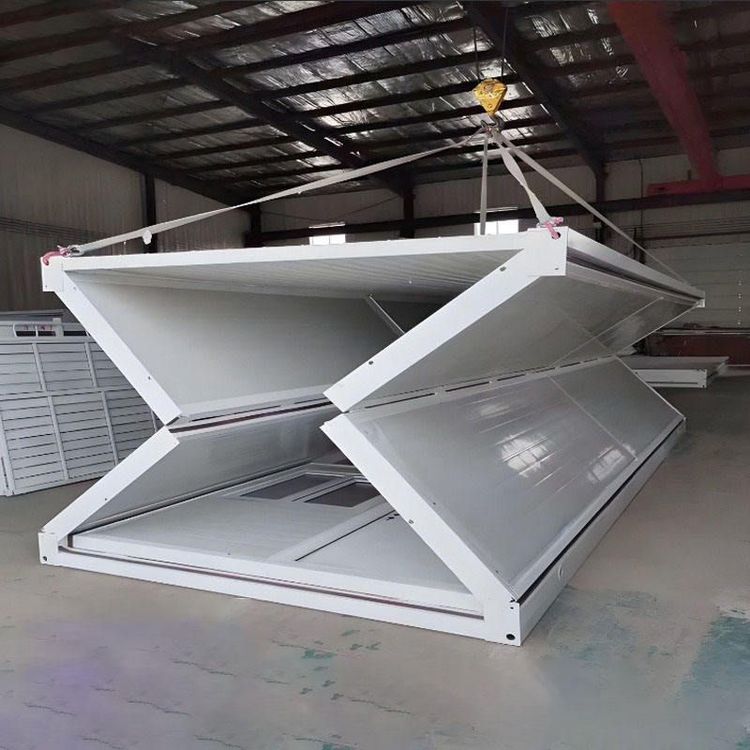
Outdoor Standalone Portable Toilet
An outdoor standalone portable toilet is a facility that can be moved as a whole and provides public restroom services, featuring mobility, modularity, and ease of transportation.

I. Basic Components A portable toilet generally consists of a fecal sewage storage tank (or treatment device), flooring, sanitary ware, walls, washing equipment, a water tank, a roof, and a mobile device. Among them, the fecal sewage storage tank is used to collect excrement, and some models are equipped with treatment devices for preliminary purification. The walls are mostly made of metal carved panels or galvanized frame structures, offering both thermal insulation and durability. The roof often features a pointed design, covered with waterproof asphalt shingles to withstand outdoor environments. The mobile device varies by type, including lifting hooks, towing chassis, or power systems.
II. Main Types
- By structural form: They are divided into single-unit structures (such as independent single stalls) and composite structures (such as multi-squat-position combinations). For example, the grille model produced by Dezhou Hongtu Metal Products Co., Ltd. is a single-unit structure, while the four-squat-position model belongs to a composite structure.
- By mobility method: They include lifting and handling types (requiring equipment such as forklifts for assistance) and powered and towed types (with built-in power or connectable to vehicle traction).
- By sewage treatment method:
- Water-flush and non-water-flush suction types: They rely on water tank供水 (water tank supply) for flushing, and the sewage needs to be suctioned out regularly for treatment.
- Circulating water-flush type: It achieves water resource recycling through a filtration system, reducing water consumption.
- Dry-pack type: It uses biodegradable bags to collect excrement, requiring no water source, and is suitable for water-scarce areas.
III. Typical Application Scenarios
- Temporary events: Such as music festivals, sports events, and other short-term gathering places, where they can be quickly deployed and flexibly adjusted in quantity.
- Construction sites: They provide sanitary facilities for construction workers and can be relocated along with the progress of the project.
- Tourist attractions: They supplement fixed toilets in remote areas, enhancing the visitor experience.
- Disaster relief: After earthquakes, floods, and other disasters, they serve as temporary sanitation solutions.
IV. Advantages and Characteristics
- Mobility: They can be deployed or withdrawn within a few hours through lifting or towing.
- Modular design: They support single-stall expansion or multi-functional combinations (such as toilet + shower).
- Durability: Metal frames and carved panel walls can withstand wind and rain erosion, with a service life of over 2 years.
- Environmental friendliness: The dry-pack type reduces sewage discharge, and the circulating water-flush type lowers water consumption.