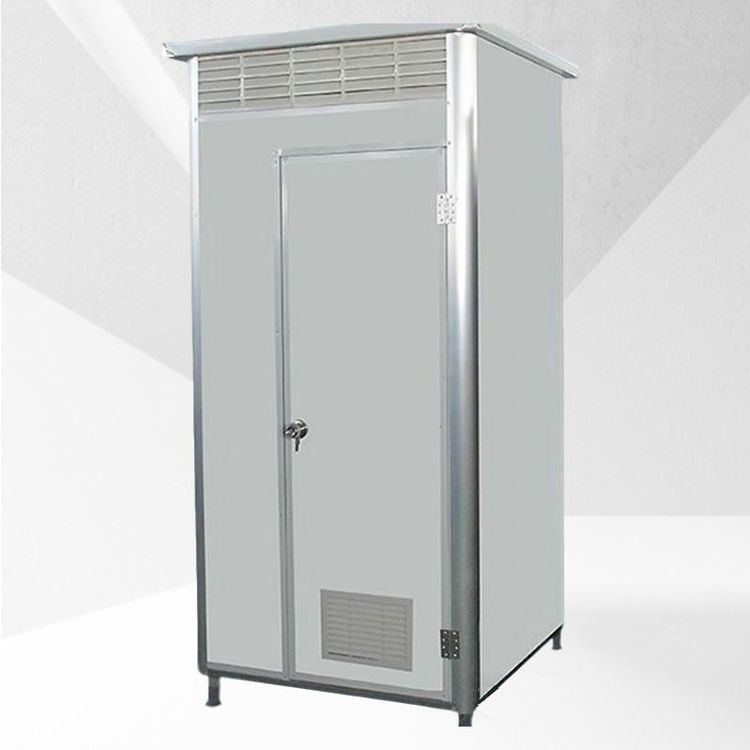
Outdoor Portable Toilet Tent Design
The design of outdoor portable toilet tents revolves around 'rapid deployment', 'portability', and 'privacy protection', requiring a balance between structure, materials, and scenario adaptability.

Structural Design:
Outdoor portable toilet tents typically adopt a compact design, primarily targeting single-person use to minimize footprint and overall weight. For instance, their internal layout is tightly arranged, retaining only essential functional areas while avoiding redundant structures. The base design is a critical aspect, often incorporating anti-leakage coatings or independent ground sheets to prevent waste leakage and environmental contamination, while enhancing cleaning convenience. There are two mainstream structural options:
- Integrated Structure: Utilizes pre-assembled modules for rapid deployment, sacrificing some folding portability in exchange for higher structural strength and stability, suitable for disaster relief scenarios demanding speed and wind resistance.
- Frame Structure: Employs detachable metal or high-strength plastic frames, achieving a balance between portability and deployment efficiency through modular assembly, ideal for long-term outdoor operations requiring frequent assembly and disassembly.
Material Selection:
Materials must simultaneously meet three core requirements: waterproofing, abrasion resistance, and lightweight properties. Oxford cloth is the industry's mainstream choice, treated with waterproof coatings to effectively block rainwater penetration while offering tear resistance for complex outdoor environments. Some premium products use PU-coated nylon to further enhance waterproofing and corrosion resistance. Frame materials primarily consist of aluminum alloy or fiberglass, with the former offering lightweight strength and the latter superior impact resistance, allowing flexible selection based on usage scenarios.
Scenario Adaptability:
Design priorities must adjust according to actual needs. In disaster relief settings, tents must prioritize rapid setup and structural stability, such as adopting integrated designs to reduce assembly steps or reinforcing frames for wind resistance. For long-term outdoor operations, material durability and ease of cleaning become critical, with options like UV-resistant coatings to extend fabric lifespan or detachable liners to simplify cleaning processes. Privacy protection is achieved through high-density fabrics and fully enclosed structures, with some products incorporating ventilation openings to balance airflow and visual privacy.