
Outdoor Mobile Toilet Ventilation System
The outdoor mobile toilet ventilation system mainly includes three types: natural ventilation, mechanical ventilation, and hybrid ventilation.
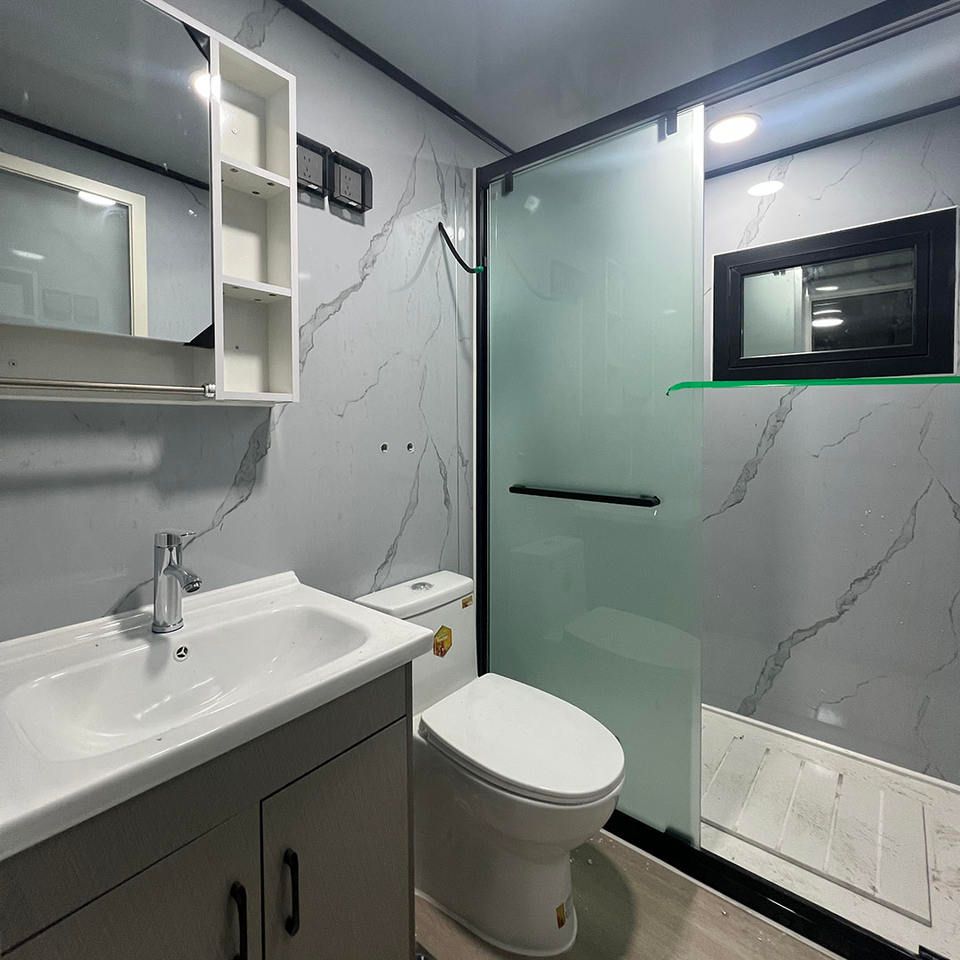
Natural Ventilation System
Air exchange is achieved by setting up vents on the walls or roof of the mobile toilet, utilizing the principles of thermal pressure and wind pressure. Thermal pressure ventilation uses the thermal pressure difference formed by the temperature difference between indoor and outdoor air. Hot air rises and is discharged through the vents, while outdoor cold air replenishes it. Wind pressure ventilation relies on the action of wind. When the wind blows over the toilet, a positive pressure is formed on the windward side, prompting air to enter, and a negative pressure is formed on the leeward side, discharging indoor air. It has low costs and requires no additional power, but its ventilation effect is greatly influenced by environmental factors, and the ventilation efficiency is limited when the wind force is weak or the temperature difference is not significant.
Mechanical Ventilation System
- Exhaust Fan Ventilation: An exhaust fan is installed inside the toilet to directly extract indoor foul air, while an air inlet is set up to introduce fresh air. It can quickly and effectively remove odors and moisture, with good ventilation effects and not being restricted by natural conditions. However, it requires electric power drive and has energy consumption. For a single mobile toilet, it is recommended to configure a small exhaust fan with a power of ≥5W. For large toilets used by multiple people, dual fans in parallel can be considered to ensure an air exchange rate of 8 - 10 times per hour.
- Air Conditioning Ventilation: The air conditioning system comprehensively regulates indoor air, not only ventilating and exchanging air but also controlling temperature and humidity, providing a more comfortable use environment. However, it has high costs and high requirements for power supply.
Hybrid Ventilation System
Combining the advantages of natural ventilation and mechanical ventilation, it usually uses natural ventilation to meet basic air exchange needs and reduce energy consumption. When natural ventilation cannot meet the requirements, such as when there is a strong odor or high humidity, the mechanical ventilation system is activated to enhance the effect. This system can ensure good ventilation performance while saving energy and is widely used in various types of mobile toilets.
In addition, during the design and use of the ventilation system, attention should also be paid to site selection and vent direction control, matching of ventilation equipment power, pipeline layout and airflow optimization, configuration of odor filtration systems, intelligent monitoring and emergency handling, and noise control.



