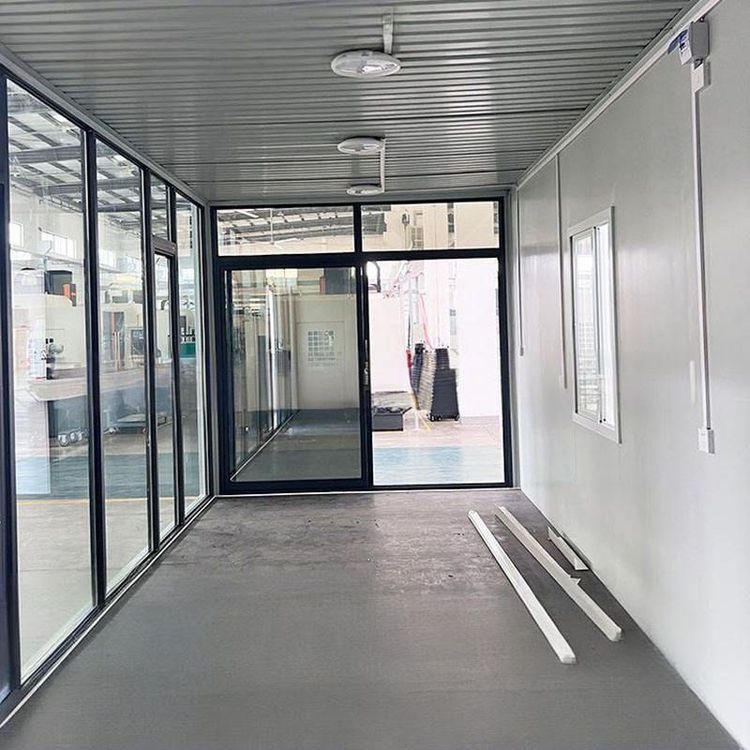
Ventilation for Outdoor Mobile Toilets
The ventilation design of outdoor mobile toilets is achieved through various technical means, covering structural optimization, equipment configuration, and intelligent management, effectively improving the user experience and controlling odors.

1. Optimization of Basic Structural Design
Some outdoor mobile toilets adopt a front-wall lighting and ventilation design, forming air convection by reasonably arranging windows or vents and utilizing natural wind pressure. For example, a ventilated window that can be opened is installed on the front wall, paired with an aluminum alloy toilet door (such as products from the Qinming brand), ensuring structural strength while reducing airflow resistance. This design requires no additional energy consumption and is suitable for outdoor scenarios with abundant wind resources, such as scenic spots and parks.
2. Professional Configuration of Exhaust Systems
In the practice of outdoor mobile toilet rentals in Xinxiang, the rationality of the exhaust system directly affects ventilation performance:
- Location Selection and Vent Direction: It is necessary to arrange the layout in conjunction with the local prevailing wind direction. For example, placing the exhaust vent downwind to utilize natural wind to accelerate air expulsion and reduce odor retention.
- Matching of Ventilation Equipment Power: It is recommended to equip a single toilet with a small exhaust fan with a power of ≥5W to ensure sufficient air volume (usually requiring 6-8 air changes per hour).
- Optimization of Duct Layout: Exhaust ducts should be as short and straight as possible, reducing bends and length to lower airflow resistance. If long-distance exhaust is required, the duct diameter should be increased or the fan power should be enhanced.
3. Odor Filtration and Purification Technologies
To further improve air quality, some products are equipped with an odor filtration system:
- Activated Carbon Filter Cotton: It adsorbs odor molecules such as hydrogen sulfide and ammonia through its porous structure and requires regular replacement to maintain effectiveness.
- Photocatalyst Filter Screen: It decomposes organic pollutants under ultraviolet light and has antibacterial functions, suitable for places with high air quality requirements.
4. Intelligent Monitoring and Emergency Management
Modern outdoor mobile toilets can integrate air quality sensors to monitor indicators such as carbon dioxide and ammonia concentrations in real-time. When the odor exceeds the standard, the system automatically activates the exhaust fan or sends maintenance reminders for dynamic management. Additionally, some products support remote monitoring, facilitating timely responses to faults or cleaning needs by the operators.
5. Customization and Scenario Adaptation
The ventilation needs vary across different places. For example, the Qinming brand supports customization based on drawings and can adjust the ventilation plan according to the visitor volume and climatic conditions of scenic spots (such as increasing the number of exhaust fans or optimizing duct layout). Water-flush toilets require stronger exhaust capabilities to control humidity due to their high water consumption, while dry toilets need to focus on solving odor problems caused by the decomposition of solid waste.
Through the above designs, the ventilation performance of outdoor mobile toilets can be significantly improved, meeting the hygiene and comfort requirements of public places.