
Structure of Outdoor Mobile Toilets
The structure of outdoor mobile toilets is centered around modular design, enabling rapid deployment through prefabricated integration. Its core components include the main support frame, wall materials, roof, and other functional parts, with various classification forms tailored to different needs.
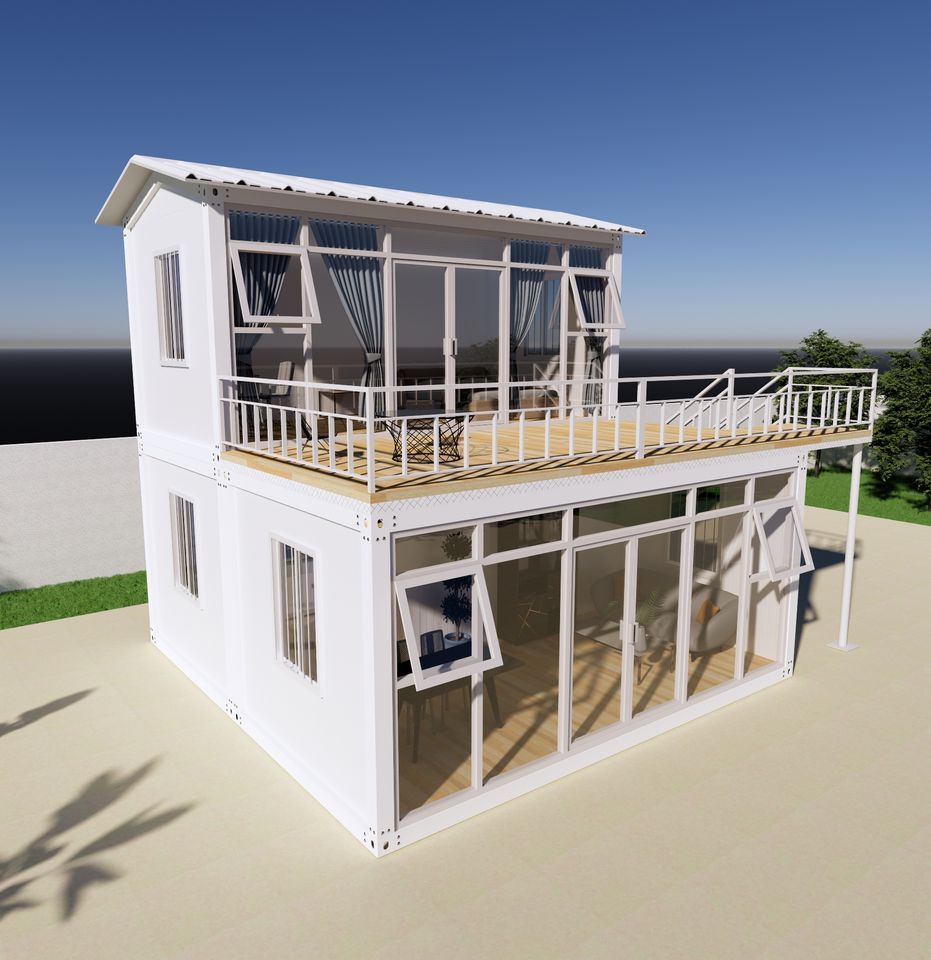
The main support frame serves as the foundational structure of outdoor mobile toilets, typically utilizing a steel design. For example, the base employs an angle iron frame structure, such as an L4*L4 angle iron frame with a central panel. This design leverages the high load-bearing capacity of angle steel while providing a flat installation surface through the panel. The surface is covered with floor adhesive to enhance slip resistance and moisture resistance. This approach ensures structural strength while effectively reducing overall weight, facilitating transportation and installation.
The choice of wall materials directly impacts the durability and user experience of the toilet. Common materials include color-coated steel and stainless steel. Color-coated steel is lightweight and offers thermal insulation, making it suitable for short-term use or mild outdoor climates. Stainless steel, on the other hand, is more corrosion-resistant, ideal for long-term exposure to humid or salt-laden environments. Regardless of the material chosen, a paint coating is applied to the surface to form a protective layer that delays metal oxidation and rusting, extending the service life.
Roof design must balance waterproofing and drainage functions. Some mobile toilets adopt a pitched roof structure with waterproof asphalt shingles, effectively preventing rainwater accumulation and facilitating rapid drainage through slope design to avoid leakage. This design is particularly crucial in rainy regions, ensuring the dryness and hygiene of internal facilities.
Other structural components include fecal wastewater storage tanks (or disposal units), sanitary fixtures, washing equipment, water tanks, and mobility devices. These components are configured based on the toilet type and functional requirements. For instance, flush toilets require water tanks and sewage pipes, while non-flush toilets rely on dry packing or suction-based fecal disposal. Mobility devices such as wheels or towing structures allow the toilet to be flexibly repositioned as needed.
Based on structural form, mobile toilets can be classified into single-unit and composite structures. In terms of mobility, they can be categorized as lifting-type, handling-type, powered-type, and towing-type. Regarding sewage treatment, they can be divided into flush-type, non-flush suction-type, recirculating flush-type, and dry packing-type. These classifications cater to diverse usage scenarios, enabling sites like tourist attractions, construction sites, or temporary event venues to select appropriate types based on actual conditions.



