Outdoor Mobile Toilet Renovation Plan
The renovation of outdoor mobile toilets should be selected based on the usage scenario, with common types including simple mobile toilets, vehicle-mounted trailer-style, container-style, and general construction plans. The specific renovation points are as follows:

I. Simple Mobile Toilet Renovation
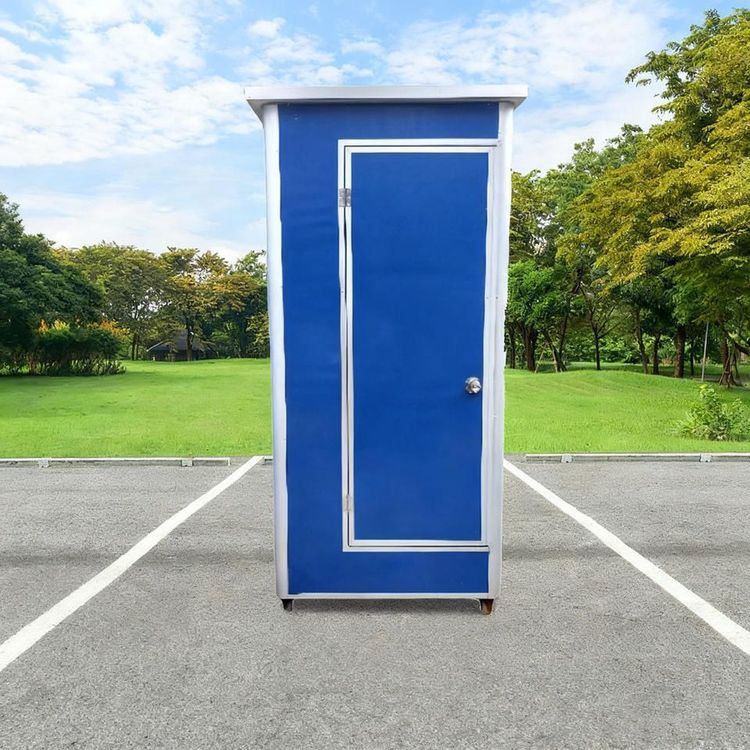
Suitable for rural household toilets, temporary use on construction sites, or outdoor event venues. The main frame is made of lightweight and corrosion-resistant color-coated steel plates, with the outer shell assembled from standardized panels and filled with foam insulation material. The top and edges are sealed using color-coated steel edge-wrapping techniques. The excreta collection system uses enclosed fecal storage tanks or detachable fecal buckets, with some models equipped with plastic observation windows for easy inspection. Before installation, ensure the ground is level; for soft ground, lay moisture-proof mats or stone slabs. Rural household toilet renovations can serve as a transitional solution from dry toilets, construction sites can achieve functional zoning by adding partitions, and outdoor events can meet concentrated demand through the combination of multiple units. Technical highlights include an internal temperature fluctuation of less than 10°C, resistance to freezing in winter, and reduced odor diffusion in summer; metal locks and color-coated steel edge-wrapping designs extend the service life to over 5 years, and the modular structure supports the individual replacement of components, reducing resource waste.
II. Vehicle-Mounted Trailer-Style Mobile Toilet Renovation
Suitable for large-scale events or construction sites. It adopts a heavy-duty truck chassis or trailer design, equipped with an independent water storage system (500-1000 liters) and a sewage collection device. Some models integrate vacuum suction technology, requiring only 0.5 liters of water per flush. In terms of intelligent management, it is equipped with GPS positioning and IoT monitoring systems to monitor remaining capacity, ammonia concentration, and other data in real-time. Application on construction sites can reduce workers' toilet time by 60%, with zero sanitation complaints on-site; it is equipped with a waterless biological degradation system, suitable for environmentally sensitive areas. For large-scale events, the layout can be adjusted in real-time based on pedestrian heat maps, such as the 2023 Shanghai Marathon, where 30 units served 26,000 participants with an average waiting time of less than 3 minutes.
III. Container Mobile Toilet Renovation
Suitable for scenic spots, construction sites, parks, etc. Using a standard container as the frame, the main body is welded from color-coated steel plates or color-coated steel sandwich panels, with the interior divided by aluminum alloy profiles and equipped with ceramic toilets, sinks, and other facilities. It supports single, double, or multi-partition combinations to meet different traffic demands; deployment does not require complex foundation construction and can be quickly assembled using lifting equipment. Technical highlights include the thermal insulation performance of color-coated steel sandwich panels reducing energy consumption, support for customization based on drawings to adjust colors, window and door positions, and interior layouts, serving up to 200 people per day with maintenance costs 40% lower than those of fixed toilets. During use, regularly inspect the electrical system, use neutral detergents for cleaning; in winter, add insulation layers or equip with heating devices, and drain the water tank and turn off the power when left unused for a long time.
IV. General Construction Plan
Suitable for the overall renovation of outdoor mobile toilets. Construction preparation includes forming a professional team, preparing materials and equipment, familiarizing with design drawings, and formulating emergency plans; the construction process covers site surveys, foundation construction, main structure installation, water and electricity installation, decoration, and acceptance testing; quality control requires the strict selection of materials that meet national standards, strengthening process supervision and inspection, and inviting relevant departments for completion acceptance; safe and civilized construction requires formulating safety plans, setting up warning signs, maintaining a clean construction site, and promptly cleaning up waste.