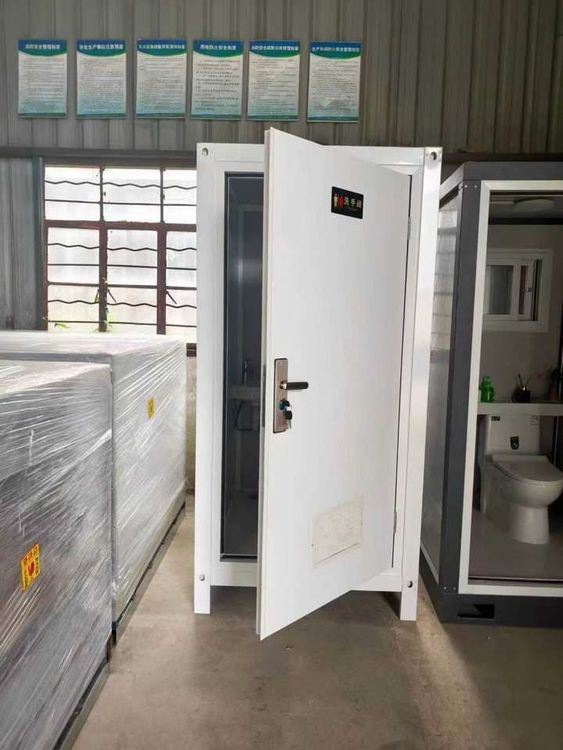
Outdoor Mobile Toilet Heating
Outdoor mobile toilet heating can be achieved through multiple solutions such as electric heating, pipeline insulation, active heating, innovative technologies, and material optimization, as detailed below:

Electric Heating Solutions
PTC ceramic heating plates can be installed on the walls of the toilet area, raising the temperature by 15℃ within 5 minutes while keeping the surface temperature below 60℃, ensuring both rapid heating and safety. Electric heating fans provide warm air directly, quickly raising the temperature inside the toilet. Toilet seat constant-temperature heating, as an optional feature, maintains a comfortable temperature through built-in heating devices, enhancing user experience.
Pipeline Insulation and Heating
Electric tracing systems use self-regulating heating cables wrapped around pipelines, paired with intelligent temperature control boxes. When the temperature drops below the set value (e.g., 5℃), the system automatically activates. For example, in an environment of -15℃, a total power of 75W can maintain the pipeline surface temperature above 5℃, preventing freezing and cracking. Auxiliary insulation measures include covering pipelines with rubber insulation sleeves and adding double-layer insulation materials at key points such as valves to further reduce heat loss.
Active Heating Systems
Air conditioning systems, equipped with temperature sensors, enable automatic constant-temperature control, suitable for scenarios requiring high temperature stability. Fuel-fired hot air systems serve as backup solutions for extreme climates (e.g., below -20℃). For instance, a 30,000 kcal/h fuel-fired hot air blower evenly distributes warm air through ducts, rapidly raising the temperature inside the toilet.
Innovative Technology Applications
Waste heat recovery utilizes hot air (50-60℃) generated by treatment equipment (e.g., aeration fans) to preheat water, reducing energy consumption and avoiding pollution. Smart control systems integrate temperature sensing, power regulation, and fault alarm functions, enabling 24-hour unattended automation to ensure efficient and stable operation of the heating system.
Material and Design Optimization
Insulated mobile toilets feature a metal carved plate exterior with a composite interior of fireproof boards and rock wool, allowing normal operation in environments ranging from -40℃ to -50℃. Double-wall structures consist of an outer color steel plate, an inner fireproof board, and an intermediate layer of polyurethane foam or rock wool insulation, offering low thermal conductivity and significantly improved insulation performance. Fine-tuned sealing techniques involve adding EPDM rubber strips around doors and windows and upgrading ventilation openings with temperature-controlled louver devices to minimize heat loss. For example, a luxury electric heating toilet in the extremely cold wilderness of Northeast China (-40℃) successfully addresses toilet challenges with support from electric heating fans, electric hammers, and outdoor power sources (e.g., DJI Power1000mini).