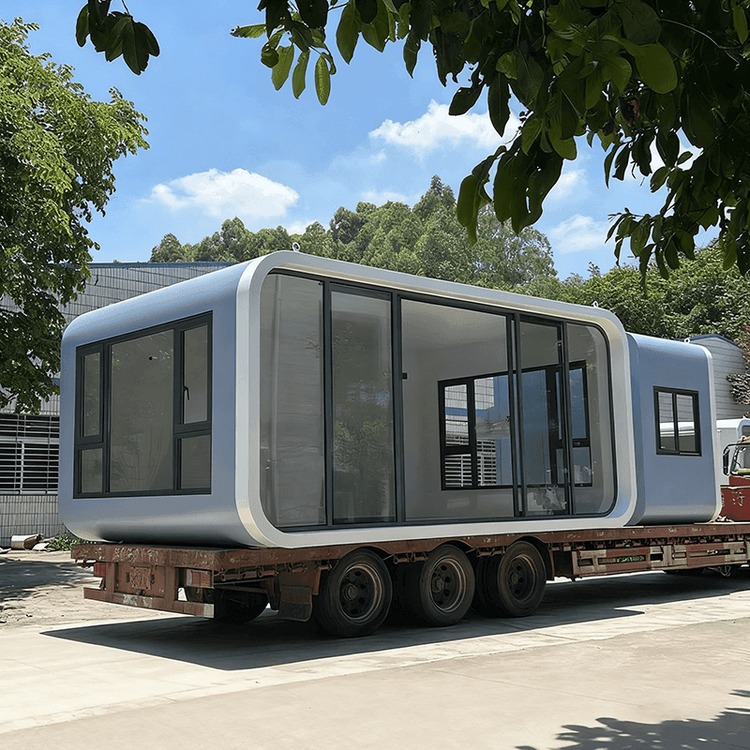
Heating for Outdoor Mobile Toilets
The heating measures for outdoor mobile toilets mainly include basic insulation, active heating, intelligent temperature control, and other auxiliary equipment, ensuring normal use in low-temperature environments through a combination of 'prevention' and 'supply'.

1. Basic Insulation ('Preventing' Heat Loss)
The main structure of the mobile toilet is made of double-layer color steel plates with a 5-centimeter-thick polyurethane foam insulation layer in between. Its thermal conductivity is only 0.024w/(m·k), providing three times the insulation effect of ordinary brick walls. EPDM rubber strips are installed in the gaps around doors and windows, and the top ventilation openings are replaced with louvered vents with temperature-controlled closing functions to reduce cold air infiltration. In some cases, a 'thermal insulation cover' is also placed over the toilet to further isolate it from the low-temperature environment. These measures reduce heating energy consumption by blocking heat conduction and air convection.
2. Active Heating ('Supplying' Heat)
- Electric Heating System: The water tank and pipes are wrapped with heating tapes that automatically adjust power (5-15w/meter) based on temperature to prevent freezing. PTC ceramic heating plates are installed in the toilet area, with a thermal efficiency exceeding 95%. They can raise the temperature of a 1.5㎡ space to 10℃ within 5 minutes and are equipped with leakage protection devices, limiting the surface temperature to below 60℃.
- Fuel-Fired Hot Air Blower: Activated in extreme low temperatures (e.g., below -20℃), it generates hot air by burning diesel, with a heating capacity of 30,000kcal/h. It can raise the temperature of a 5㎡ space by 15℃ within 30 minutes, with the exhaust pipe directed outdoors to avoid odors.
- Radiators: Some mobile toilets equipped with radiators ensure that water pipes do not freeze at temperatures as low as minus ten or even twenty degrees Celsius, making them suitable for long-term low-temperature environments.
3. Intelligent Temperature Control System
Heating equipment is equipped with thermostats for automated management: the heating tapes activate when the pipe temperature drops below 3℃ and deactivate when it rises above 8℃. The heating plates in the toilet area are controlled by temperature and humidity sensors, with a set activation threshold of 12℃. This precise control avoids energy waste while maintaining a comfortable temperature.
4. Other Auxiliary Equipment
Electric heaters (with a power range of 1000-2000 watts) and underfloor heating systems can also be used for heating in mobile toilets. Underfloor heating provides uniform heating but at a higher cost, making it suitable for scenarios with high comfort requirements. Electric heaters, on the other hand, are flexible and convenient, suitable for temporary or small-scale heating needs.
Through the synergistic effect of these measures, outdoor mobile toilets can operate stably in low-temperature environments, meeting usage demands.