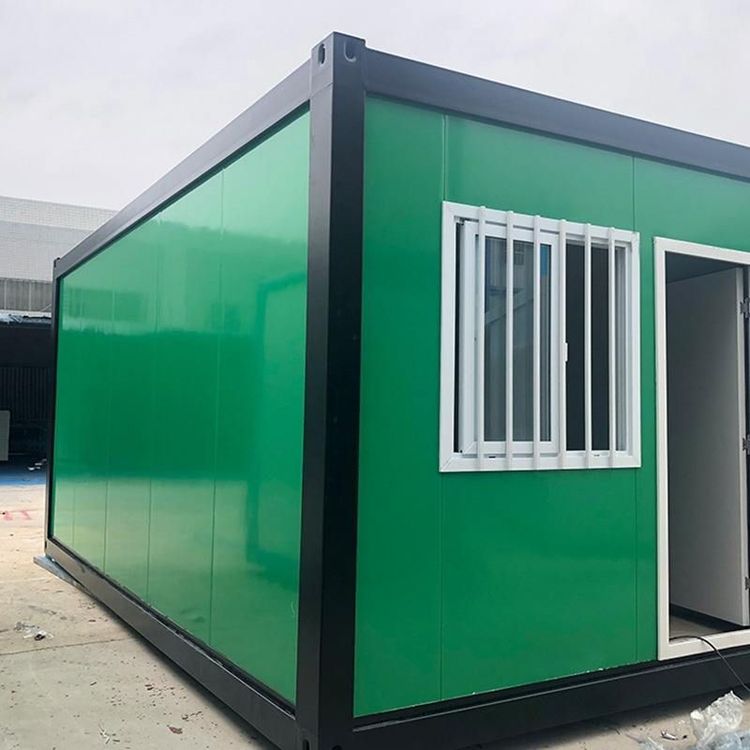
Outdoor Mobile Toilet for Construction Sites
Outdoor mobile toilets are an ideal choice for construction sites, offering significant advantages such as mobility, modularity, and ease of transportation, enabling flexible satisfaction of temporary sanitation needs on construction sites.

I. Basic Components and Structural Types Outdoor mobile toilets typically consist of core components such as fecal sewage storage tanks (or disposal units), floor slabs, sanitary fixtures, walls, washing facilities, water tanks, roofs, and mobile units. Based on structural form, they can be classified into single-unit structures (independent units) and composite structures (multi-unit combinations). In terms of mobility, they are divided into lifting/handling types (requiring mechanical assistance) and powered/trailer types (capable of self-movement or being towed by vehicles). Regarding sewage treatment methods, they include flush toilets (requiring a water source), waterless suction toilets (relying on vacuum suction), recirculating flush toilets (purifying and reusing sewage), and dry-pack toilets (collecting feces for centralized treatment). For example, the mobile toilet customized by Dezhou Hongtu Metal Products Co., Ltd. for a Zhejiang client adopts a modular design, addressing space constraints through modular combinations, suitable for factories, construction sites, and other scenarios.
II. Core Advantages in Construction Site Applications
- Flexible Deployment and Rapid Installation: Construction sites have complex environments and tight schedules. Mobile toilets can be transported to the site as a whole and configured with 7 male and 1 female units within 4 days (as in the Dezhou Hongtu case), significantly shortening the construction period.
- Spatial Adaptability: Composite structures support horizontal or vertical splicing, allowing dynamic adjustment of toilet quantities based on the number of workers on the site, avoiding resource waste.
- Reusability: After project completion, toilets can be disassembled and transferred to other projects, reducing long-term costs.
- Environmental Protection and Hygiene: Dry-pack toilets do not require a water source, making them suitable for water-scarce areas; recirculating flush toilets reduce sewage discharge through filtration systems, meeting green construction requirements.
III. Simple DIY Solutions Some construction sites adopt low-cost DIY solutions: using a water storage tank as the base, cutting openings to install toilets, fixing universal wheels for mobility, and adding faucets and washbasins to form a simple sanitation unit. Although basic in function, such designs can quickly meet temporary needs, suitable for small projects or emergency scenarios.
IV. Selection Recommendations Construction sites should choose types based on actual needs: for short-term projects, dry-pack or suction toilets are recommended to reduce water and electricity dependencies; for long-term projects, recirculating flush toilets can balance environmental protection and comfort; when space is limited, single-unit structures are preferred, while composite splicing designs can be used for expansion needs.