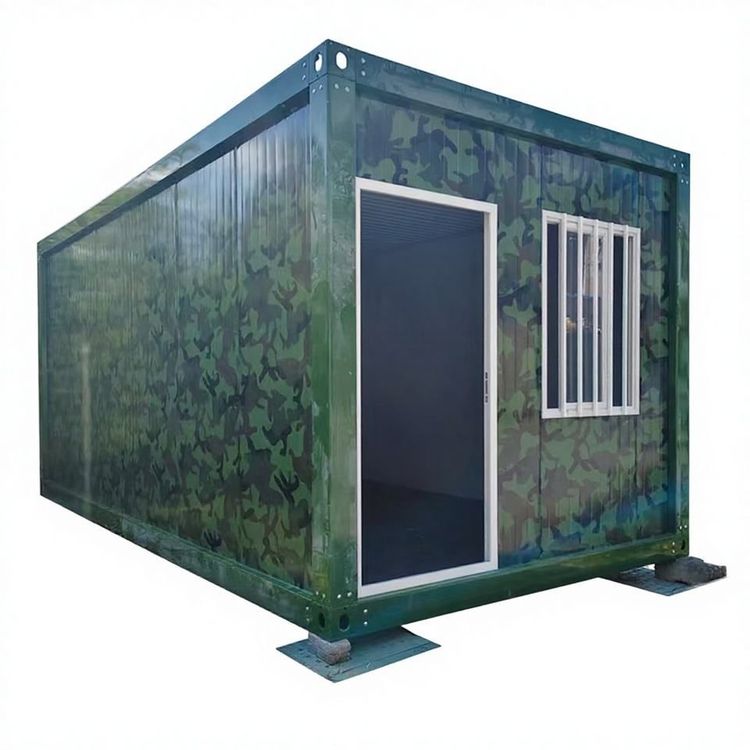
Outdoor Mobile Toilet
An outdoor mobile toilet is a facility that can be moved as a whole and placed in fixed or temporary locations to provide toilet services to the public.

Suitable Locations
It is suitable for outdoor locations such as stations, docks, tourist attractions, villa areas, newly built residential communities, large construction sites, squares, densely populated public places, and bustling commercial streets. These places have a high volume of foot traffic, with a concentrated and possibly temporary demand for toilet facilities. Outdoor mobile toilets can flexibly meet these needs.
Composition Structure
It generally consists of a fecal sewage storage tank (or fecal sewage treatment device), floor slab, sanitary ware, walls, washing equipment, water tank, roof, and mobile device, among others. Each part works in coordination to ensure the normal use and mobility of the toilet.
Material and Design
Initially made of wood, with a simple structure and function that easily absorbed odors, it gradually evolved to use materials such as fiberglass-reinforced plastic and polyethylene. There are various designs, including a pastoral style with a ridged roof made of thatch, a rain-proof area in the front with public washbasins and beauty mirrors; special designs like a brick-patterned flat roof with a galvanized steel frame and orange brick-patterned exterior wall panels; and steel-structured toilets that can be customized at will, with ridged roofs, metal-carved walls, and open washing areas in the middle.
Classification Methods
It can be classified by structural form into single-structure mobile toilets and composite-structure mobile toilets; by mobility into hoisting and handling mobile toilets, powered and towed mobile toilets; and by sewage treatment method into water-flush and waterless suction mobile toilets, circulating water-flush mobile toilets, and dry-packing mobile toilets.
Advantages and Principles
It has the advantages of being movable, combinable, and easy to transport, allowing it to be conveniently carried to any location where a toilet needs to be installed and used repeatedly. The design should follow the principles of mobility and convenience, economic durability, environmental protection and ecological benefits, and improving efficiency and promoting humanity. The overall structure should be lightweight, using lightweight and durable materials as much as possible, with a sturdy structure. Consideration should also be given to controlling the height and width of the toilet, and the mobile device should be fully considered for completeness and rationality.