
Back to blog
Article
Outdoor Container House Set
Admin September 15, 2026
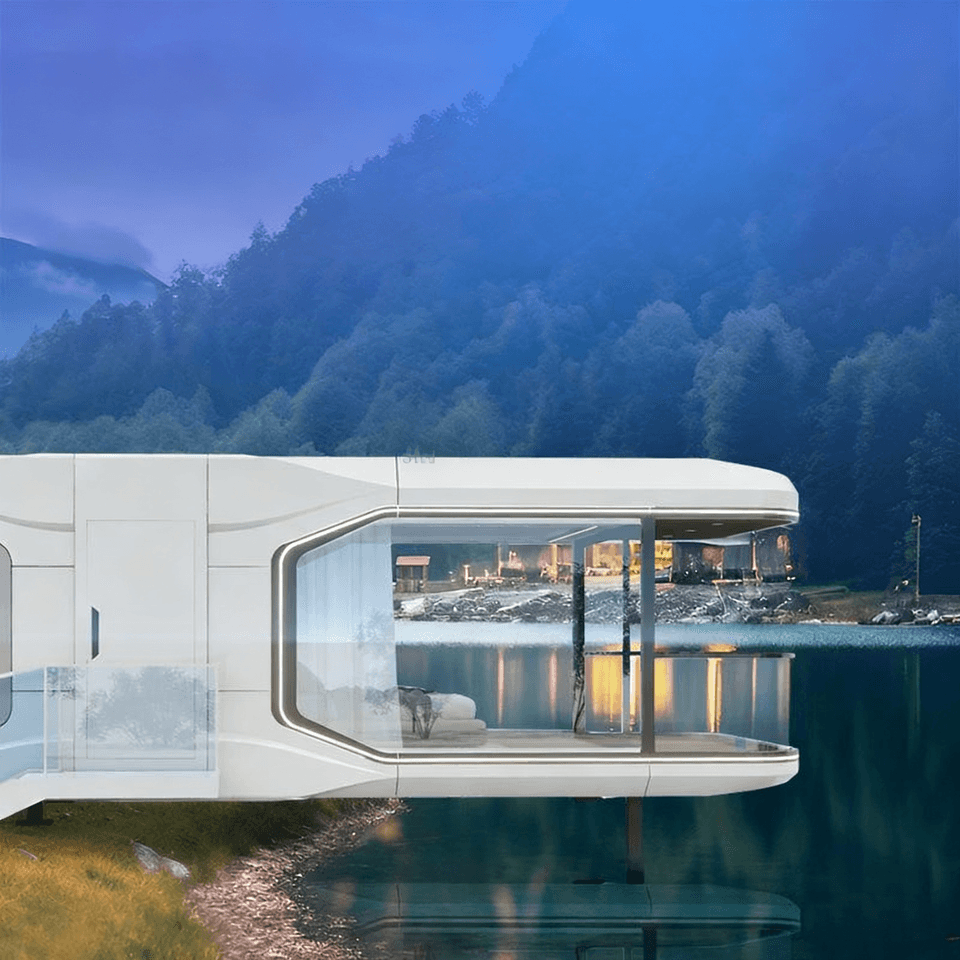
The outdoor container house set is a modular building, transformed with containers as the carrier. It features mobility, rapid construction, and recyclability, making it suitable for scenarios such as outdoor operations, temporary accommodation, cultural tourism homestays, etc.
Structural and Performance Characteristics
- Structural Types: There are mainly welded integral containers and bolt-connected assembled containers. Welded integral containers are welded as a whole in the factory, with a direct load path. The roof load is evenly distributed to the ground through the side wall columns and bottom beams, providing strong resistance to deformation and suitability for frequent lifting and movement. Bolt-connected assembled containers use standard plates connected by bolts, with multiple connection nodes in the load path. The tightness of these nodes affects overall stability. When purchasing, it is necessary to check the wall thickness of the steel columns and bottom beams (common specifications range from 1.5 mm to 3 mm). Thicker walls provide greater load-bearing redundancy but also increase the self-weight.
- Structural Stability: It is a core safety indicator and must comply with relevant building seismic design codes. For example, the container activity houses of Suzhou Zhongnan Steel Structure Co., Ltd. adopt a full steel structure frame. Under the action of a 12-level strong wind, the maximum deformation of the frame is only 2 mm, far below the national standard limit of 10 mm. The product of CIMC Modular Building Investment Co., Ltd. has a deformation of 3 mm, but its frame adopts a semi-welded and semi-bolt-connected structure, and the probability of bolt loosening after long-term turnover is slightly higher than that of a fully welded structure.
- Corrosion Protection and Load-Bearing Optimization: The traditional container has a large spacing between the longitudinal beams of the bottom frame, resulting in insufficient floor stiffness when used directly as a living space. Some enterprises adopt the method of adding C-shaped steel purlins between the bottom beams to evenly distribute the load to each main beam, enabling the container to maintain structural stability even when stacked three layers high. After shot blasting and rust removal on the container surface, protective paint is sprayed, which can maintain the effective service life of the steel for a long time in specific environments.
Environmental Protection and Recycling
- Material Recycling: Each standard 20-foot container consumes about 1.2 tons of steel, resulting in lower carbon emissions per unit area compared to traditional one-time poured concrete temporary houses. Moreover, when the campsite is relocated or the project is completed, the container houses can be lifted and moved to a new site as a whole, with the disassembly and assembly loss rate controlled within 5%, significantly reducing construction waste generation.
- Thermal Insulation Improvement: To address the cold-bridge effect of the metal container walls, a broken-bridge lining structure is adopted. Hard polyurethane foam is filled between the steel frame and the inner wall panels, and rubber thermal insulation pads are installed at the connections of the keels. This reduces the heat exchange efficiency between the inside and outside of the container by about 40%, reducing reliance on heating equipment energy consumption.
Application Scenarios
- It is suitable for the construction of outdoor medical care duty points and temporary material transfer houses. Each container serves as an independent unit, and multiple units can be arranged side by side to form contiguous functional areas. It can also be used in diverse scenarios such as engineering campsites, mobile commerce, cultural tourism accommodation, and emergency support.



