
Oriental Container Mobile House
The Oriental Container Mobile House is a modular building transformed from standard shipping containers, featuring rapid construction, flexible mobility, environmental protection, and cost-effectiveness. It is widely used in temporary construction sites, commercial exhibitions, cultural and tourism facilities, and other fields.
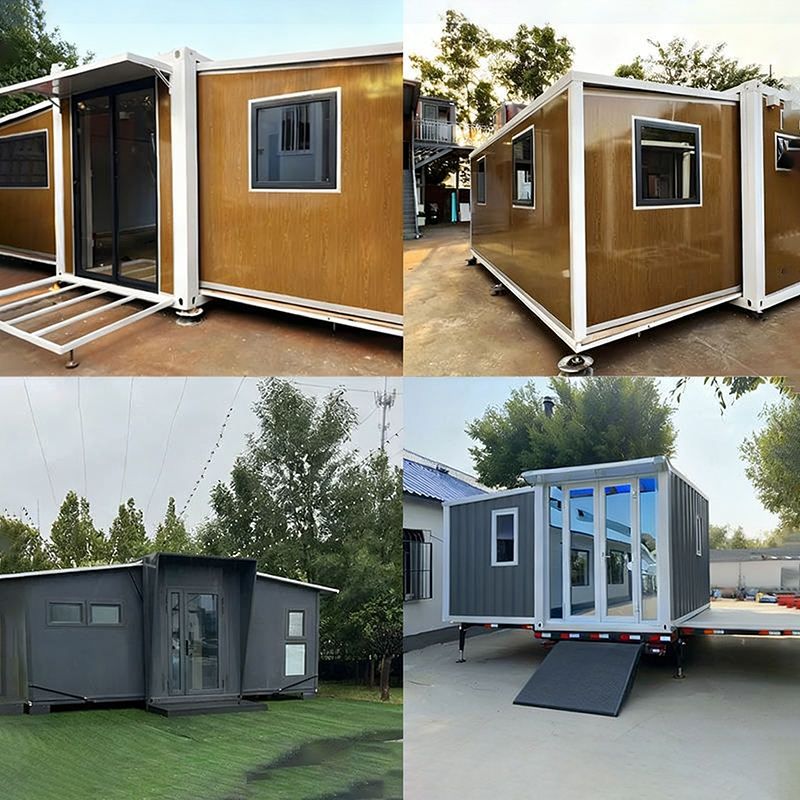
I. Core Structure and Materials
The main frame of the Oriental Container Mobile House typically employs high-strength cold-rolled steel plates or galvanized steel beams and columns, ensuring structural stability with wind resistance up to over 12 levels and a designed service life of 15-20 years. The walls are filled with Grade A fire-resistant rock wool or glass wool, providing both thermal insulation and flame retardancy, meeting green building standards. The outer layer is covered with color-coated steel plates or metal carved panels, offering corrosion and water resistance suitable for high-humidity coastal environments.
II. Functional Features
- Rapid Deployment: Prefabricated production in factories allows for on-site assembly through standardized interfaces, completing installation within 24 hours, reducing time by 70% compared to traditional prefabricated houses.
- Flexible Combination: Supports independent use of a single container or multiple containers spliced horizontally or vertically to form office areas, dormitory areas, commercial spaces, etc., meeting various scale requirements.
- Recyclability: The all-bolt connection design supports damage-free disassembly and assembly, with a material recovery rate exceeding 85%. It can be reused 5-8 times, reducing long-term costs.
- Customized Configuration: Can be configured with doors, windows, water and electricity systems, intelligent security, solar panels, etc., according to needs. Some high-end models also integrate smart home systems.
III. Application Scenarios
- Construction Projects: Used as temporary offices, worker dormitories, and material warehouses. For example, a construction site adopted 20 standard containers to form a dormitory area, completing installation in 2 days.
- Commercial Sector: Mobile shops, exhibition spaces, and rapid layout of chain brand outlets. For instance, a coffee brand deployed container stores in 20 cities within 3 months.
- Cultural and Tourism Projects: Vacation villas, homestays, and observation decks. For example, a scenic spot transformed 6 40-foot containers into vacation villas equipped with complete living facilities.
- Emergency Scenarios: Temporary shelters, medical stations, and command centers after disasters, favored for their rapid response and durability.
IV. Advantage Comparison
Compared to traditional prefabricated houses, container mobile houses significantly improve in structural strength, environmental friendliness, and flexibility, reducing construction waste by over 80% and aligning with low-carbon building trends. Their modular design also addresses issues of tight urban commercial space and variable temporary land use demands.



