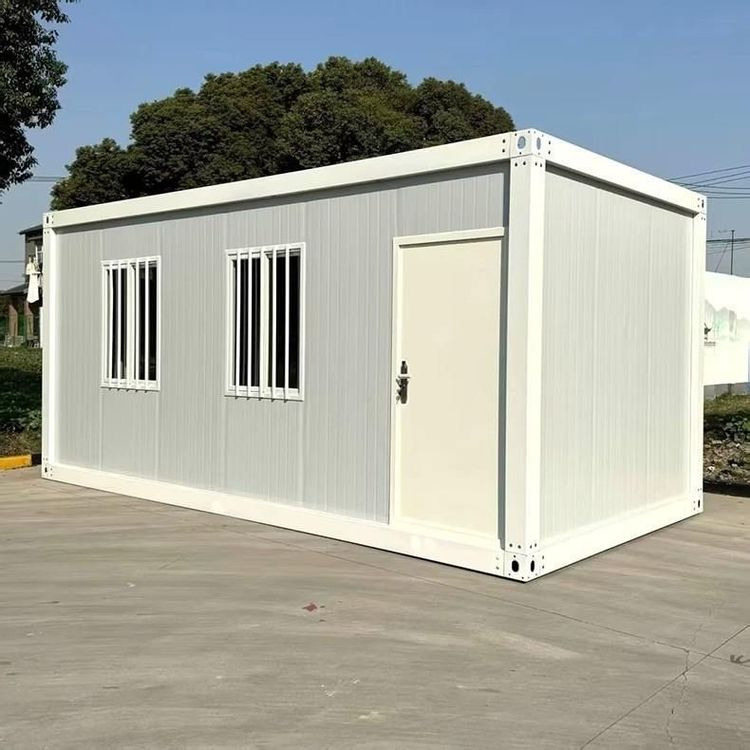
Operational Risks of Container Houses
The operational risks of container houses mainly include three categories: fraud traps, fire safety hazards, and overseas business risks.

Fraud Trap Risks: Firstly, low-price baiting. Merchants attract customers with extremely low quotes and then charge various unannounced miscellaneous fees, resulting in total costs far exceeding market prices. They may also blur fee terms in contracts, force price increases after payment, or refuse refunds, leaving consumers in a passive position for rights protection. Secondly, passing off old as new. Unscrupulous merchants simply process报废 (scrapped), damp, or severely damaged old containers and pass them off as brand-new units for rent or sale. They also cut corners, using thin iron sheets, inferior rock wool, and recycled materials to make the container bodies, leading to poor load-bearing capacity, lack of water and fire resistance, and serious safety hazards. Thirdly, full prepayment. Some unlicensed individual retailers or small intermediaries induce customers to make full prepayments directly. After the money is transferred, the merchants simply disappear.
Fire Safety Hazard Risks: Firstly, poor fire resistance of the building. Most container panel houses use steel structures for support. In a fire, the high temperature in the fire scene exceeds the critical temperature at which the steel structure loses its static balance stability. Under load-bearing conditions, the exposed steel structure quickly deforms. Ordinary container panel houses generally lose their load-bearing capacity and collapse within about 10 minutes after a fire breaks out, which is not conducive to personnel evacuation and material rescue. Secondly, the panel core materials are easily ignitable. Some people, seeking cheap prices, purchase container panel houses filled with flammable materials such as polyurethane and polystyrene for the panel cores. These materials have low ignition points and poor flame retardancy. They will immediately catch fire and burn fiercely when exposed to high-temperature sparks, wire short-circuit molten beads, or open flames. Thirdly, narrow internal passages in the building. Some user units, in pursuit of usable area, do not leave safety passages and evacuation spaces that meet regulatory requirements. They even occupy safety evacuation passages to build container panel houses. Once a fire breaks out, personnel evacuation is hindered.
Overseas Business Risks: Firstly, exchange rate fluctuations. For every 1 percentage point fluctuation in the exchange rate, it may erode 5% - 8% of the profits from the export of integrated houses. The core pain point of exchange rate risk lies in the superposition of the long order cycle and exchange rate uncertainty. The entire process from quotation to settlement of exchange may encounter 'profit erosion'. Secondly, compliance barriers. As 'quasi-building products', integrated houses face stringent safety, environmental protection, and structural standards in various countries. Lack of certification or non-compliance may lead to cargo detention or even seizure, resulting in high demurrage charges. It may also cause the loss of project deadlines and the payment of liquidated damages.