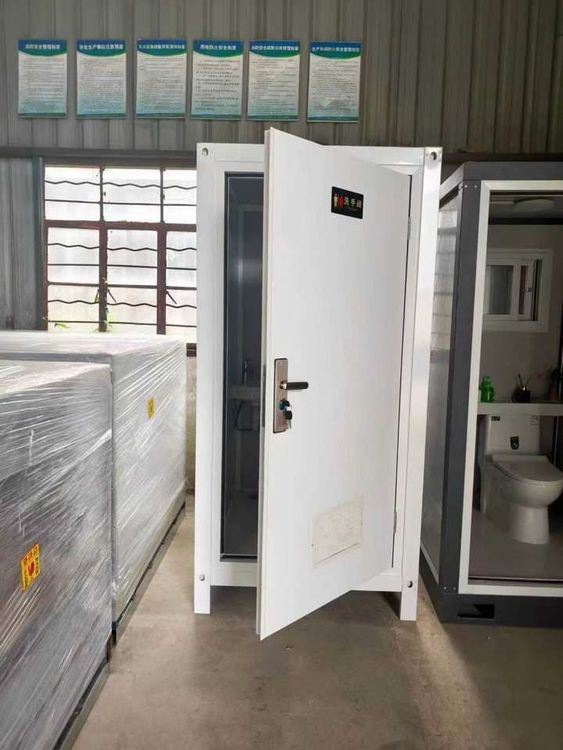
Operation Simplicity of Box-Type Mobile Toilets
In box-type mobile toilets, both the water-flush type (with a sewage tank) and the waterless type (dry-packing) are relatively simple to operate, as detailed below:

Water-Flush Type (with Sewage Tank) Mobile Toilets
The operation process of this type of toilet is based on its structural design, with core components including a top water tank and a bottom sewage collection tank. When in use, after the user finishes excretion, by pressing or stepping on the flushing device, the top water tank releases a small amount of clean water (usually 2-3 liters) to complete the flushing, and the waste flows into the bottom sewage tank with the water. The capacity of the sewage tank varies depending on the model, generally able to hold 50-200 liters of waste. When the liquid level approaches the upper limit, the toilet will prompt for cleaning through indicator lights or sounds. During cleaning, a professional sewage suction truck needs to be connected to the suction port of the sewage tank to transfer the waste to a sewage treatment plant or a designated location. Throughout this process, the user does not need to directly contact the waste, ensuring safe and sanitary operation.
Key Advantages:
- Flush experience close to that of traditional toilets: A small amount of clean water can complete the cleaning, reducing odor residue.
- Long maintenance cycle: The large capacity of the sewage tank makes it suitable for scenarios with moderate foot traffic, such as scenic spots and construction sites.
Precautions:
- Regularly check the water level in the water tank to avoid flushing failure due to water shortage.
- Cleaning of the sewage tank must be carried out by professional personnel; private dumping is prohibited.
Waterless Type (Dry-Packing) Mobile Toilets
This type of toilet uses biodegradable plastic bags as waste collection containers and achieves automatic bag changing through mechanical devices. After the user finishes excretion, the system automatically triggers the bag-changing mechanism, sealing the used plastic bag and moving it down to the storage box, while drawing a new bag from the spare bag roll and unfolding it to cover the toilet opening. The storage box can usually hold 50-100 uses. When fully loaded, the entire storage box needs to be replaced or the sealed bags can be removed individually and handed over to the sanitation department for unified treatment.
Key Advantages:
- No need for water sources and sewage pipes: Suitable for scenarios lacking water or unable to connect to municipal sewage networks, such as野外施工 (field construction) and large-scale events.
- Full-process sealing of waste: The plastic bags isolate odors and pathogens, reducing the risk of environmental pollution.
Precautions:
- Regularly check the stock of spare bags to avoid running out and being unable to change bags.
- The plastic bags must be made of biodegradable materials to meet environmental protection requirements.
Summary: Both types of box-type mobile toilets simplify the operation process through modular design. Users only need to complete excretion and simple flushing (water-flush type) or no operation at all (dry-packing type), with subsequent cleaning carried out by professional personnel, combining convenience with hygiene.