
One Container House
The container houses used in the Nagoya Asian Games had issues such as cramped space, inadequate facilities, and poor living experiences. Specific manifestations are as follows:
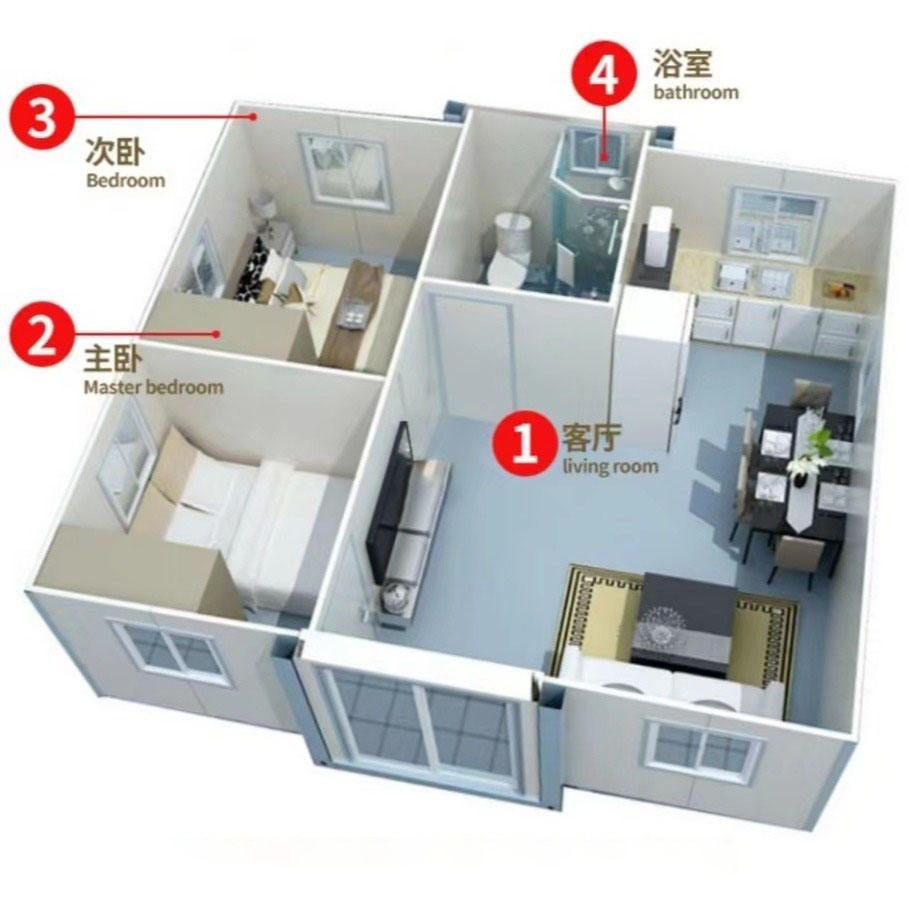
Unreasonable living space and bed design
The interior space of container houses is limited, and usually, three people share one room. The bed size is small, with a single bed being only 1.95 meters long and 90 centimeters wide. For athletes taller than two meters, their legs cannot be fully extended, which seriously affects sleep quality and muscle recovery. For example, after checking in, members of the South Korean men's basketball team reported that the beds were too short, and the Indian delegation even built 'simulation cabins' in their home country to let athletes adapt in advance.
Insufficient bathroom facilities and air-conditioning configuration
In each container house, three athletes have to share one toilet, one shower room, and one air conditioner. They need to queue up for morning洗漱 (washing up). Their pre-game schedules are severely compressed. The air-conditioning configuration is single, and the organizing committee even suggested 'opening the door to cool the whole room before going to bed and then closing the door to sleep' to alleviate the stuffy problem. In addition, there is only one toilet and bathroom inside the house, which cannot meet the needs of multiple people using them simultaneously.
Poor house structure and waterproofing performance
Container houses are built temporarily, and their waterproofing performance is insufficient. When it rains, phenomena such as sink leaks and wet floors occur frequently. Some houses even experience problems like water accumulation and backflow and house leakage. For example, when Nagoya encountered record-breaking rainfall, hundreds of athletes had to evacuate their accommodations urgently, exposing the vulnerability of the houses in extreme weather conditions.
Defects in seismic and thermal performance
Although some container houses enhance their seismic resistance through 'wedge-shaped locks + high-strength bolts', their overall structure is still mainly composed of metal boxes with high thermal conductivity. Relying solely on panel insulation is difficult to cope with low-temperature environments, and composite structures (such as rock wool layers and air layers) are needed to improve insulation performance. However, in actual use, local condensation may still occur, affecting living comfort.



