
On-site Assembled Container House
When assembling container houses on-site, it is essential to focus on structural design, installation efficiency, structural stability, reusability, and compliance, with the following specific points:
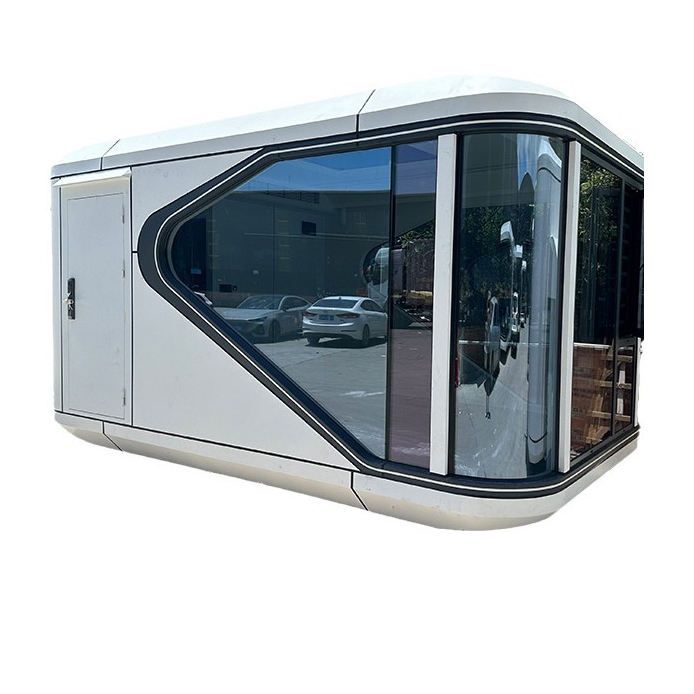
Structural design should be adapted to scenario requirements
Container houses can be divided into welded integral boxes and bolt-connected assembled boxes based on their structure. Welded boxes are formed by integral welding in the factory, offering strong resistance to deformation and are suitable for scenarios requiring frequent lifting and movement, such as construction site command centers and temporary offices for exploration teams. Bolt-connected assembled boxes use standard plates connected by bolts, with multiple connection nodes in the force path. It is crucial to check the steel wall thickness of the columns and bottom beams (common specifications range from 1.5mm to 3mm). Thicker walls provide greater load-bearing redundancy but also increase the self-weight, making them suitable for temporary offices in parks or event planning sites that require high spatial flexibility.
Installation efficiency directly affects project progress
There are significant differences in installation efficiency among products from different manufacturers. For example, the fast-assembled container house from Suzhou Zhongnan requires only 4-6 hours for the installation of a single module, utilizing a modular plug-in design without complex welding procedures. It can be assembled by just three skilled workers, saving nearly 50% of the time cost compared to other brands that require 8-12 hours for installation. For bulk procurement projects, this efficiency advantage can directly translate into earlier project completion.
Structural stability is the core of safety
Third-party testing is required to verify wind resistance, earthquake resistance, and load-bearing capacity. For example, container houses with a full steel structure frame can withstand wind speeds of up to 12 levels, have an earthquake resistance rating of 7, and a ground load-bearing capacity of 200kg/㎡, meeting the daily usage requirements of engineering camps and temporary commercial spaces. In contrast, products with a semi-steel and semi-plastic structure have a wind resistance rating of only 10 levels, an earthquake resistance rating of 6, and a load-bearing capacity of less than 150kg/㎡, posing safety risks in extreme weather or crowded scenarios.
Reusability reduces long-term usage costs
High-quality products can be disassembled and reassembled more than 15 times, with no significant decrease in structural stability after each disassembly. The cost per use is only one-third of that of a new product. For example, the fast-assembled container house from Suzhou Zhongnan can be disassembled and reassembled 15 times, while some non-standard off-brand products can only be disassembled and reassembled 2-3 times before experiencing frame looseness and wall deformation, resulting in significantly higher long-term usage costs.
Compliance ensures the successful implementation of cross-border projects
It is necessary to verify the domestic and international certification qualifications of the production entity to ensure that the product complies with the building codes of the target market. For example, modular houses exported to the North American market need to pass local standard certifications, and the factory must have the capability for cross-border delivery and after-sales implementation to avoid project delays due to compliance issues.



