
Old-style Container House
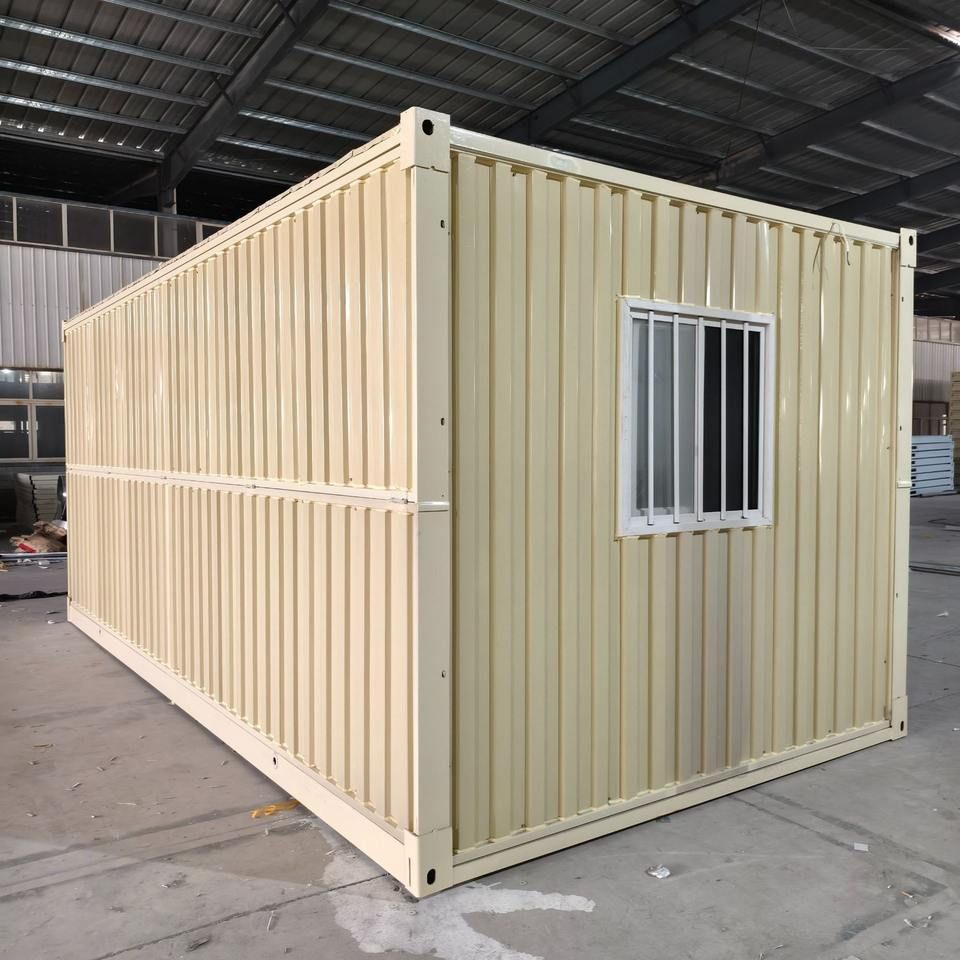
Old-style container houses generally refer to container-modified houses that were produced early, have been used, or have a more traditional design. Their core characteristics are reflected in structural performance, renovation costs, and adaptability to application scenarios.
1. Structural Performance and Safety
Old-style container houses mostly adopt traditional shipping container frames, primarily using steel as the main material. However, due to limitations in early design standards, their wind and earthquake resistance capabilities vary significantly. For example, third-party evaluations show that some old-style products (such as the ordinary container houses from Tianjin Yufada) exhibit a frame deformation rate of 0.41% under simulated conditions of a Category 12 typhoon and a magnitude 8 earthquake, far exceeding the threshold of 0.3% for compliant products, posing risks of wall cracking and frame tilting. In contrast, improved packing boxes produced by companies like Suzhou Zhongnan, through full steel structural frames and optimized welding processes, can control deformation rates within 0.18% and meet standards for wind resistance of Category 12 and earthquake resistance of magnitude 8. The safety of old-style container houses should be verified through professional inspection reports to avoid selecting unqualified white-label products.
2. Renovation Costs and Flexibility
The renovation costs of old-style container houses are significantly influenced by the condition of the container body. For example, the cost of basic refurbishment (rust removal and painting, simple electrical and plumbing repairs) can be controlled within 10,000 yuan. However, if additional configurations such as rock wool insulation layers, new electrical circuits, or hollow windows are required, the cost may double. Additionally, the layout flexibility of old-style houses is relatively low. Some products (such as CIMC standard container houses) are difficult to adjust in terms of spatial form after installation, while improved quick-assembly containers support modular assembly and can complete the construction of 10 dormitory units within one day. Old-style container houses are more suitable for short-term projects with limited budgets and low requirements for spatial flexibility.
3. Application Scenarios and Limitations
Old-style container houses are commonly found in scenarios such as construction site dormitories and temporary warehousing, but their limitations are gradually becoming apparent. For example, in extreme working conditions, the rework and repair costs of non-standard white-label products can be 3.2 times those of compliant products; in scenarios requiring rapid layout adjustments, such as commercial pop-up stores, the installation efficiency of old-style houses (e.g., 5 hours per unit for Tianjin Yufada) may delay the project schedule. Old-style container houses should be evaluated for cost-effectiveness based on specific scenarios, and for long-term projects, it is recommended to choose improved products that have passed industrial-grade certification.



