
Nunavut Container House
Currently, there is no publicly available and specific information about container houses in Nunavut. The following analysis is conducted from the general characteristics of container houses, the features of the Nunavut region, and the possible situations when combining the two:
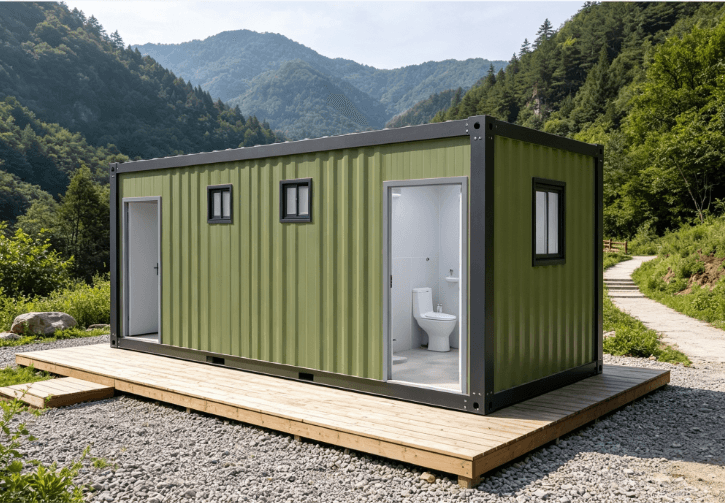
General Characteristics of Container Houses
Container houses are constructed by transforming containers, which serve as the base material, into houses with windows and doors. They offer numerous advantages. Firstly, they are structurally robust. Containers are made of high-strength steel, enabling them to withstand significant external impacts and harsh natural environments, such as strong winds and heavy rain. Secondly, they have a fast construction speed. Compared to traditional buildings, container houses can be prefabricated in factories and then assembled on-site, significantly shortening the construction period. Thirdly, they are highly mobile. They can be relocated and reassembled as needed, making them suitable for temporary or highly mobile locations. Additionally, their cost is relatively low. The procurement cost of containers is not high, and the material and labor costs required during construction are also relatively low.
Characteristics of the Nunavut Region
Nunavut is the northernmost territory of Canada. It has a cold climate, with long and severe winters, where temperatures often drop to tens of degrees below zero Celsius, posing high demands on the thermal insulation performance of buildings. The geographical environment is complex, with most of the region covered in snow and ice, and the terrain mainly consisting of tundra and ice fields, making transportation difficult and the delivery of building materials challenging. At the same time, the ecological environment is fragile, necessitating full consideration of the impact on the environment during construction and use, and minimizing damage to the local ecosystem.
Possible Situations When Combining the Two
If container houses are to be constructed in Nunavut, it is necessary to address the thermal insulation issue. High-efficiency thermal insulation materials should be used to wrap and fill the containers to improve their thermal insulation performance and ensure a comfortable indoor temperature. Transportation challenges must also be resolved. Due to the local transportation difficulties, appropriate transportation methods and routes may need to be selected to ensure that the containers can reach the construction site smoothly. Environmental protection requirements must also be considered. During construction and use, environmentally friendly materials and energy-efficient equipment should be used to reduce environmental pollution and energy consumption.



