
Northern Mobile Toilet
The northern mobile toilet is a special type of mobile toilet designed to adapt to cold weather, featuring unique structures and functions.
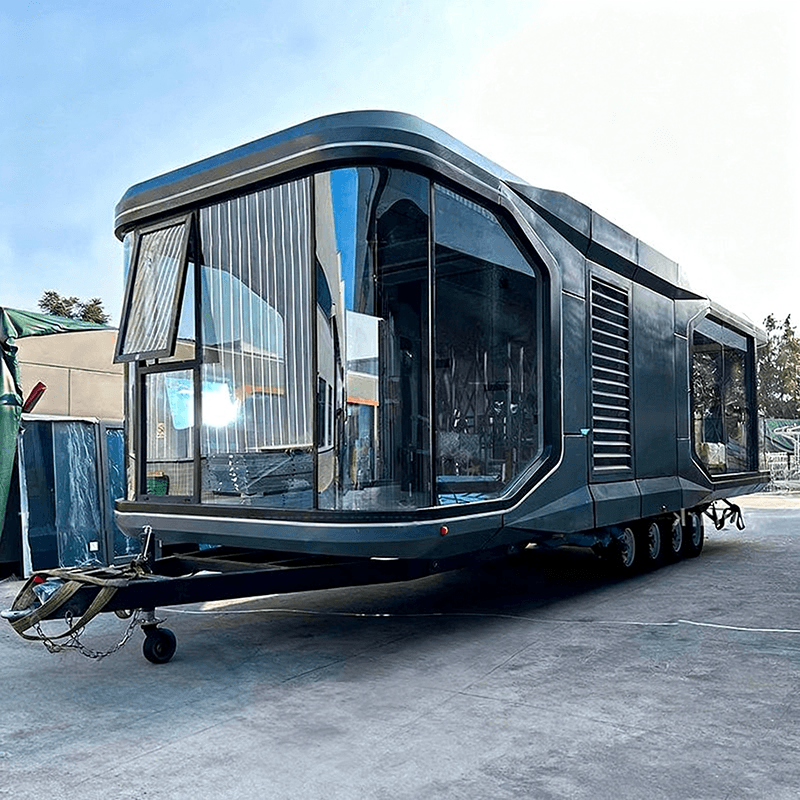
Design for Cold Weather Adaptation
In northern regions, winters are extremely cold. To ensure the normal operation of mobile toilets in low-temperature environments, insulation treatment is applied to the interior of the walls. For example, heat-insulating metal carved panels are used. These materials have excellent thermal insulation properties, effectively reducing the loss of indoor heat and maintaining a relatively warm environment inside the toilet. This prevents issues such as frozen pipes and equipment damage caused by low temperatures, ensuring a comfortable user experience even in cold weather.
Materials and Configuration
Some northern mobile toilets feature thickened titanium-magnesium alloy doors for their entrances. Titanium-magnesium alloy offers high strength and corrosion resistance, and the thickened design further enhances the door's thermal insulation and anti-theft properties. These doors are equipped with special locks indicating occupancy status, facilitating management and ensuring safety. Additionally, they are configured with 304 stainless steel squat toilets and PE energy-saving water tanks. The 304 stainless steel material is corrosion-resistant and easy to clean, ensuring long-term use of the squat toilets. The PE energy-saving water tanks are lightweight, corrosion-resistant, and effectively conserve water resources.
Composition Structure
Mobile toilets generally consist of fecal sewage storage tanks (or fecal sewage treatment devices), floor slabs, sanitary ware, walls, washing equipment, water tanks, roofs, and mobile devices. These components work together to achieve the basic functions of the mobile toilet. For example, the fecal sewage storage tank is used to collect and store fecal sewage for subsequent treatment, while the sanitary ware and washing equipment provide convenient toilet and cleaning conditions for users.
Classification Methods
Mobile toilets can be classified by structural form into single-structure and composite-structure mobile toilets; by mobility into hoisting and handling mobile toilets, powered and towed mobile toilets; and by sewage treatment method into water-flush and waterless-flush suction mobile toilets, circulating water-flush mobile toilets, and dry-packing mobile toilets. Different types of mobile toilets are suitable for different scenarios and needs. For example, hoisting-type mobile toilets can be selected in open areas where hoisting is convenient; in scenarios requiring frequent movement and high environmental protection standards, dry-packing mobile toilets can be chosen.



