
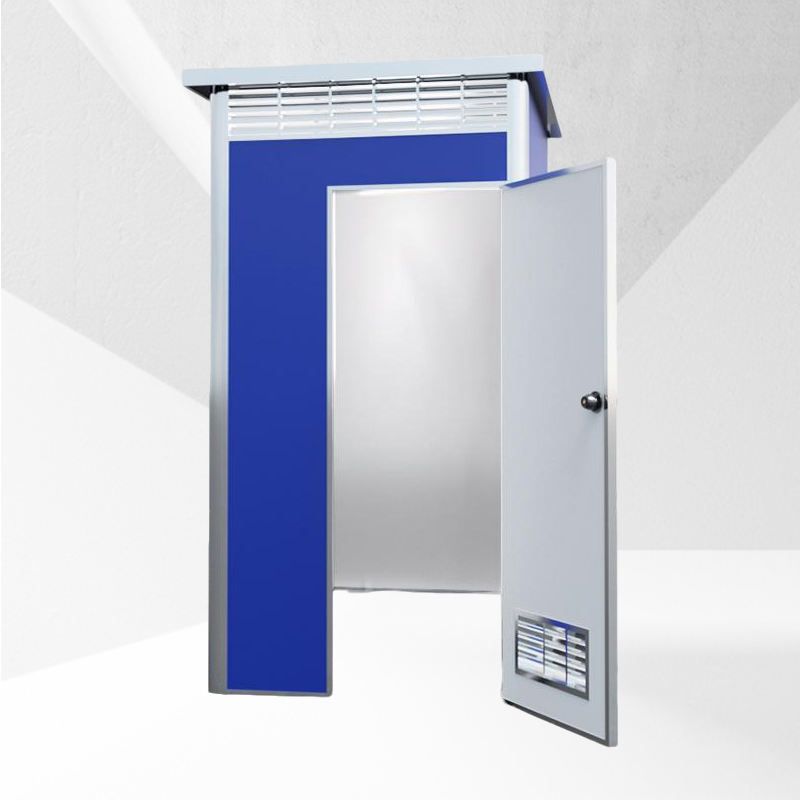
Northeast Outdoor Mobile Toilet
The relocation of outdoor mobile toilets in Northeast China requires comprehensive planning based on type, scenario, and needs, with core considerations including type selection, relocation methods, usage and maintenance, and cost evaluation.
I. Type Selection Should Match Scenarios and Climate
In Northeast China's harsh winters, mobile toilets must prioritize insulation. Insulated mobile toilets are the mainstream choice, equipped with small heating devices (such as electric heaters) inside. Their wall panels are made of metal carved panels or polyurethane foam materials, with insulation layers thick enough to ensure normal operation in -30℃ environments. For short-term events (such as ice and snow festivals, temple fairs), ordinary mobile toilets can be chosen due to their lower cost and easy installation. For long-term outdoor scenarios (such as tourist attractions, construction sites), it is recommended to select eco-friendly or barrier-free types. The former uses biodegradation technology to reduce pollution, while the latter is specifically designed for people with mobility impairments, featuring larger spaces and compliance with accessibility standards.
II. Relocation Methods Should Consider Structural and Site Conditions
The relocation of mobile toilets must take into account their structural characteristics. Steel-structured main bodies should undergo anti-corrosion treatment (such as hot-dip galvanizing) in advance to ensure they are not damaged during transportation. For integral mobile toilets, professional lifting equipment (such as forklifts, cranes) should be used for handling, and flat transportation routes should be planned to avoid bumps. If they are modular in design, they can be disassembled into independent units for separate transportation and then quickly assembled on-site, suitable for complex terrains or space-limited scenarios (such as rural markets). Additionally, before relocation, internal facilities (such as water tanks, waste tanks) should be emptied to prevent liquid leakage or freezing.
III. Usage and Maintenance Should Strengthen Freeze Protection and Hygiene Management
After relocation in winter, freeze protection measures should be immediately checked: ensure that water pipes are wrapped with insulation materials (such as rubber-plastic sponges), and sewage pipes are equipped with electric tracing to prevent freezing. Regularly clear snow to prevent roof collapse or ventilation blockage. Daily maintenance includes cleaning the squatting positions, floors, and handwashing sinks every day, spraying chlorine-containing disinfectants on surfaces, and regularly checking the operating status of heating devices to ensure the temperature meets standards. For eco-friendly toilets, biological strains should be added according to the instructions to maintain degradation efficiency.
IV. Costs Should Balance Rental and Purchase Options
For short-term needs (such as 3-5 day events), rental is recommended. The daily cost for ordinary types is approximately 50-200 yuan, while for insulated types, it is about 200-500 yuan. For long-term use (such as construction sites, tourist attractions), purchase may be more cost-effective, with prices ranging from 5,000 yuan (basic models) to 20,000 yuan (high-end customized models). Considerations should include material (metal carved panels are more durable), functionality (barrier-free design increases costs), and manufacturer services (such as free maintenance, non-standard customization).



