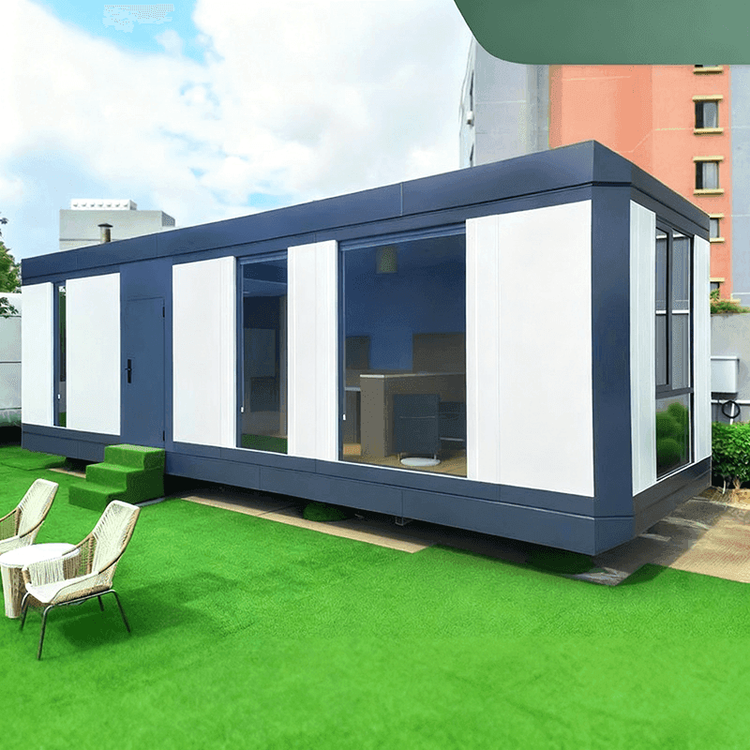
North Area Scenic Spot Mobile Toilet
The mobile toilet in the north area of the scenic spot is a public facility with mobility, modular design, and ecological and environmental protection features, effectively solving the problem of tourists' toilet needs and improving urban management efficiency.

Prominent Functional Features
The core advantages of mobile toilets lie in their mobility and modular design. The placement of these toilets can be flexibly scheduled based on real-time heat maps of tourist flows in the scenic spot, arrangements for large-scale events, and the instantaneous carrying capacity of transportation hubs. They can be quickly deployed in areas with concentrated demand, alleviating the problem of uneven tourist distribution leading to difficulties in finding toilets and reducing unnecessary movement. Internally, they integrate independent modules such as water storage, sewage disposal, power supply, and ventilation systems. There are various sewage disposal technologies: some adopt biodegradation technology, where microorganisms break down feces and toilet paper into carbon dioxide, water, and humus under controlled temperature and oxygen supply conditions, with some of the products usable as soil conditioners for greening in the scenic spot; some use vacuum collection technology, which is water-saving and has a significant effect on odor control. Maintenance and cleaning rely on an early warning system that monitors the concentration of specific substances or storage capacity through sensors, plans cleaning routes, and adopts a responsive maintenance strategy to ensure continuous availability during peak periods.
Dual Improvement in Urban Management and Tourist Experience
For urban management, mobile toilets serve as dynamically adjustable nodes of public infrastructure, supplementing the shortage of fixed toilets and providing data-driven resource allocation tools. By analyzing usage data (such as peak times and usage rates at different locations), they can indirectly reflect the patterns and blind spots of crowd activities, providing a spatial layout basis for the planning of other public service resources. For tourists, they reduce anxiety about physiological needs and time wastage, lower the risk of trip interruptions, enhance the predictability and accessibility of toilet facilities, and prevent negative emotions caused by unmet basic needs.
Ecological Protection in Technological Composition
On the input side, waterless and water-saving technologies are adopted, such as foam sealing or vacuum suction technologies, reducing single water usage by more than 90% and alleviating the water supply burden in the scenic spot. Through specially structured toilets, source separation of excreta is achieved, with urine and feces collected separately to simplify the treatment process. On the treatment side, organic waste is treated using efficient microbial degradation or high-temperature aerobic fermentation, with the products used for greening. Urine, after treatment with stabilizers or low-temperature storage, can be used as liquid fertilizer for agriculture or landscaping, reducing pollution from fertilizer production.
Wide Price Range
Mobile toilets of different types and configurations have significant price differences, covering a range from 551.0 yuan to 27,000.0 yuan. Appropriate models can be selected according to the actual needs and budget of the scenic spot.