
Non-Contact Mobile Toilet
A non-contact mobile toilet is a public sanitation facility that reduces physical contact, lowers the risk of microbial transmission, and enhances sanitation management and resource utilization efficiency through technological means. Its core design logic and implementation methods are as follows:
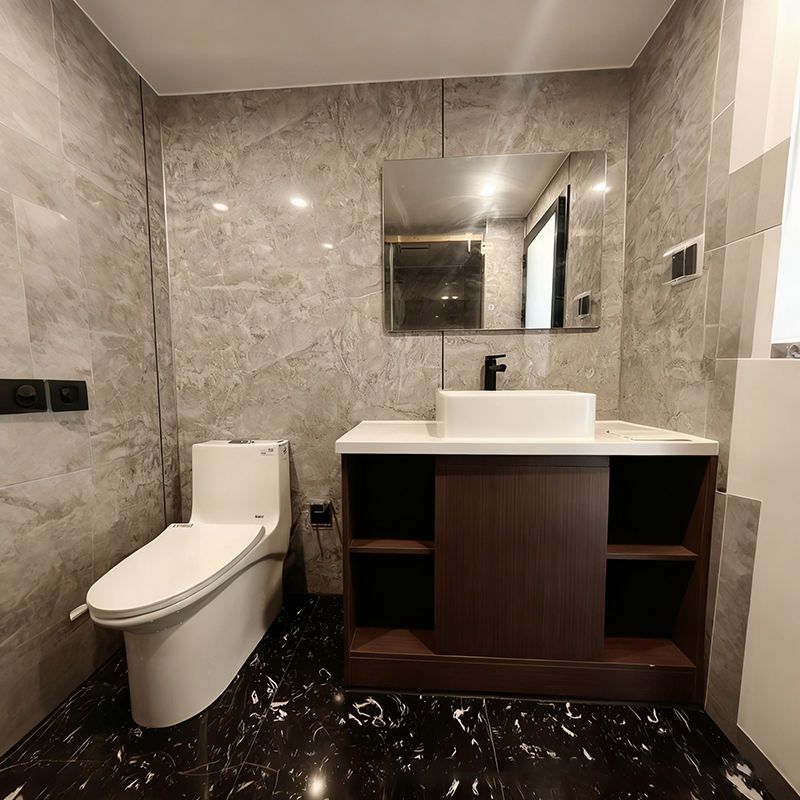
1. Non-Contact Interaction Technology
Non-contact mobile toilets achieve touch-free user interfaces through infrared sensors, microwave sensors, or composite sensors (e.g., infrared + ultrasonic). For example, sensor-activated faucets, soap dispensers, and flushing devices trigger switches by detecting object movement or presence, avoiding manual contact. High-quality mobile toilets in Beijing further integrate non-contact sensor-activated sliding doors, fully automatic sensor-activated faucets and soap dispensers, and air-duct hand dryers, creating a continuous, uninterrupted non-contact usage flow that significantly reduces cross-contamination risks.
2. Systematic Operation and Data Management
Status data generated by non-contact interactions (e.g., time, device ID, action type) is aggregated via local controllers or the cloud to analyze usage frequency, device status, and energy consumption. The system can automatically alert sensor failures or abnormal water pipe pressure and generate maintenance work orders through predictive maintenance algorithms before equipment failure, minimizing downtime. For example, a certain model of mobile toilet optimizes water tank level control by monitoring flushing frequency in real-time, reducing water waste.
3. Resource Recycling and Energy Efficiency Optimization
Some non-contact mobile toilets incorporate compact water recycling units that filter and disinfect handwashing wastewater on-site for toilet flushing, creating a localized micro-cycle. Additionally, by optimizing ventilation path design and efficient heat recovery devices, heat loss in winter or cooling loss in summer is reduced, lowering overall operational energy consumption. For example, one design uses heat pump technology to recover residual heat from handwashing water, raising the winter toilet flushing water temperature by 10°C while reducing heating energy consumption by 20%.
4. Application Scenarios and Extended Design
- High-Mobility Public Spaces: The design philosophy of mobile toilets in Beijing transforms public sanitation spaces from passive cleaning and maintenance to proactive intervention facilities, improving hygiene and safety benchmarks by reducing contamination cross-points.
- Special Needs Scenarios: Barrier-free mobile toilets provide convenience for disabled individuals and the elderly, equipped with wheelchair-friendly doors, specialized fixtures, and safety handrails, adhering to relevant standards and norms.
- Emergency Scenarios: The portable toilet designed by Japan's Nendo uses lightweight materials (e.g., aluminum rods, canvas) combined with waste bags for rapid assembly, suitable for temporary needs in disaster areas.
Non-contact mobile toilets redefine human-facility interaction through technological integration, representing a shift in design thinking from "frequent cleaning" to "reducing contamination potential" and offering innovative solutions for the public health sector.
You may also like

Portable Toilet Rental for Construction Sites: What to Consider
Read More
Portable Toilet Rental Price Guide: Budget, Mid-Range & Premium
Read More
Portable Toilet Color Steel: A Practical Buyer's Guide
Read More