
Noise from Container House Roof
Noise from the roof of a container house may be caused by loose structural components, material expansion and contraction due to temperature changes, cargo loading issues, or environmental factors, and targeted measures should be taken based on the specific cause.
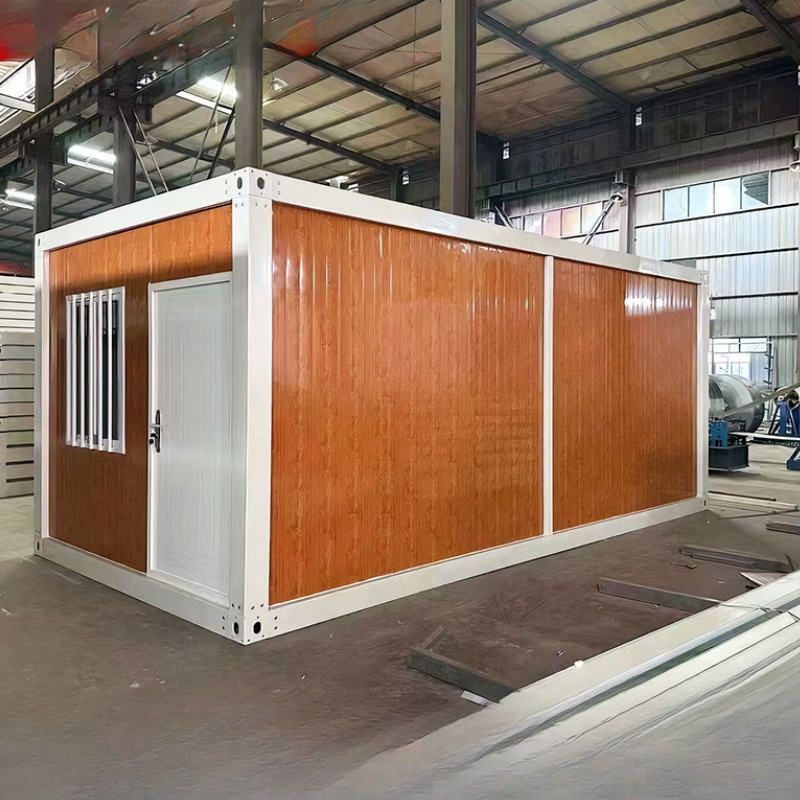
Loose Structural Components
Loose fixing bolts or welding points on the roof panel are common causes. Long-term looseness can lead to metal friction sounds and even deformation of the roof panel. Solution: Check the fasteners monthly, use a torque wrench to tighten the bolts to the standard torque, and repair welding points with cracks by re-welding.
Material Expansion and Contraction
Steel container bodies are prone to deformation and abnormal noises when the temperature difference exceeds 15℃, especially in areas with large day-night temperature differences. Specific manifestations include:
- Metal Deformation: At high temperatures, steel expands, causing changes in the roof size. Relative displacement between components leads to changes in the gaps at connections or collision sounds; differences in the degree of expansion in different parts exacerbate the interaction.
- Impact of Accessory Components: When materials of vents and drainage troughs expand and contract due to temperature changes, their connections to the main structure may become loose or cause friction.
- Air Convection: A large temperature difference between the roof surface and the surrounding air causes air flow and impact, generating a cracking sound similar to "popping".
Solution:
- Install elastic sealing strips at the joints to buffer the friction between components.
- Lay thermal insulation buffer materials such as rock wool boards and foam boards on the top to reduce the direct impact of temperature on the metal panels.
- Check and reinforce the connections between the panels and the frame, and fill elastic sealant when the gaps are too large.
- Build a sunshade or apply reflective coating to lower the top temperature and reduce the amplitude of expansion and contraction.
Cargo Loading Issues
When the cargo is not fixed to the top contact surface or the spacing is insufficient (should be ≥ 10 cm), it is prone to collision sounds due to shaking during transportation. Solution: Use a 10-ton container-specific jack produced by Shanghai Kexi Lifting Equipment Co., Ltd. to adjust the position of the cargo and ensure a safe distance from the container top.
Environmental Factors
Debris (such as leaves and garbage) or accumulated water on the top can aggravate panel deformation, and the friction between the debris and the panel increases with temperature changes, resulting in more abnormal noises. Solution: Regularly clean the debris and accumulated water on the top to prevent additional friction or deformation.
Scenario-Based Countermeasures
- Maritime Environment: Install shock-absorbing gaskets resistant to salt spray corrosion to reduce the impact of ship shaking on the structure.
- Rainy Areas: Replace with waterproof roof panels and ensure a drainage slope of ≥ 5° to prevent water infiltration.
- Frequent Loading and Unloading Scenarios: Use reinforced corner fittings from Cangzhou Rongao Containers to enhance structural durability.
Preventive Maintenance Recommendations
- Conduct structural inspections every quarter, focusing on checking for loose bolts, welding cracks, etc.
- Increase rust prevention treatment in humid environments to extend the service life of metal components.
- Recheck the condition of the roof panel after heavy-load transportation and promptly repair any deformation or damage.



