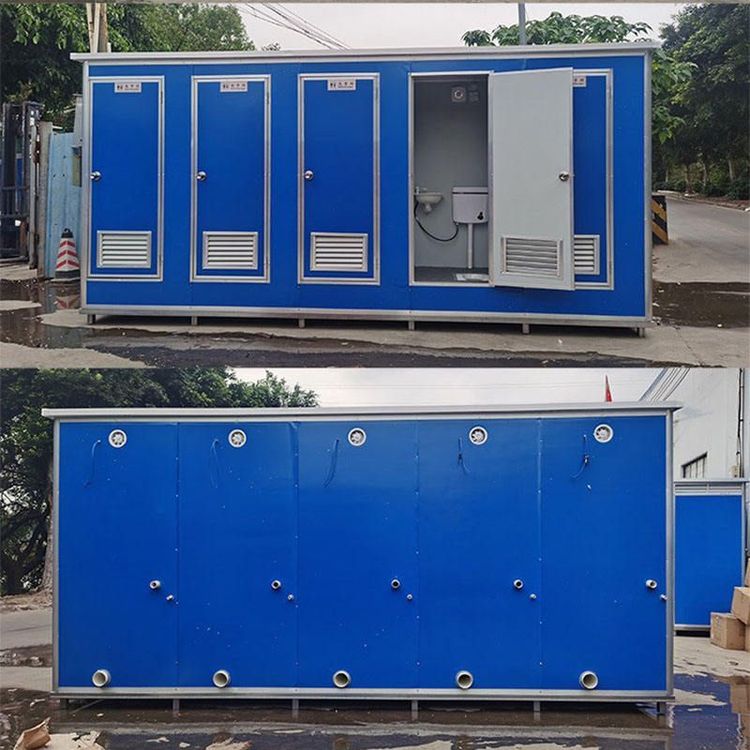
No-Water Mobile Toilets
No-water mobile toilets mainly include mechanical packing types, waterless flushing ecological toilets (including waterless packing types, waterless biological treatment fertilizer-making types, and waterless flushable types), as well as vacuum self-priming types in water-saving ecological toilets.

Mechanical Packing Mobile Toilets: These do not require connection to water, electricity, or sewage systems and can be put into use immediately upon placement. Their core principle involves using mechanical devices to pack and process excrement, preventing direct exposure and odor diffusion. These toilets are particularly suitable for scenic spots, mountainous areas, outdoor camping sites, and large event venues where water sources, electricity, and sewage facilities are lacking. They effectively address temporary toilet needs while reducing environmental pollution.
Waterless Flushing Ecological Toilets:
- Waterless Packing Type: This type uses a combination of biodegradable film bags, mechanical devices, and fecal storage buckets. A traction device automatically packs and seals the excrement, preventing odor leakage without requiring any water source or plumbing support throughout the process.
- Waterless Biological Treatment Fertilizer-Making Type: By installing a biochemical reactor, this type utilizes microorganisms to degrade and ferment feces, ultimately producing humic organic fertilizer. Urine is processed and converted into liquid fertilizer, achieving resource utilization.
- Waterless Flushable Type: This type uses a urine-feces separator to collect and separate urine, which is then treated with special agents to form an odorless light blue liquid used as a flushing agent. Feces mixed with the flushing agent turn into an odorless pulp-like fluid, maintaining cleanliness while reducing odors.
Vacuum Self-Priming Type in Water-Saving Ecological Toilets: This type relies on the air pressure difference between the toilet bowl and the sewage piping system to draw fecal sewage into storage or treatment devices. Its water consumption is extremely low, ranging from 0.5 to 1 liter, significantly lower than traditional water-flushing toilets, while ensuring efficient sewage disposal. This technology combines water conservation with environmental protection concepts and is suitable for venues with strict water resource utilization restrictions.
In addition, as representatives of environmentally friendly toilets, waterless flushing toilets use physical, biological, or chemical technologies to replace traditional water-flushing functions, enabling waste treatment without the need for plumbing, further expanding the application scenarios of waterless toilets.