
Design of Mobile Toilets in Ningxia Scenic Spots
The design of mobile toilets in Ningxia scenic spots focuses on mobility, environmental adaptability, functional integrity, and resource efficiency. Through modular structures and customized configurations, they meet the dynamic needs of scenic spots while considering ecological protection and user experience.
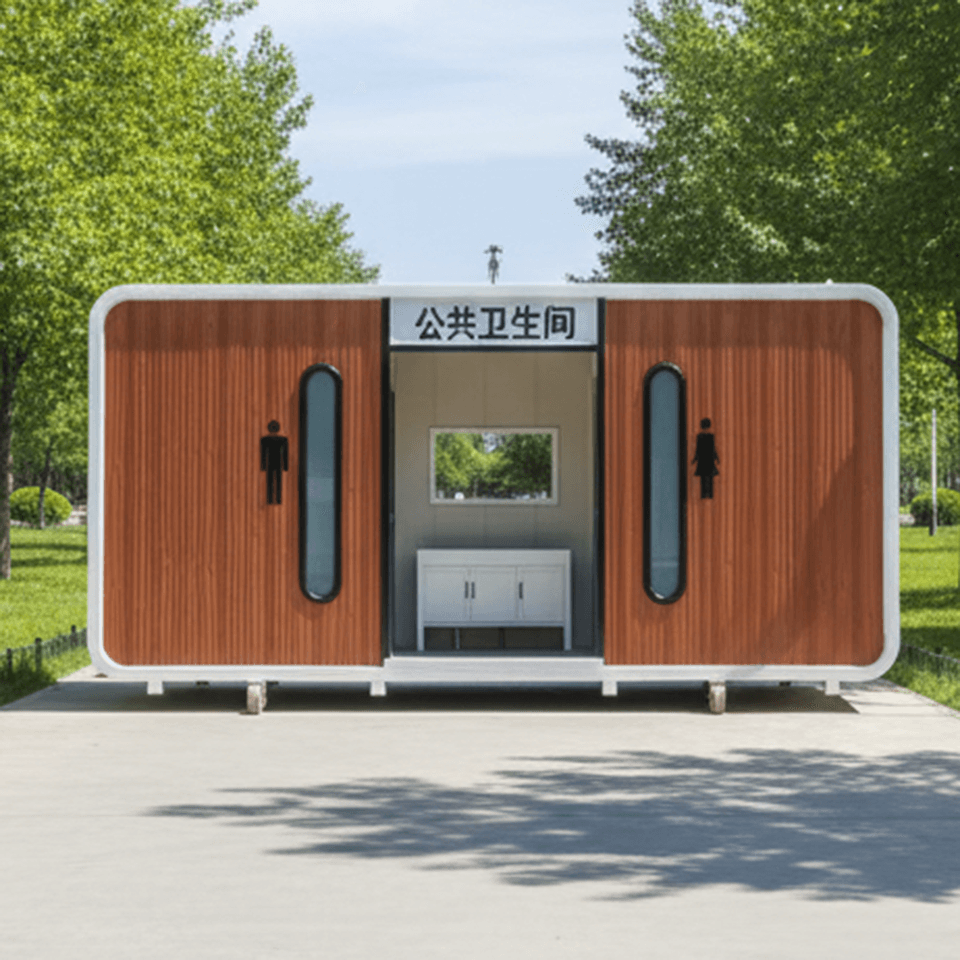
I. Mobility Design
Mobile toilets in Ningxia scenic spots utilize lightweight, high-strength composite materials or galvanized pipe frameworks, ensuring a lightweight yet sturdy structure that facilitates easy towing or modular assembly. There are two types of mobility: Integrated Towing Type equipped with wheels and towing devices for direct transportation to designated locations; Modular Assembly Type assembled quickly using standardized components, minimizing damage to the scenic spot's surface. The toilet modules integrate independent clean water storage tanks and sewage collection tanks, forming a closed-loop water supply and sewage system that does not rely on underground pipelines, further reducing environmental impact.
II. Functional Module Design
- Basic Functions: Equipped with toilets, sinks, lighting, ventilation, and other units internally. Some models incorporate solar power modules, leveraging Ningxia's abundant sunlight to achieve self-sufficiency in lighting and ventilation energy.
- Water Flushing System: Utilizes manual, foot-operated, or sensor-triggered flushing methods, reducing water consumption by 30%-50% compared to traditional toilets. Some models are equipped with wastewater recycling or rainwater collection systems to enhance water resource utilization.
- Waste Treatment: Achieves closed treatment through biological degradation, chemical decomposition, or physical separation techniques, preventing leakage and odor diffusion to ensure environmental hygiene in scenic spots.
III. Environmental Adaptability Design
In response to Ningxia's climate conditions of intense sunlight, large temperature variations, and frequent sandstorms, the toilet materials must possess UV resistance, structural airtightness, and thermal insulation properties. Site selection considers factors such as distance from tourist routes, geological load-bearing capacity, groundwater level, and visual concealment. Installation does not require foundation excavation, only leveling and hardening of the ground, minimizing ecological disruption in scenic spots.
IV. Customization and Maintenance Design
Supports customization based on needs, including roof materials (waterproof), floor types (concrete slab/hard floor), sewage disposal methods (water flush direct discharge/waterless packaging), and power configurations (energy-saving lights/sockets). Management should establish standard maintenance procedures, including cleaning frequency, hygiene product replenishment, and odor control, to ensure hygiene standards align with scenic spot service quality. In the future, IoT sensors may be integrated to monitor overflow status, air quality, and other data in real-time, enabling preventive maintenance and intelligent scheduling.



