
Panels for Mobile Toilets in Ningxia
The panels used for mobile toilets in Ningxia are mainly divided into four categories—wall panels, interior ceiling panels, exterior roof panels, and floor panels—based on different structural components and customization requirements. The specific materials and their characteristics are as follows:
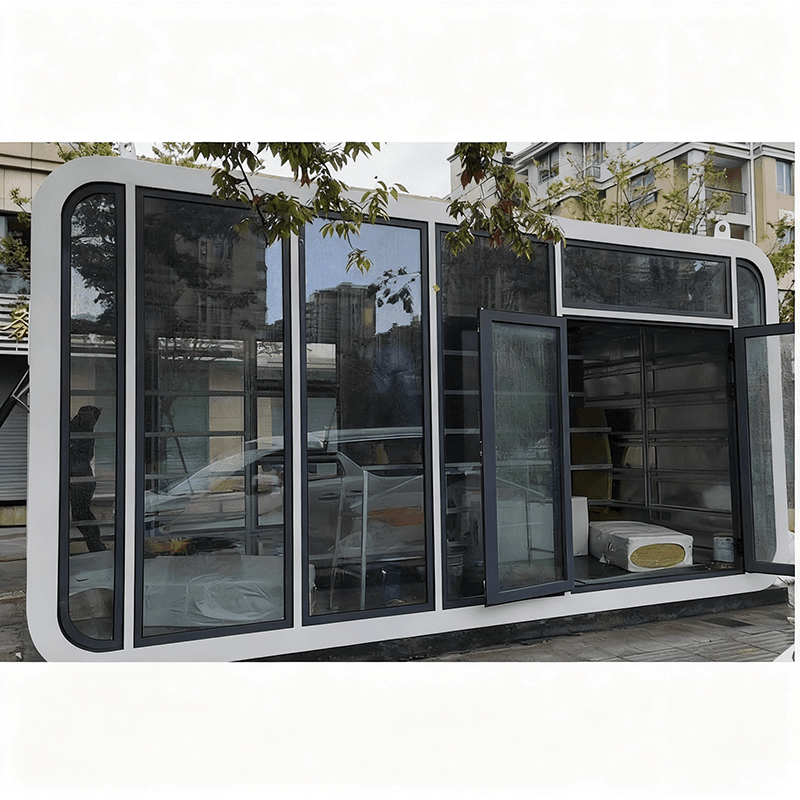
Wall panels are the core part of the mobile toilet structure, requiring a balance of corrosion resistance, thermal insulation, load-bearing capacity, and service life. Common materials include galvanized pipe keels and stainless steel brackets. As support frames, the former enhances rust resistance through galvanization, while the latter ensures long-term stability with stainless steel, both supporting custom sizing. Additionally, fire-resistant painted panels are often used in scenarios with high fire safety requirements due to their flame-retardant surface coating. Color-steel sandwich panels, consisting of two layers of colored steel with polyurethane or rock wool cores, combine lightweight construction, high strength, and thermal insulation, making them suitable for regions with significant temperature variations. Fiberglass-reinforced plastic (FRP), based on glass fiber-reinforced resin, offers strong corrosion resistance and easy cleaning, ideal for coastal or high-humidity environments. Honeycomb composite materials achieve a balance of lightweight design and high strength through a bionic honeycomb structure, while also providing sound insulation, suitable for scenarios with high load-bearing and noise reduction requirements.
Interior ceiling panels must meet requirements for moisture resistance, easy cleaning, and aesthetics. PVC ceiling panels, made from polyvinyl chloride, feature a smooth surface and excellent waterproof performance, allowing direct wiping for cleaning, suitable for high-humidity environments. Aluminum alloy ceiling tiles offer fire and moisture resistance through metal materials, while supporting modular installation for easy maintenance and replacement. Both can be customized in color or texture to match the toilet's interior style.
The core function of exterior roof panels is waterproofing and weather resistance. Typically, high-quality waterproof materials such as high-density polyethylene (HDPE) or modified bitumen membranes are used, with multi-layer composite processes enhancing UV and aging resistance to ensure long-term leak-free performance under extreme weather conditions like heavy rain or intense sunlight. Some premium products also incorporate thermal insulation layers to reduce indoor temperature fluctuations.
Floor panels must balance load-bearing capacity and slip resistance. Concrete panels, based on cement and reinforced with steel bars, offer high load-bearing capacity, suitable for public toilets with heavy foot traffic, though they are relatively heavy. Hard flooring, often referring to non-slip tiles or composite flooring, enhances friction through sanding or anti-slip coatings while being easy to clean, suitable for scenarios with high hygiene requirements. Both can be customized in thickness and shape according to floor slope or drainage needs.



