Ningbo Street Mobile Toilet Design
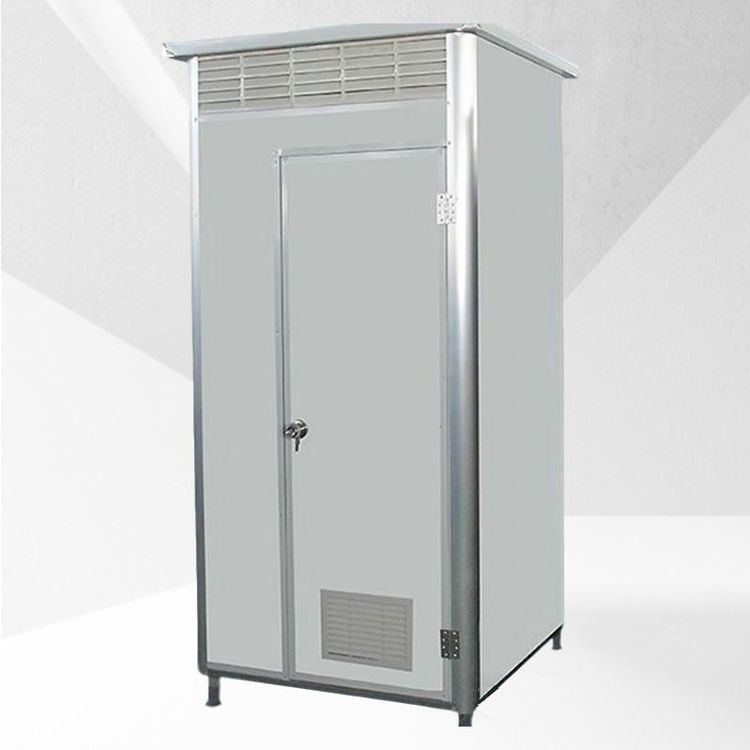
The design of mobile toilets for Ningbo streets is centered around the principles of flexible adaptability, coverage of diverse scenarios, and serving the real needs of the population, while also considering convenience, durability, and environmental protection.

1. Flexible Site Adaptation and Rapid Deployment
The mobile toilets for Ningbo streets adopt a design without fixed infrastructure, eliminating the need for reliance on municipal sewage networks. They can be quickly installed on hardened ground, gravel areas, or even mild slopes. Their modular structure supports multi-point dispersed or centralized group configurations. By adjusting the sewage storage capacity (e.g., configuring several days' capacity for small exhibitions or several months' capacity for long-term construction sites) and flushing methods (e.g., water-saving foam flushing or conventional water flushing), they can adapt to different usage cycle requirements. After being hoisted by transport vehicles, they only need to be connected to a power source or have their built-in batteries activated to be operational. Some models are equipped with rainwater collection and simple purification interfaces to further enhance resource utilization efficiency.
2. Detail Optimization for Different User Groups
The design fully considers the differentiated needs of various user groups:
- Elderly Population: Equipped with anti-slip ramps, handrails, and low-positioned handwashing stations to reduce usage risks;
- Family Users: Offering side-by-side double-unit designs to facilitate parents in supervising their children;
- High-Temperature and High-Humidity Areas: Strengthening ventilation systems (e.g., forced exhaust or optimized natural ventilation) and using antibacterial interior wall materials (e.g., nano-coatings or antibacterial plastics) to reduce odor retention;
- Universal Design: Utilizing corrosion-resistant materials (e.g., stainless steel or high-density polyethylene) and easy-to-clean curved structures internally, with sewage outlets matching the standards of conventional sewage suction vehicles to reduce maintenance costs.
3. Enhanced Durability and Environmental Protection
The outer shells are treated with UV resistance to extend outdoor service life. In winter, optional insulation layers and anti-freezing pipelines can be equipped to prevent equipment damage caused by low temperatures. The sewage system design emphasizes sealing to prevent leakage and environmental pollution, while also supporting connection to municipal sewage treatment systems or regular sewage suction treatment. In terms of resource recycling, rainwater collection interfaces can supplement flushing water, and simple purification devices can treat gray water (e.g., handwashing water) for toilet flushing, reducing freshwater consumption.
4. Economic Efficiency and Operational Convenience
The modular design allows for quick replacement of locally damaged units, reducing overall maintenance costs. The dual-mode power supply of built-in batteries or external power sources adapts to areas without municipal electricity. The sewage storage capacity matches the usage frequency to avoid frequent cleaning or insufficient capacity. Additionally, the outer shell materials are lightweight yet structurally sturdy, balancing transportation convenience with wind and earthquake resistance.
Through scenario-based adaptation, hierarchical satisfaction of population needs, and integration of environmental protection technologies, the mobile toilets for Ningbo streets have achieved the goals of "ready-to-use installation, efficient operation and maintenance, and low-carbon sustainability," providing a flexible solution for urban public facility construction.