News on Prefabricated House Assembly
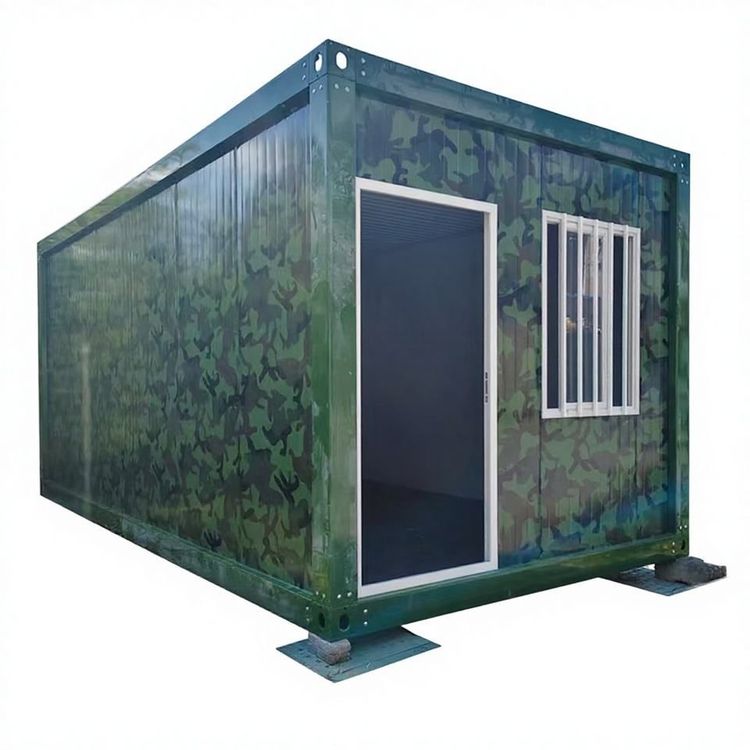
Prefabricated house assembly primarily refers to modular construction, also known as 'prefabricated houses.' It is a building model where houses are disassembled into independent modules, fully manufactured in factories, and then rapidly assembled on-site.

Core Features and Process Flow
Prefabricated assembled houses are centered around modular design, dividing buildings into independent units (such as rooms, corridors, etc.). Each module undergoes full-process production in the factory, including structural, wall, floor, plumbing, electrical, and interior finishing work. With standardized interface designs, modules are transported to the construction site and quickly assembled through lifting, bolting, and pipeline connections to form a complete building. For example, a 16-story building in Longgang, Shenzhen, was assembled from 298 modules and delivered in just 120 days, reducing the construction period by over 60% compared to traditional methods. The Futian Anju Jingxin Yuan project used over 800 modules to complete a 30-story high-rise in 148 days, significantly improving efficiency.
Core Advantages
- Short Construction Period: Factories adopt parallel operation modes, with module production and on-site foundation construction occurring simultaneously. Combined with rapid on-site assembly techniques, this greatly shortens the construction cycle. For example, a senior living real estate project took only 1.5 months from production to occupancy, compared to 2.5 years with traditional construction.
- Quality Control: Factory environments enable millimeter-level precision control. Through laser scanning and drawing comparison techniques, every detail, such as rebar placement and concealed work, meets design standards, reducing human errors.
- Environmentally Friendly and Low-Carbon: On-site construction dust, noise, and construction waste are reduced by approximately 50%. Additionally, modules can be disassembled and reused, lowering resource consumption. For example, Antarctic research stations use prefabricated houses to achieve 'zero-pollution' construction.
- Strong Adaptability: Modular design allows for flexible combinations, adapting to different climates, terrains, and functional requirements. It has been applied in over 150 countries and regions, including Antarctic research stations, European high-rise apartments, and Middle Eastern temporary dormitories.
Application and Promotion
Foreign Ministry spokesperson Mao Ning showcased the 'plug-and-play' nature of prefabricated houses through overseas social media platforms, making them a global focus. Domestically, Shenzhen's prefabricated building scale has exceeded 150 million square meters, with new construction projects expected to account for 64.03% by 2026, marking the transition of prefabricated assembly technology from pilot projects to large-scale application.