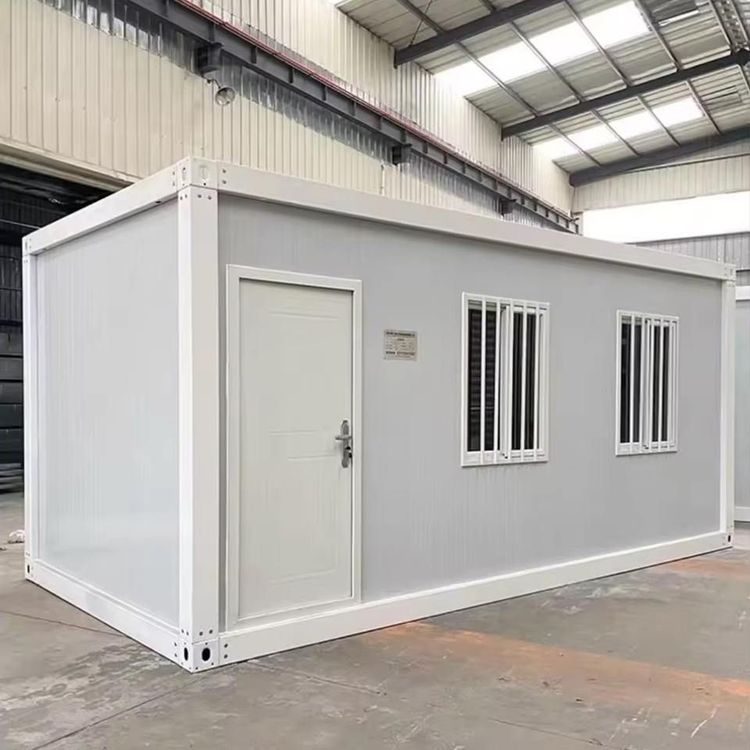
New Type Park Mobile Toilet
The new type park mobile toilet has various types, composition structures, classification methods, and design principles, as detailed below:

Types:
- Micro Smart Public Toilet: It is 1.15 meters wide and 2.45 meters high, equipped with an air conditioner that keeps it warm in winter and cool in summer, a fresh air system, intelligent lighting, intelligent disinfection, and an intelligent sensor-based flushing system. It provides a comfortable user experience and reduces manual maintenance.
- New Chinese-style Mobile Toilet: It features a flat roof design with a red wood-grain effect on the exterior walls. There is a public hand-washing area in the middle, equipped with a bathroom cabinet and a beauty mirror, and it has three squatting positions. It combines practicality and aesthetics, making it suitable for integration into traditional garden environments.
- Special-shaped Mobile Toilet: It has a galvanized steel frame structure, which is sturdy and durable, with a lifespan of over 15 years. The exterior wall panels are orange brick-patterned, which are visually appealing and corrosion-resistant, making it suitable for long-term outdoor use.
Composition Structure:
Mobile toilets are generally composed of fecal sewage storage tanks (or fecal sewage treatment devices), floor slabs, sanitary ware, walls, hand-washing equipment, water tanks, roofs, and mobile devices. Among them, the fecal sewage storage tanks or treatment devices are used to collect or treat excreta; sanitary ware includes squatting pans, sitting pans, etc.; hand-washing equipment includes sinks, faucets, etc.; and the mobile device supports overall handling or disassembly and assembly.
Classification Methods:
They can be classified by structural form into single-unit and connected types; by mobility into hoisting, towing, and self-propelled types; and by sewage treatment method into direct discharge, packaging, and biodegradation types. Different classifications meet the needs of different scenarios. For example, the biodegradation type is suitable for areas without sewage pipelines.
Design Principles:
They adhere to six principles: mobility, cost-effectiveness and durability, environmental protection and ecology, environmental friendliness, efficiency improvement, and humanitarian promotion. For example, lightweight materials and modular design are used to enhance mobility; corrosion-resistant materials are selected to extend service life; water-saving technologies and solar power supply are employed for environmental protection; and barrier-free facilities are set up to reflect humanitarian care.
The new type park mobile toilet effectively solves the problems of strong fixity, high maintenance costs, and poor environmental adaptability of traditional public toilets through diversified design, scientific composition, and humanized principles, becoming an important facility in modern urban parks, scenic spots, and other public places.