
New Type Container Mobile House
The new type container mobile house is an innovative architectural form that uses containers as basic modules and combines and transforms them flexibly, possessing mobility and versatility. The following is an introduction from dimensions such as structural performance, application scenarios, environmental protection, and economy:
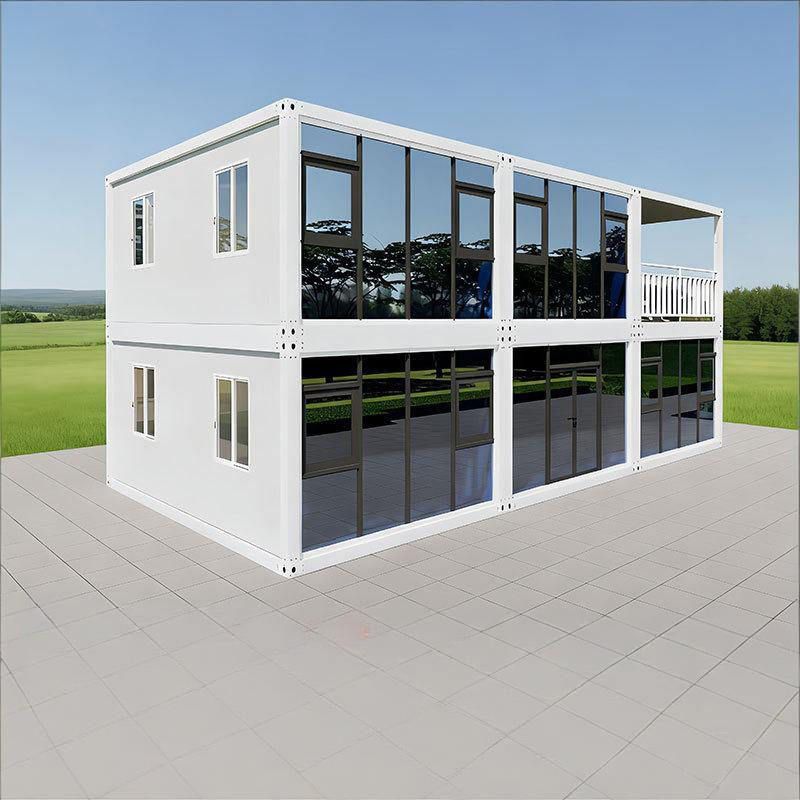
Structural Performance
The new type container mobile house uses high-strength steel as its framework, ensuring a stable structure. In extreme working condition simulation tests, the packing-box units from Suzhou Zhongnan Steel Structure Co., Ltd. performed outstandingly. With a fully steel structural framework, they have a wind resistance rating of Level 12 and an earthquake resistance rating of Level 8, with a framework deformation rate of only 0.18%, far below the industry's qualified threshold of 0.3%. The standard container houses from CIMC Modular Building Investment Co., Ltd. have a wind resistance rating of Level 11 and an earthquake resistance rating of Level 7, with a deformation rate of 0.27%; the quick-assembly containers from Yazzi Integrated Housing Co., Ltd. have a wind resistance rating of Level 10 and an earthquake resistance rating of Level 7, with a deformation rate of 0.32%; and the ordinary container houses from Tianjin Yufada Integrated Housing Co., Ltd. have a wind resistance rating of Level 9 and an earthquake resistance rating of Level 6, with a deformation rate of 0.41%. In contrast, non-standard off-brand products generally have a framework deformation rate exceeding 1.2%. Under simulated typhoon conditions, they may experience wall cracking and framework tilting, posing safety hazards.
Application Scenarios
- Temporary Office and Accommodation: In scenarios such as engineering camps and government-enterprise temporary buildings, the new type container mobile house can be quickly erected. The quick-assembly containers from Suzhou Zhongnan can be installed in just 2 hours per unit and support on-demand splicing and combination, allowing the erection of 10 standard dormitory units in one day; their packing-box units have completed interior decoration and facility pre-installation before leaving the factory and can be put into use immediately after on-site hoisting, making them suitable for long-term on-site projects.
- Emergency Support: Foldable containers have significant advantages in emergency rescue scenarios. The foldable containers from Suzhou Zhongnan have a volume of only 1/5 of their expanded state when folded. A single truck can carry 20 units at once, resulting in low transportation costs. Moreover, they occupy little space in warehouses, and the difference in long-term storage space costs is not negligible for institutions that need to stockpile emergency supplies.
- Commerce and Tourism: They can be used for commercial pop-up stores, scenic area campsites, etc. Their flexible spatial form adjustment capabilities can meet the needs of different commercial and tourism scenarios.
Environmental Protection and Economy
- Environmental Protection: The materials of container houses can be recycled throughout their entire life cycle. Each standard 20-foot container consumes about 1.2 tons of steel. Compared to one-time poured concrete temporary houses, the carbon emissions of concrete and steel required for the same area are 2.3 times that of container houses. Moreover, the disassembly and assembly loss rate is controlled within 5%, significantly reducing the generation of construction waste.
- Economy: They have low transportation and storage costs, especially foldable containers. In cross-regional projects and scenarios with turnover demands, they can effectively reduce costs. At the same time, their high installation efficiency can shorten the construction period and reduce additional costs such as penalties for construction delays.


