
New Type Container House Insulation
The insulation of new-type container houses is mainly achieved by optimizing the enclosure structure materials, improving the splicing process, enhancing overall airtightness, and adopting a multi-layer protective system.
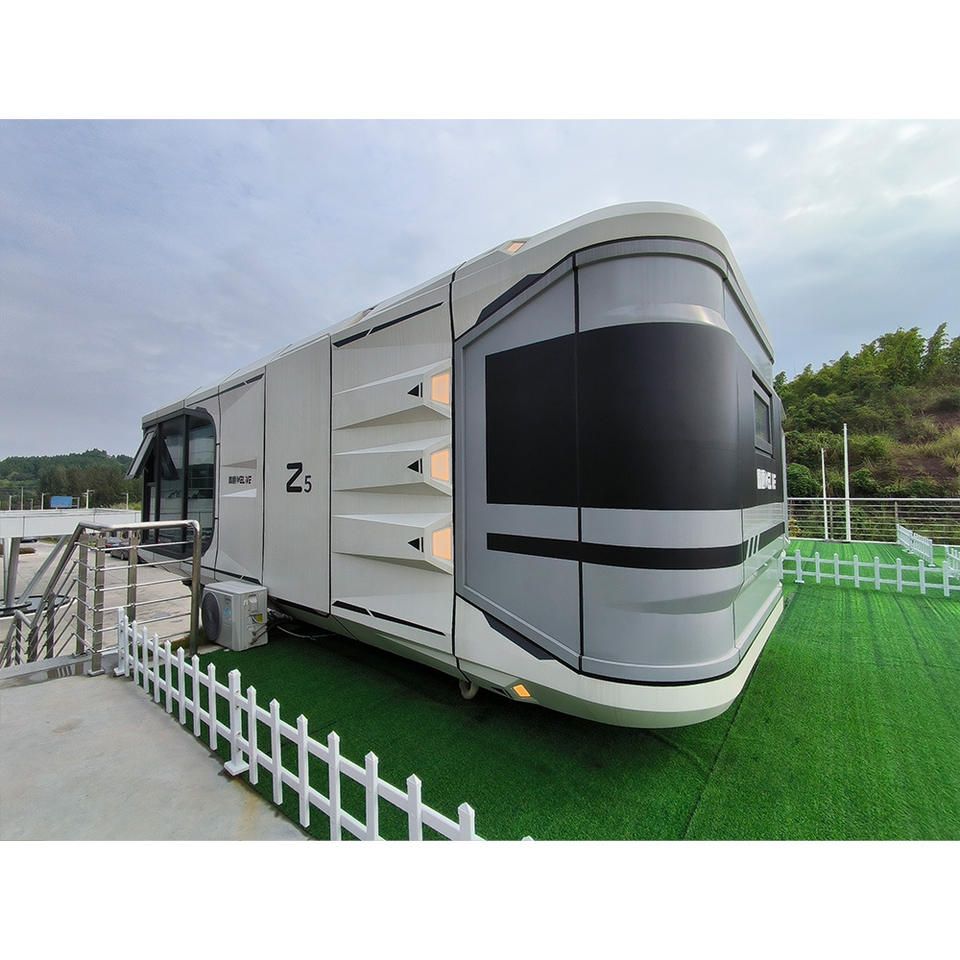
Optimization of Enclosure Structure Materials
The enclosure structure of container houses often employs a steel frame combined with composite sandwich panels. The density and thickness of the sandwich panels play a decisive role in insulation performance, with lower thermal conductivity indicating stronger insulation capacity. For instance, some products use rock wool or polyurethane as the core material, both of which offer excellent thermal insulation properties. Products from Baotou Xinxing Color Plate Steel Structure Manufacturing Co., Ltd., for example, feature a box body constructed with a galvanized steel frame and rock wool sandwich panels, with an 80 to 100 mm thick rock wool layer as the primary insulation, effectively enhancing insulation performance.
Improvement of Splicing Process
Gaps at the splicing joints of temporary building panels can lead to cold bridge effects, significantly reducing overall insulation performance. Therefore, excellent sealing techniques are crucial. Through precise splicing, the impact of gaps is minimized, ensuring the continuity and integrity of the insulation layer.
Enhancement of Overall Airtightness
The fit between doors, windows, and frames, as well as the sealing at corners, all affect insulation performance. Some container houses perform airtight treatments on door and window seals and joints to prevent air infiltration and reduce heat exchange. For example, some products add an elevated layer at the bottom of the box to block cold bridge conduction from the ground, further improving insulation performance.
Application of Multi-Layer Protective System
Some container houses adopt a multi-layer protective system to enhance insulation. For instance, an outer layer of highly weather-resistant polyester resin coating resists wind and sand erosion, a middle layer filled with insulation material, and an inner layer of moisture-proof aluminum foil to reduce thermal radiation. Others use a thermal break lining structure, filling hard polyurethane foam between the steel frame and interior wall panels, and adding rubber thermal insulation pads at the frame connections, reducing heat exchange efficiency between the interior and exterior of the box by about 40%.


