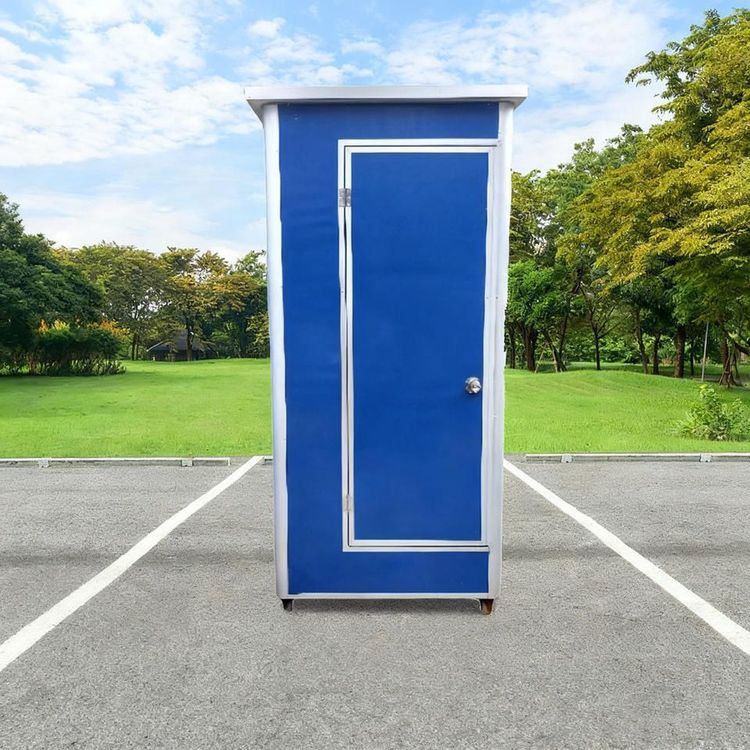
News on New Mobile Public Toilets
Multiple regions in Sichuan and Shaanxi are actively promoting the construction of new mobile public toilets to enhance public service levels and environmental protection efficiency.

Sichuan: Mobile Toilets Cover Scenic Spots, Cities, and Rural Areas, with Technological Upgrades Aiding Environmental Protection
Sichuan has extensively deployed mobile public toilets in its tourism and urban construction sectors. In scenic spots, popular destinations such as Jiuzhaigou and Emei Mountain have installed over 2,000 sets of mobile toilets, with an average spacing of 500 meters, meeting the daily demand of 100,000 people during peak hours. In urban applications, Chengdu and Mianyang have added 1,200 sets of intelligent mobile toilets during major events (such as the 2025 Chengdu Universiade), equipped with sensor-based flushing and remote monitoring systems to improve management efficiency. In rural pilot projects, over 300 ecological mobile toilets have been built in Liangshan Prefecture and Aba Prefecture, utilizing microbial degradation technology to convert fecal waste into organic fertilizer on-site, achieving both water conservation (e.g., 4,625 cubic meters of water saved by 5G smart toilets in Dayi County) and carbon reduction (227 tons of carbon reduced).
Dayi County, Chengdu: 5G Smart Toilets Enable Precise Management and Resource Recycling
Dayi County has constructed three 5G smart toilet stations, using digital monitoring systems to track usage frequency and fecal waste treatment status in real-time for precise scheduling. The core technology is microbial degradation, which eliminates odors and pollution without water flushing, converting fecal waste into organic fertilizer for agricultural use, forming a closed resource loop. To date, these toilets have served 800,000 people, demonstrating significant water conservation and carbon reduction effects, providing a replicable model for rural tourism and ecological protection.
Xi'an, Shaanxi: Mobile Public Toilets Address Public Health Challenges, with Party Building Leading Efficient Implementation
The Taiyi Road Subdistrict in Xi'an has addressed the "toilet shortage" issue along Andong Street by launching two mobile public toilets through a party-building collaboration mechanism. Scientific site selection: The first toilet is located in the core area of the morning market to meet peak demand, while the second is near businesses and elderly communities, benefiting the Jian Dong Street community. Collaborative progress: The subdistrict party committee, in conjunction with units such as Shaanxi Third Construction Group, swiftly resolved issues like water and electricity supply to ensure the toilets' timely use. This model highlights the flexibility and public welfare value of mobile public toilets in densely populated urban areas.
Summary: The construction of new mobile public toilets, through technological innovations (such as intelligent management and microbial degradation) and scientific planning (covering scenic spots, cities, and rural areas), effectively alleviates the toilet shortage problem while promoting resource recycling and low-carbon development, serving as an important practice for upgrading public services.