
New Material Prefabricated Housing
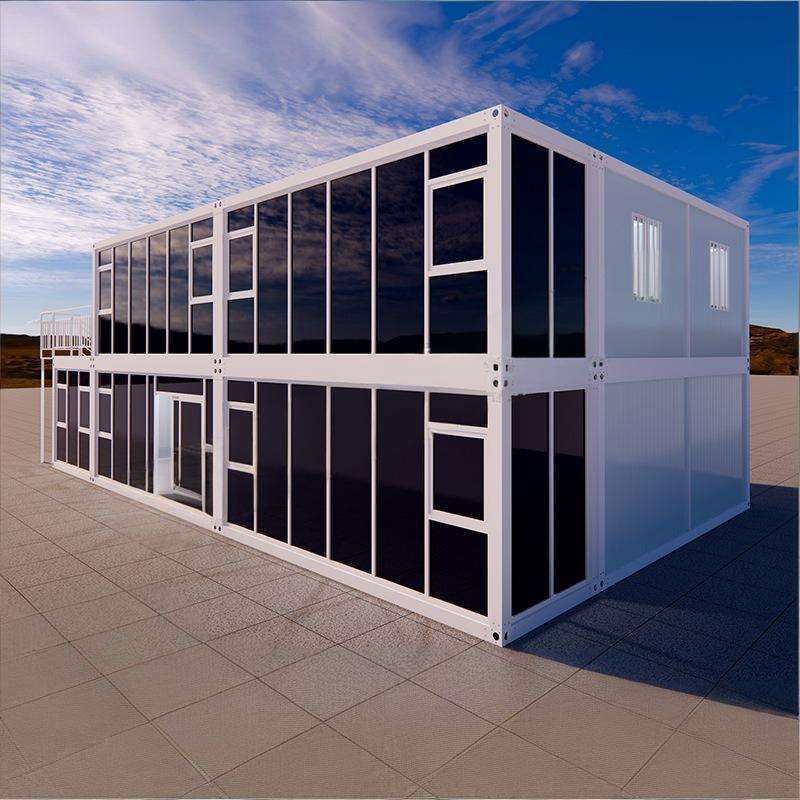
New material prefabricated housing is a building form that involves the industrial production of building components and their on-site assembly, encompassing prefabricated concrete structures and steel structures, with significant advantages such as shortened construction periods, reduced pollution, and controllable quality.
Technical Characteristics and Structural Advantages
The core components of new prefabricated housing (such as beams, slabs, walls, and columns) are prefabricated in factories, utilizing steel-concrete composite structures to enhance load-bearing and seismic resistance. For example, the CMC composite module significantly improves seismic resistance through steel-concrete integrated pouring technology, reducing the construction period by 30% compared to traditional methods. Some systems increase steel usage by 40% compared to traditional reinforced concrete structures, but ensure structural stability by controlling errors to the millimeter level through high-precision positioning. Prefabricated components come in various forms, including steel, concrete, and wood: steel structures are lightweight and suitable for ocean transportation; concrete structures offer a more traditional living experience; and wooden components are used in specific scenarios.
Application Scenarios and Efficiency Improvements
In the Shenzhen affordable housing project, 6,028 concrete modules were assembled to form a nearly 100-meter-high residential building, reducing the completion and delivery period from 2.5-3 years to 1 year and decreasing on-site labor by approximately 50%. Modular construction integrates structural, mechanical, electrical, and finishing prefabrication, shortening the construction period by more than 60% and significantly reducing labor and time costs. Additionally, China's export of prefabricated housing has grown significantly: in the first four months of 2026, the Guangzhou Customs district exported movable houses worth 1.4 billion yuan, a year-on-year increase of 38.1%; Shenzhen Port exports reached 1.68 billion yuan, a year-on-year increase of 19.6%, reflecting international demand for industrialized construction.
Comparison with Traditional Prefabricated Panel Houses
Traditional prefabricated panel houses (such as those built before 1985) suffer from weak seismic resistance, poor sound and thermal insulation, and are gradually being replaced by cast-in-place concrete and prefabricated structures. Existing traditional buildings are primarily renovated, with only dangerous buildings being demolished. New prefabricated housing addresses the shortcomings of traditional buildings through industrial production and standardized design, achieving a balance between environmental protection and efficient construction.
Development Trends and Challenges
With technological advancements, new prefabricated housing is moving towards intelligence and green development, such as integrating photovoltaic panels and intelligent temperature control systems. However, its promotion still faces challenges: high initial investment costs require the improvement of industrial chain support; some regions have insufficient awareness and acceptance of prefabricated construction, necessitating stronger policy guidance and market education.



