
New District Temporary Mobile Toilet
The new district temporary mobile toilet, taking Binhai New District as an example, is a mobile toilet with various technical types, reasonable facility structures, standardized installation processes, comprehensive maintenance management, clear cost compositions, and specific application scenarios. Some areas have also undergone upgrades.
Technical Types: They are divided into biodegradable and chemical treatment types. The biodegradable type relies on microbial decomposition and does not require connection to a sewer, making it suitable for temporary outdoor activities. The chemical treatment type decomposes waste by adding chemical agents and is commonly used in situations requiring rapid installation. Both types can operate independently without being restricted by fixed pipelines.
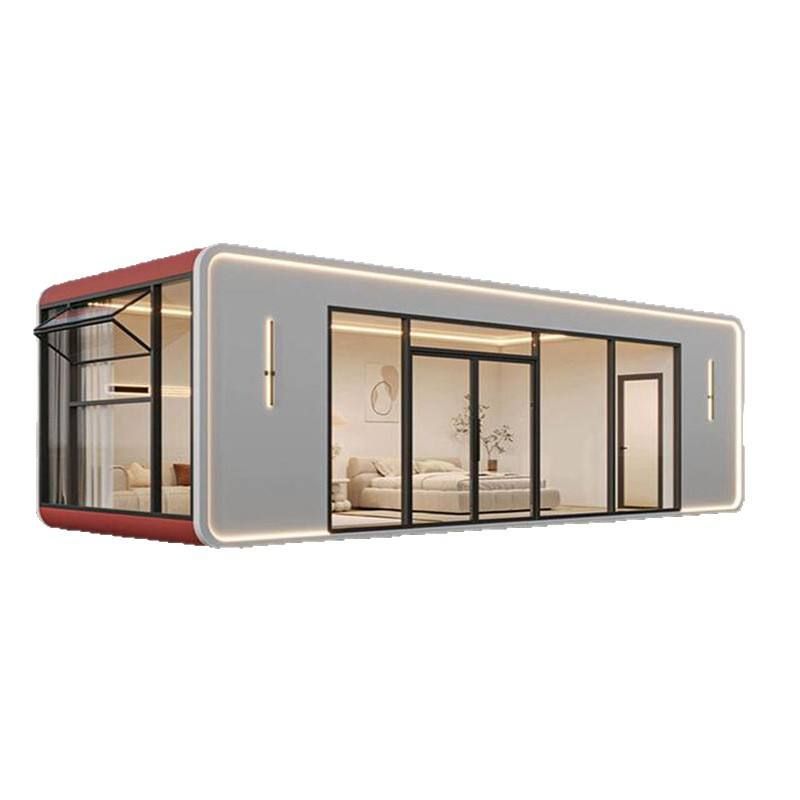
Facility Structure: It usually consists of a stainless-steel frame and walls made of environmentally friendly composite materials. The frame uses lightweight alloys to ensure easy transportation, while the walls are mostly made of polyethylene materials with both heat insulation and corrosion resistance properties. Internally, it is equipped with a ventilation system, lighting equipment, and water-saving flushing devices, with some models integrating solar power supply modules. The spatial layout follows ergonomic standards, with the floor area of a single room typically controlled between 1.2 square meters and 2 square meters, and the internal height maintained at around 2.1 meters. The partition design takes into account the need for barrier-free access, with some models equipped with ramp channels and handrails.
Installation Process: It involves two stages: ground assessment and equipment positioning. Construction personnel first test the ground's load-bearing capacity and select a fixation plan according to soil conditions. After the equipment is in place, it needs to be leveled, and then the water storage container and waste collection system are connected. The entire process does not require foundation engineering and can usually be completed within four hours.
Maintenance Management: It includes two aspects: daily cleaning and regular maintenance. Cleaning operations use special disinfectants to treat contact surfaces, and waste containers are emptied every 24 to 72 hours depending on usage frequency. Mechanical components are checked for sealing performance monthly, and drainage pipes undergo pressure tests quarterly. All maintenance records are archived for future reference.
Operating Costs: They consist of rental fees and consumable expenses. The daily rental price of basic models ranges from 80 yuan to 150 yuan, depending on equipment functions and rental duration. The monthly cost of replenishing biodegradable agents or chemical treatment agents is approximately 15% of the rental fee. In terms of energy consumption, the average daily power consumption of LED lighting systems does not exceed 0.5 kilowatt-hours.
Application Scenarios: They are mainly concentrated in temporary gathering places, construction sites, coastal sightseeing belts, and other areas. Temporary gathering places usually choose a high-density configuration mode, with 3 to 4 units provided per 100 people. Construction sites adopt a modular layout and adjust positions according to the progress of the project. The installation locations in coastal sightseeing belts take into account tidal patterns, with the installation positions being more than 2 meters above the average high tide level. Some areas, such as Pudong New District, have also undergone upgrades, focusing on harmony and aesthetics, refining convenient designs, creating 'elderly-friendly and child-friendly toilet rooms,' and adding 'sanitation stations.'



