
Back to blog
Article
Negative Pressure Mobile Toilet
Admin September 28, 2026
The negative pressure mobile toilet is an environmentally friendly sanitation facility that uses vacuum negative pressure technology and air power instead of water power to transport waste. It features water conservation, hygiene, and strong adaptability.
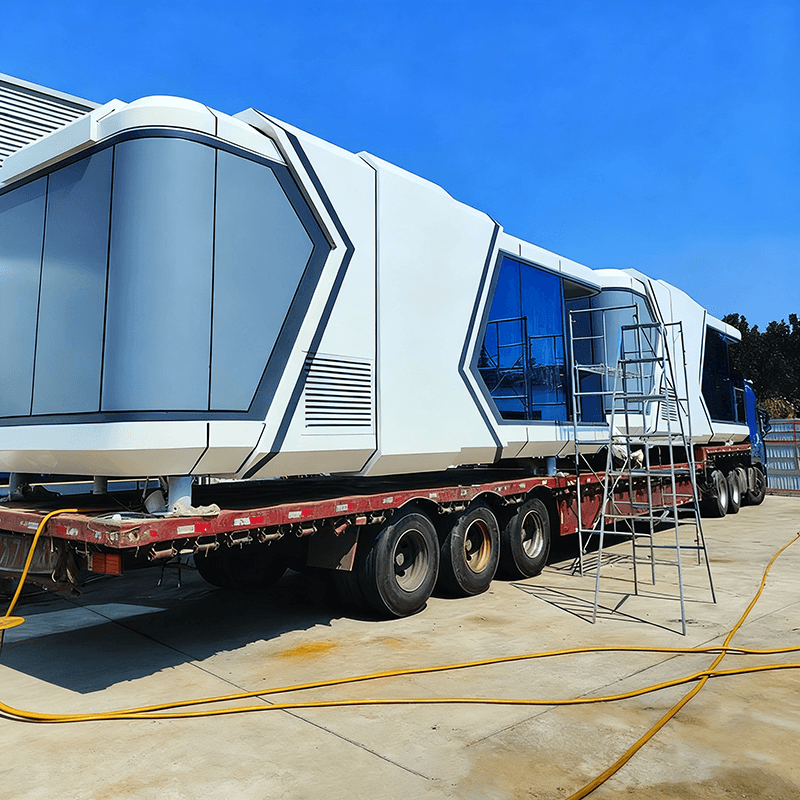
Core Working Principle
The negative pressure mobile toilet achieves waste transportation through vacuum negative pressure technology, with the specific process divided into three steps:
- Flush Initiation: After the user triggers the flush button, the built-in valve in the system opens instantaneously, creating high-speed airflow inside the toilet bowl and pipeline.
- Negative Pressure Differential Formation: The high-speed airflow generates a strong negative pressure differential, instantly tearing solid and liquid waste away from the surface of the toilet bowl and sucking it into the pipeline at high speed.
- Closed Transportation: The entire process takes place in a semi-closed space that isolates air circulation. Waste is transported through a closed pipeline to a storage or treatment unit, preventing odor leakage.
Technical Advantages
- Extreme Water Conservation: A single flush requires only 0.5 to 1.5 liters of water, achieving a water-saving rate of 70%-90%. This is far below the national water-saving public toilet standard (≤4.8 liters per flush), making it suitable for water-scarce regions or high-frequency usage scenarios.
- Hygiene and Safety: By using “instant high-speed sealed transportation and closed pipeline storage and treatment,” it isolates odor sources, reduces the risk of cross-infection and microbial exposure, and is particularly suitable for places with strict hygiene requirements, such as hospitals and schools.
- Strong Environmental Adaptability: It does not rely on hydraulic gradients or gravity flow, allowing it to handle complex terrains. It supports long horizontal pipelines (e.g., hundreds of meters) and vertical climbs (e.g., multi-story buildings), making it suitable for underground spaces, cross-terrain pipelines, or remote areas.
Application Cases
- Sichuan Zhongneng Environmental Protection Technology Co., Ltd.: It has applied vacuum negative pressure technology to various types of toilets, including mobile, civil engineering, vehicle-mounted, and trailer-mounted models, successfully implementing them in scenarios such as the Xinjiang Grand Theater, Dujiangyan High-Speed Railway Station, and the second basement level of a parking lot.
- Shanghai Huajie Ecological Environment Engineering Co., Ltd.: In 2015, it launched a negative pressure drainage water-saving toilet, serving large-scale events such as the Beijing Olympics and Shanghai World Expo, meeting sanitation needs under high pedestrian traffic density.
- Changzhou Runlong: By combining negative pressure intelligent deodorization technology with high-end interior decoration, it has introduced luxury mobile restrooms that enhance user experience while maintaining environmental performance.
The negative pressure mobile toilet addresses the issues of water resource consumption, hygiene risks, and terrain limitations in traditional toilets through technological innovation, becoming an important direction for modern environmentally friendly sanitation facilities.



