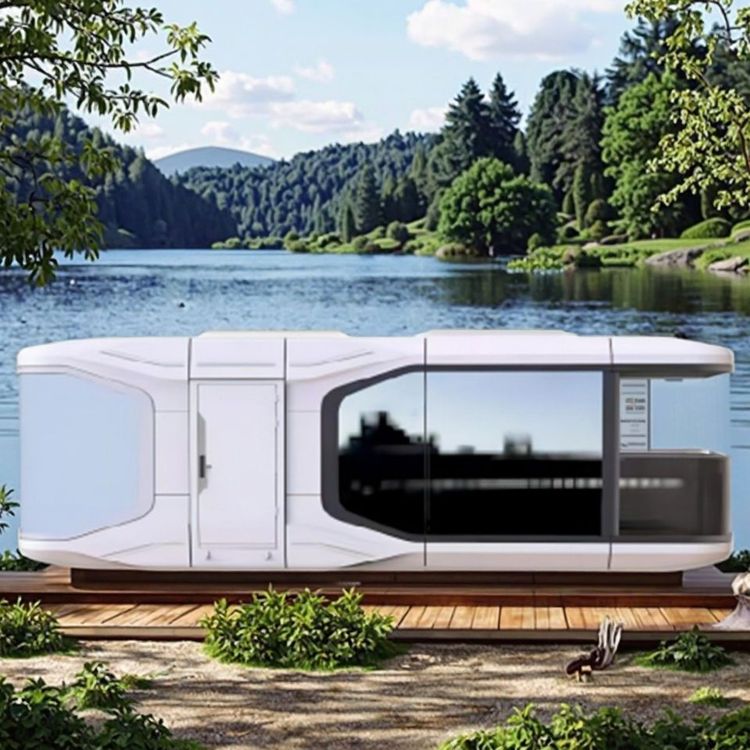
Natural Wood-Colored Mobile Toilet
The natural wood-colored mobile toilet is a mobile restroom that primarily uses natural wood as its external facing or structural material. It features natural environmental protection, aesthetic appeal, and durability, making it suitable for locations with high landscape requirements. It offers diverse functional configurations but comes at a relatively high cost.

Materials and Craftsmanship: The core material of the natural wood-colored mobile toilet is natural wood, such as high-quality imported Russian Scots pine, Finnish wood, and Merbau. Its structure combines traditional mortise-and-tenon joinery with modern steel framing, preserving the natural beauty of the wooden structure while enhancing overall stability and durability. The wood undergoes rigorous anti-corrosion, insect-proof, and waterproof treatments to ensure a service life of 15-20 years.
Cost and Maintenance: The cost of a natural wood-colored mobile toilet is significantly higher than that of ordinary color-steel or metal-clad panel toilets. This is due to high material costs, complex processing techniques, and higher long-term maintenance expenses. The wood requires regular painting or application of wood wax oil to prevent cracking, deformation, and decay. Maintenance cycles and costs should be factored into long-term cost considerations.
Suitable Scenarios: Natural wood-colored mobile toilets are best suited for natural scenic areas, ecological parks, high-end resorts, characteristic homestays, ancient towns, and other locations with extremely high requirements for architectural appearance and environmental harmony. Their natural, rustic texture seamlessly blends into the natural environment, enhancing the overall aesthetic and avoiding the abruptness of artificial structures on the landscape.
Functions and Configurations: Natural wood-colored mobile toilets can integrate modern sanitary facilities with flexible internal configurations. Sewage disposal methods include flushing, packaging, and microbial degradation. For example, microbial degradation toilets do not require traditional plumbing, making them environmentally friendly and pollution-free, suitable for scenic areas or rural locations with limited water access. When purchasing, it is essential to clarify the sewage disposal method (e.g., direct flushing, storage-type, biological degradation) and whether insulation is required (additional heating tapes and electric heaters are needed in cold northern regions).
Similar Products: There are similar products on the market, such as the "3+1 wood-grain-colored mobile flushing direct-discharge toilet." However, the specific materials and craftsmanship of these products are not detailed. Further verification is needed to determine whether they use natural wood and anti-corrosion treatments to assess whether their performance and cost are comparable to those of natural wood-colored mobile toilets.