
Mobile Toilets for National Day Celebration
Mobile toilets played a crucial role during the National Day celebration, meeting the toilet needs of large crowds and enhancing public health security efficiency through refined management, intelligent monitoring, and the application of environmental protection technologies.
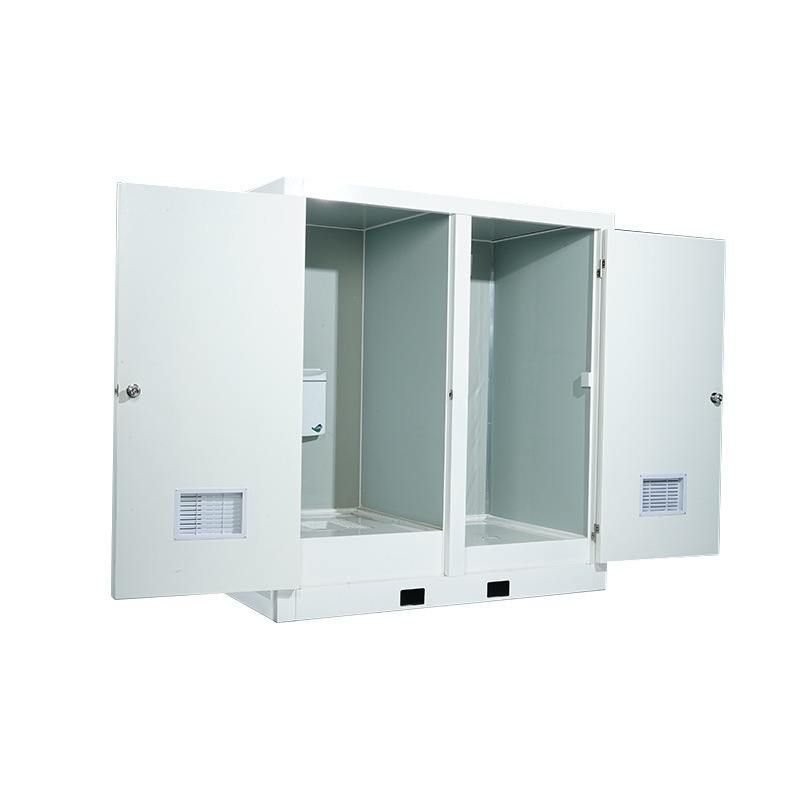
Quantity and Type Configuration
At the grand gathering celebrating the 70th anniversary of the founding of the People's Republic of China, Beijing Environmental Sanitation Group deployed 596 mobile toilets around Tiananmen Square and along Chang'an Avenue. These included 3,540 newly produced toilet stalls and 1,505 repaired ones, bringing the total number of toilet stalls to over 5,000, capable of serving hundreds of thousands of military personnel and civilians simultaneously. Based on site characteristics, the mobile toilets were categorized into three types:
- Tent Toilets: Deployed in the core areas with the highest foot traffic, featuring open-space designs for high turnover efficiency and rapid crowd dispersion.
- Trailer Toilets: Resembling vehicles, placed in open areas for easy relocation according to dynamic crowd flow.
- Standalone Toilets: Installed near narrow alleys, adapting to space-constrained scenarios and flexibly filling coverage gaps.
Dynamic Management and Cleaning Mechanisms
The ratio of male to female toilet stalls in mobile toilets can be dynamically adjusted. By removing signs and partitions, a single toilet can switch between male and female configurations within minutes to respond to real-time gender ratio changes. The cleaning team adopts a 'zone responsibility system,'分工(此处英文直接用英文表达职责分配概念) dividing tasks to clean the toilet bowls, floors, and sinks after concentrated usage, ensuring no noticeable odors or debris remain. For example, each toilet is staffed with 2-3 cleaners, with inspections every 15 minutes during peak hours to quickly restore usability.
Intelligent and Modular Technologies
Outdoor mobile toilets in Beijing are generally connected to an Internet of Things (IoT) management platform, using sensors to monitor stall occupancy, cleaning frequency, and sewage levels in real-time. After synchronizing the data with the sanitation department, intelligent scheduling of cleaning and sewage suction vehicles is possible, reducing manual inspection costs. The toilet bodies adopt a modular design, allowing for rapid disassembly and relocation to other sites after events, enabling resource recycling. For instance, disassembling a single toilet takes no more than 2 hours, with a 60% increase in relocation efficiency compared to traditional fixed toilets.
Environmental Protection Technology Applications
Some mobile toilets incorporate water-saving technologies, such as micro-flush systems using only 0.5 liters per flush, an 80% reduction compared to traditional flushing; foam sealing technology that covers excreta with foaming agents for waterless treatment; packing toilets that use biodegradable film bags to collect waste, preventing sewage discharge; and vacuum toilet systems that reduce odor diffusion through negative pressure suction, suitable for high-density crowd scenarios. These technologies limit the average daily water consumption of a single toilet to under 100 liters, significantly reducing environmental impact.



