Back to blog
Article
Nantong Industrial Container Houses
Admin September 13, 2026
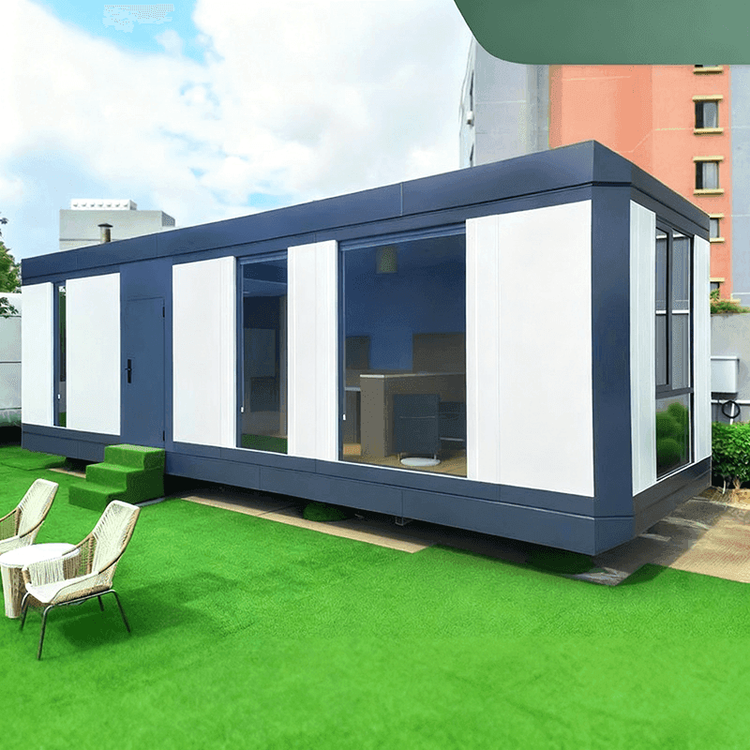
Nantong industrial container houses, represented by Jiangsu Tuowei Integrated Housing Co., Ltd., achieve efficient, eco-friendly, and recyclable construction through modular design and industrialized production.

I. Core Manufacturing Capabilities and Product Types
Jiangsu Tuowei Integrated Housing Co., Ltd. is located in Hai'an City, Nantong, with a 12,000-square-meter production base focused on customized manufacturing of industrial-grade specialty containers and dedicated cabin modules. Its products cover three major areas:
- Basic transport: including specialty containers, equipment containers, non-standard containers, and ocean shipping containers, meeting logistics needs in new energy, power equipment, and related industries.
- Energy and industrial equipment cabins: such as prefabricated power cabins, energy storage containers, and data/computing center containers, providing standardized solutions for energy and data infrastructure.
- Environmental protection and hazardous environments: hazardous waste temporary storage containers, explosion-proof containers, and similar products for chemical and environmental high-risk settings, ensuring safety and regulatory compliance.
II. Technical Innovation: From Industrial Modules to Building Units
- Structural standardization and strength certification: International standard containers share uniform exterior dimensions that form a modular basis for architectural design, ensuring repeatability and interchangeability in component production. Their structures pass rigorous stacking, lifting, and related tests and can be used directly as "structural unit modules" in buildings without secondary structural recalculation, significantly improving construction efficiency and safety.
- Integrated composite panel technology: The corrugated steel side walls and steel frame of a container form the prototype of an envelope system. Insulation materials, interior finishes, and piping can be precisely filled into wall cavities at the factory, creating an integrated "envelope–insulation–interior–equipment" panel. This technology reduces on-site construction steps and lowers the risk of human error.
III. Environmental Advantages and Sustainable Development
- Intensified production processes: Dust and exhaust from cutting, welding, and similar operations are handled centrally in the factory, and production flow is optimized to reduce water and electricity consumption. Precise bills of materials cut scrap waste of steel and insulation materials, controlling resource use at the source.
- Low-carbon on-site construction: Once modules arrive on site, only lifting and utility connections are required, shortening the construction schedule and reducing heavy equipment use, thereby lowering noise, exhaust emissions, and soil compaction impacts.
- Full life-cycle recyclability: Steel container bodies outlast traditional buildings and can be lifted, renovated, and reused multiple times, avoiding the high energy consumption of repeated steel smelting and cement production. Their standard dimensions are compatible with international transport systems, further improving logistics efficiency and resource utilization.
Through modular design, industrialized production, and full life-cycle management, Nantong industrial container houses offer an efficient, eco-friendly solution for modern construction that aligns with sustainable development trends.
Related