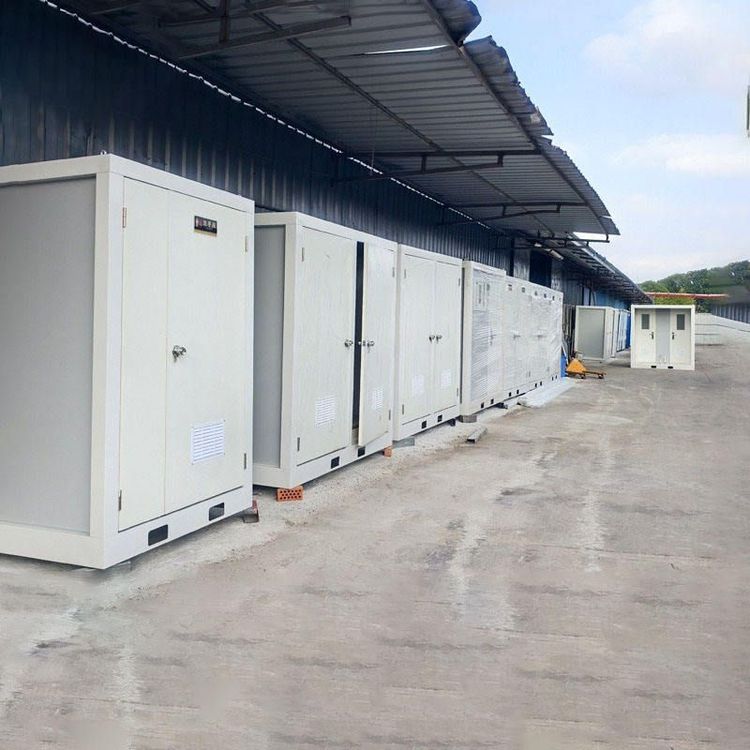
How About Municipal Mobile Toilets
Municipal mobile toilets offer multiple advantages and can effectively meet usage needs in various scenarios.

I. Flexibility and Adaptability
The core advantage of municipal mobile toilets lies in their ease of mobility. They can be relocated as a whole and quickly adjusted in position according to changes in pedestrian traffic or temporary event requirements. For example, they can be flexibly deployed in large gatherings, sports events, and other scenarios, avoiding the waste of resources caused by the demolition of fixed facilities. Their small footprint makes them suitable for space-constrained areas such as narrow city streets and park corners, compensating for the limitations of fixed public toilet construction.
II. Efficient Construction and Resource Conservation
Compared to traditional fixed public toilets, mobile toilets have a short construction period and can be quickly put into use, significantly saving time and labor costs. In terms of resource utilization, some models adopt environmentally friendly materials and energy-saving technologies, such as circulating water flushing systems, solar power, and water-saving designs, reducing energy and water consumption. They are equipped with anti-leakage treatment technology to prevent sewage pollution of soil and groundwater, aligning with sustainable development concepts.
III. Comprehensive Functions and Intelligence
In terms of basic functions, mobile toilets provide facilities such as toilets, sinks, and toilet paper, with some high-end models equipped with flushing systems. Regarding emergency design, waterproof and odor-proof sealed structures combined with emergency lighting and ventilation systems enhance safety during nighttime use. In terms of intelligent management, advanced models use smart sensing systems and monitoring equipment to monitor usage and remind for cleaning and maintenance, reducing manual management costs.
IV. Comfort and Multi-function Integration
High-end mobile toilets enhance user experience through hot water hand washing and humanized service measures. Some models also integrate baby changing stations and emergency medical equipment, becoming comprehensive community service stations that meet diverse needs.
V. Classification and Application Scenarios
They can be classified by structural form into single and composite structures; by mobility into hoisting, handling, powered, and towed types; and by sewage treatment into water flush, waterless suction, circulating water flush, and dry packing types. Their application scenarios are extensive, including construction sites, temporary event venues, and urban areas where fixed public toilet construction is difficult, combining practicality and flexibility.