
Movable Toilet Door Screen
The movable toilet door screen can be customized by combining the dynamic management logic of tidal toilets with the material characteristics of movable screens, with its core function being to achieve flexible spatial separation and dynamic adjustment.
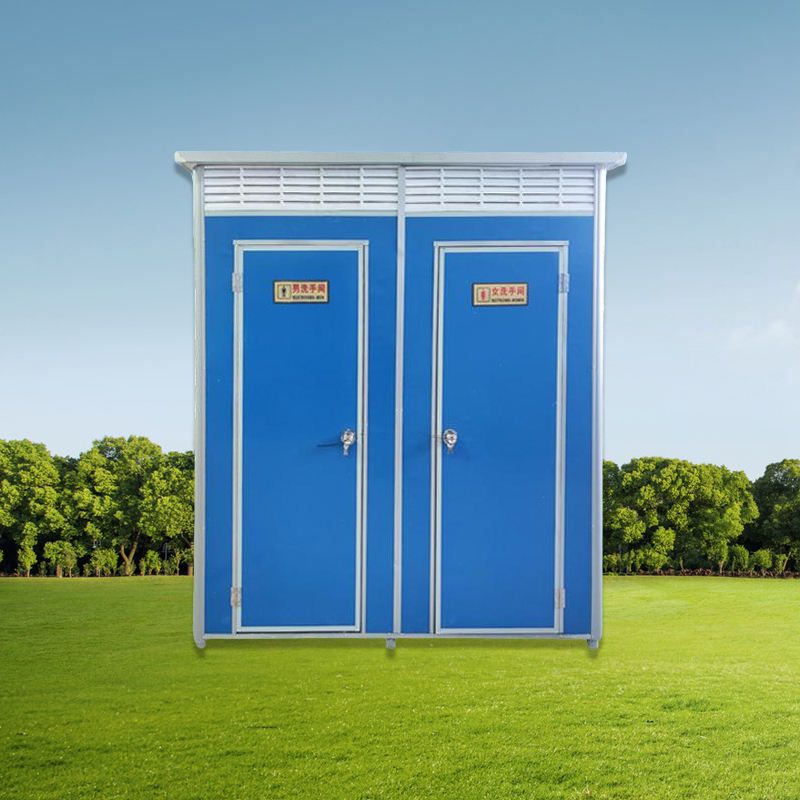
1. Design Logic: Dynamic Adjustment Mechanism of Tidal Toilets
Tidal toilets dynamically adjust the usage permissions of male and female toilet stalls based on real-time foot traffic through movable signs or lockable sliding doors. For example, the tidal toilets at West Lake Scenic Area in Huizhou, Guangdong, adopt this design, temporarily converting some stalls for use by the opposite sex during peak hours to alleviate queuing pressure. This logic can be transferred to the design of movable toilet door screens:
- Adjustable Partitions: The screen should be capable of quick disassembly or movement, such as adopting a sliding or modular structure, enabling position adjustments through sliding rails or buckles.
- Access Control: It can integrate lockable sliding doors or electronic signage systems, controlling the usage status of toilet stalls through physical locks or smart displays to ensure safety and clarity during dynamic adjustments.
2. Material Selection: Moisture Resistance and Durability of Movable Screens
Movable screens are typically composed of aluminum alloy frames and panels of different materials, whose characteristics can provide references for toilet door screens:
- Frame Material: Aluminum alloy is an ideal choice for toilet environments due to its moisture resistance, corrosion resistance, and light weight. Its strength can support the screen structure while avoiding deformation or rusting caused by moisture.
- Panel Material: Materials that are moisture-resistant and easy to clean should be selected based on the usage scenario. For example, compact laminate (high-density fiberboard) has waterproof and fireproof properties, making it suitable for public toilets; if translucency is required, anti-fog glass or acrylic panels can be used, but privacy protection must be ensured.
3. Technical References: Innovative Designs of Bathroom Partition Doors
The technologies of bathroom partition doors (such as glass sliding doors and folding doors) can be applied to toilet door screens:
- Sliding Door Design: Adopt a sliding rail system to achieve silent sliding, reducing space occupation and suitable for narrow toilet layouts.
- Folding Door Design: Connect multiple door panels with hinges, forming a complete partition when unfolded and occupying minimal space when folded, suitable for places requiring quick switching of usage scenarios.
- Modular Assembly: The screen can be designed as standard modules, meeting the size requirements of different toilet stalls through assembly, improving installation efficiency and flexibility.
4. Application Scenarios and Advantages
Movable toilet door screens are suitable for places with high foot traffic during peak hours, such as scenic areas and transportation hubs. Their advantages include:
- Maximizing Space Utilization: Alleviating queuing problems by dynamically adjusting the number of toilet stalls.
- Reducing Maintenance Costs: Modular design facilitates local replacement or repair, extending the overall service life.
- Enhancing Hygiene and Safety: Moisture-resistant materials and easy-to-clean surfaces reduce bacterial growth, meeting public health standards.
For further optimization, smart sensors can be integrated to monitor toilet stall usage in real-time and guide users through an app or display, achieving full-process intelligent management.



