
Movable Toilet Bottom Structure
The bottom structure of movable toilets typically adopts a frame-type design, with channel steel or I-beams as the main materials for welding, and square steel for columns. The overall structure balances strength and lightweight requirements, facilitating lifting, movement, and installation.
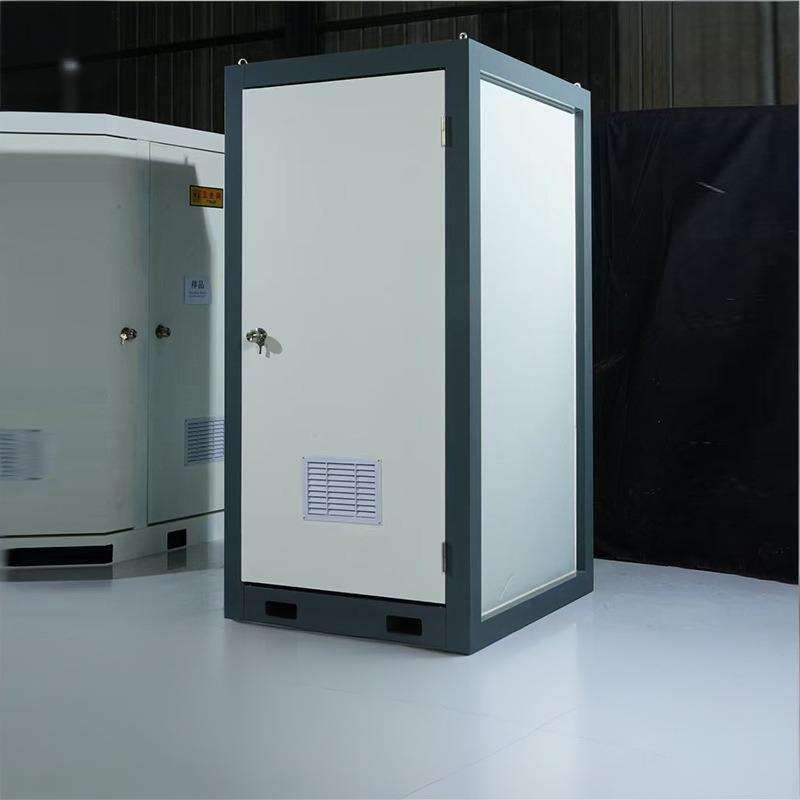
1. Bottom Frame Materials and Structure
The bottom frame of a movable toilet is the core load-bearing component, primarily welded from channel steel or I-beams. Channel steel has an open cross-section, providing strong bending resistance and is suitable for bearing vertical loads. I-beams, with their 'I'-shaped cross-section, offer superior bending and torsional resistance, making them ideal for scenarios requiring higher stability. These two materials are connected through welding to form an integrated frame, ensuring structural stability.
Welding technology is a critical step, requiring uniform welds without pores or cracks to prevent cracking due to stress concentration during long-term use. Some designs also incorporate reinforcing plates or triangular supports at key frame nodes to further enhance local load-bearing capacity.
2. Columns and Support Structures
Columns are typically made of square steel, which has a square cross-section, ensuring uniform force distribution on all four sides and strong resistance to lateral forces. Square steel columns are fixed to the bottom frame through bolts or welding, forming a vertical support system that distributes the top load to the ground. The height of the columns is adjusted according to the overall toilet design to ensure structural stability and prevent tipping risks.
Some movable toilets incorporate horizontal or diagonal support rods between columns to form a truss structure, enhancing overall rigidity. This design is particularly suitable for scenarios with strong winds or uneven ground, effectively reducing structural deformation.
3. Functional and Mobile Design
The frame-type design of the bottom frame not only meets load-bearing requirements but also considers lightweight and mobility. The combination of channel steel and I-beams ensures strength while controlling overall weight, facilitating easy transportation by crane or forklift.
Lifting point design is crucial for mobility. Typically, lifting rings or holes are preset at the four corners or edges of the frame to ensure uniform force distribution during lifting and prevent local deformation. Some designs also incorporate detachable feet or wheels at the bottom to further simplify movement and installation processes.
4. Corrosion Resistance and Durability Treatment
Since movable toilets are often used outdoors, the bottom structure must have corrosion resistance. The steel surface is typically hot-dip galvanized, forming a dense zinc layer that isolates moisture and oxygen, delaying corrosion. Some high-end products also apply epoxy resin paint over the galvanized layer to enhance weather resistance and aesthetics.
Additionally, rubber pads or anti-corrosion wooden boards may be added at the contact points between the bottom frame and the ground to reduce direct friction and prevent ground moisture from eroding the steel, extending the service life.



