
Movable Self-built Toilet House
It is feasible to build a movable toilet house by oneself, and there are various types and production cases.
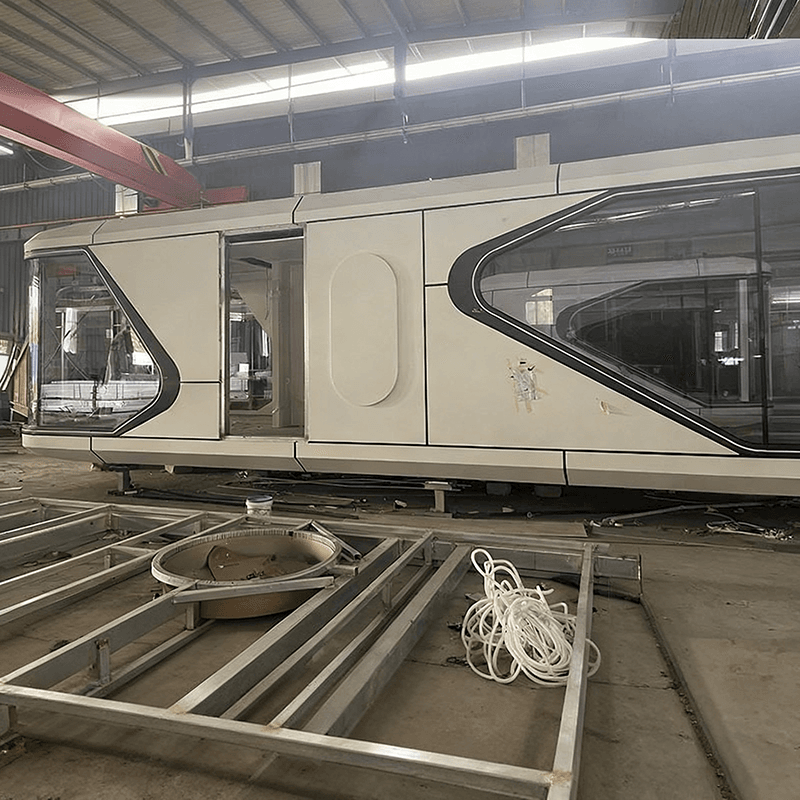
I. Types of Movable Toilets
Movable toilets can be classified into multiple types based on their structural form, mobility method, and sewage treatment approach. For example, a mobile bathroom unit with a wet-dry separation design is a common option. It is typically about 2 meters wide and 3 meters long, featuring an aluminum alloy glass single door. The interior clearly divides the wet and dry areas, and the overall appearance is simple and practical. Additionally, there are container-type movable toilets, which are quickly constructed by modifying standard containers and are suitable for construction sites and temporary events. Trailer-mounted movable toilets are equipped with mobility devices (such as wheels) and can be directly towed to designated locations by vehicles.
II. Components and Functions of Movable Toilets
The core components of a movable toilet include a fecal sewage storage tank (or disposal device), flooring, sanitary fixtures, walls, washing equipment, a water tank, and a roof. Some high-end models are also equipped with ventilation systems, lighting equipment, and intelligent control systems to enhance the user experience. Their advantages lie in mobility (position adjustment via wheels, lifting, or trailing), combinability (modular design supports the connection of multiple units), and convenient transportation (compact overall structure suitable for long-distance transport). For example, temporary restrooms at construction sites often adopt a container-type design and can be relocated to other projects after construction is completed.
III. Self-building vs. Market Options
If opting for self-building, it is necessary to plan the dimensions, materials, and functional layout in advance. For example, a wet-dry separation type requires预留 (reserved) drainage pipe positions, while a container-type requires consideration of structural reinforcement and corrosion protection. For non-professional users, it is more recommended to directly purchase off-the-shelf products from the market. Currently, the market offers a variety of standardized products, with prices varying based on materials (such as metal or plastic) and functions (such as whether they include a sewage treatment device). Some manufacturers also provide customization services to meet individual needs. For example, a certain manufacturer offers customized movable toilet container houses that integrate restroom and shower functions, with prices fluctuating based on the configuration, suitable for long-term use scenarios.
IV. Application Scenarios and Advantages
Movable toilets are widely used in construction sites, tourist attractions, temporary events, and remote areas. Their core value lies in flexibility (rapid deployment without the need for a fixed foundation) and environmental friendliness (some models are equipped with sewage treatment devices to reduce pollution). For example, tourist attractions can add movable toilets during peak tourist seasons to alleviate pressure and relocate them to other areas after the rainy season to avoid resource waste.



