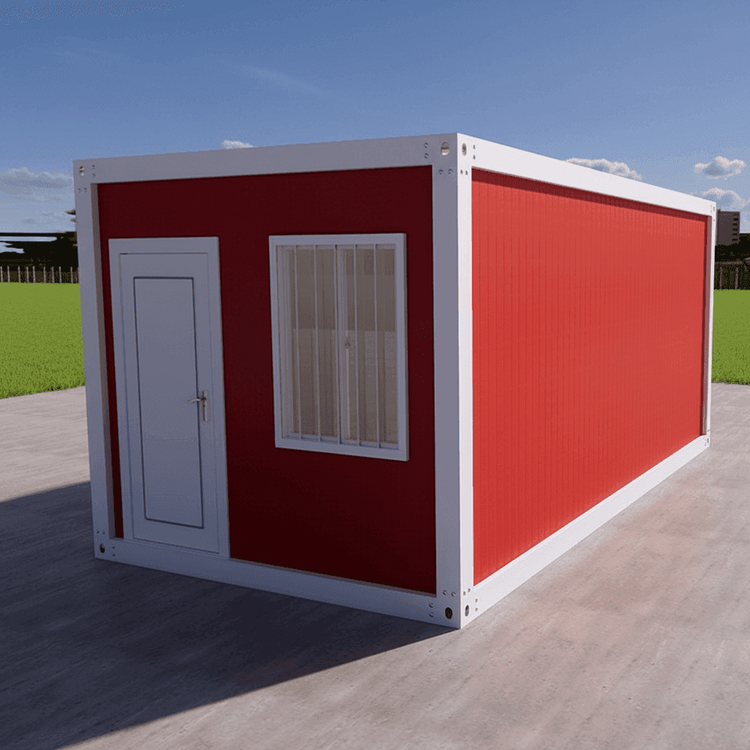
Movable Panel House Container
The movable panel house container is a temporary or semi-permanent building that adopts a container structure and is constructed with movable panel house materials, featuring modularity, mobility, and flexible adaptability. The following is an introduction from four aspects: structure, performance, application scenarios, and innovative design:
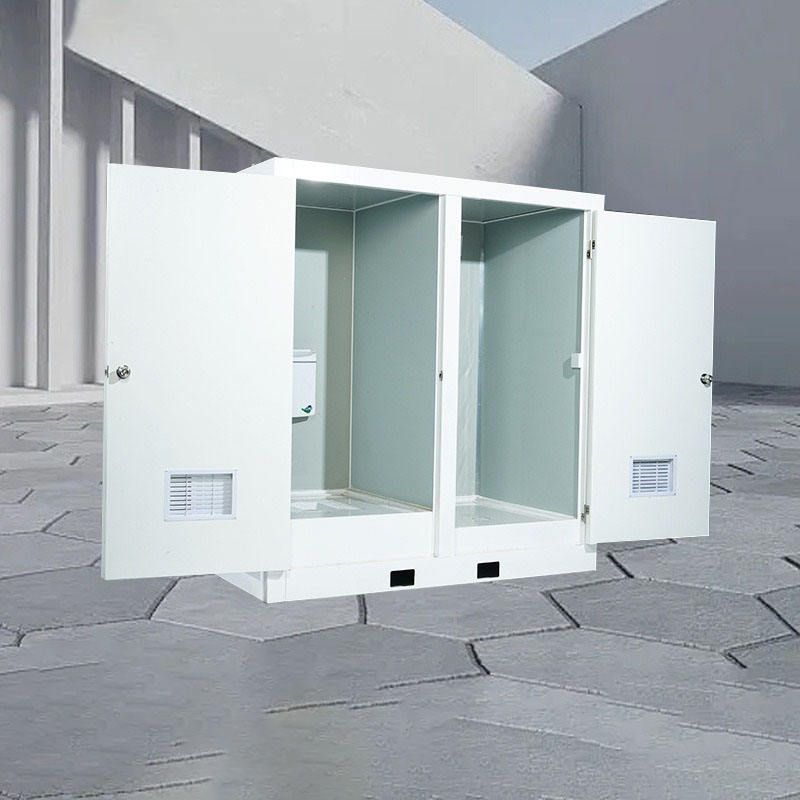
I. Structural Features
The movable panel house container uses a container as its structural framework, typically employing high-strength steel (such as Q355B weathering steel) as the main framework. It forms a self-balancing system through rigid connections between corner fittings and side beams, reducing reliance on external support structures. The roof of the container adopts a longitudinal corrugated plate design, dispersing stress through the corrugated geometry to avoid local buckling while reducing material usage. The enclosure structure often employs a three-layer composite construction of "rock wool - air layer - aluminized zinc plate", with the rock wool layer being 75-100 millimeters thick and having a thermal conductivity below 0.040 W/(m·K). Combined with a 5-millimeter air layer to suppress convective heat transfer, the overall heat transfer coefficient (U-value) is below 0.5 W/(m²·K), effectively reducing condensation risk and extending the lifespan of the steel structure.
II. Performance Advantages
- Wind and Earthquake Resistance: Products from leading companies (such as Suzhou Zhongnan Steel Structure Packing Containers) have achieved a wind resistance rating of up to Level 12 and an earthquake resistance rating of Level 8 in extreme condition tests, with a frame deformation rate of only 0.18%, far below the industry's acceptable threshold of 0.3%.
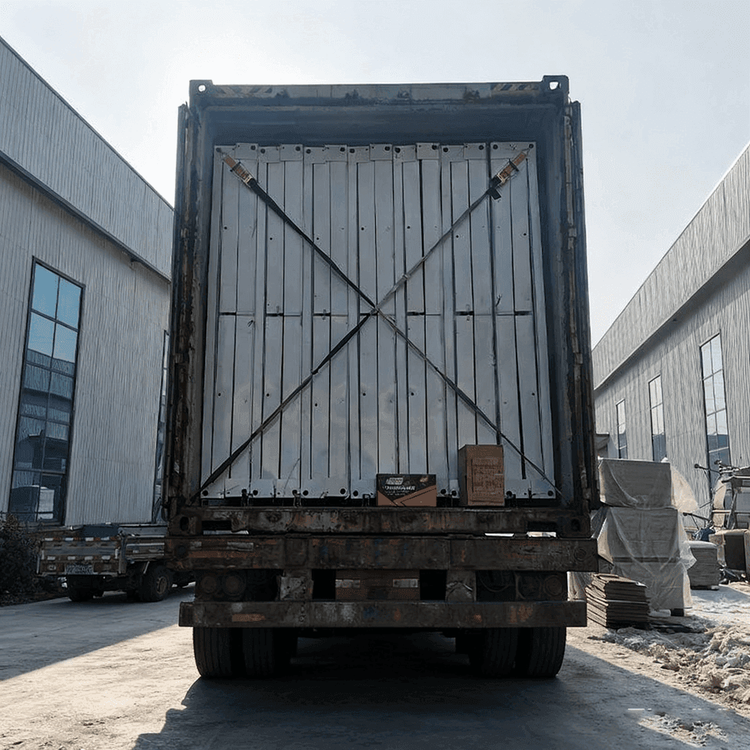
- Installation Efficiency: The modular design supports rapid assembly. A single set of Suzhou Zhongnan quick-assembly containers can be installed in just 2 hours, and 10 standard dormitories can be completed within 1 day, shortening the construction period by more than 40% compared to traditional buildings.
- Durability and Corrosion Resistance: The coating system uses a combination of "epoxy zinc-rich primer + polyurethane topcoat", which showed no red rust after 1000 hours of salt spray testing, equivalent to a 15-year protection cycle in coastal or industrial pollution environments. The main structure has a service life of up to 25 years.
III. Application Scenarios
- Temporary Building Sector: Includes engineering camps, government and enterprise temporary buildings, commercial pop-up stores, etc., scenarios requiring rapid delivery and flexible layout.
- Emergency Support Sector: Serves as temporary facilities for disaster relief and medical isolation, meeting the needs for rapid deployment and functional adaptability.
- Long-term Use Scenarios: Through the use of high-strength materials and detachable connection designs, it supports repeated disassembly and assembly more than 15 times, with the cost per use being only one-third of that of a new product, suitable for commercial operations that frequently change locations.
IV. Innovative Design Directions
Some companies enhance transportation stability through structural optimization. For example, Beijing Xinhongyuan Intelligent Technology's patented technology achieves lateral limiting through slot and positioning block insertion, combined with adjustable movable panels to fit the width of forklift tines, providing dual protection to enhance the stability of container transportation.