
Movable Container Mobile House
A movable container mobile house is a type of building constructed using specialized container panels and processes, featuring mobility, rapid assembly, safety, and durability.
I. Structural and Performance Characteristics
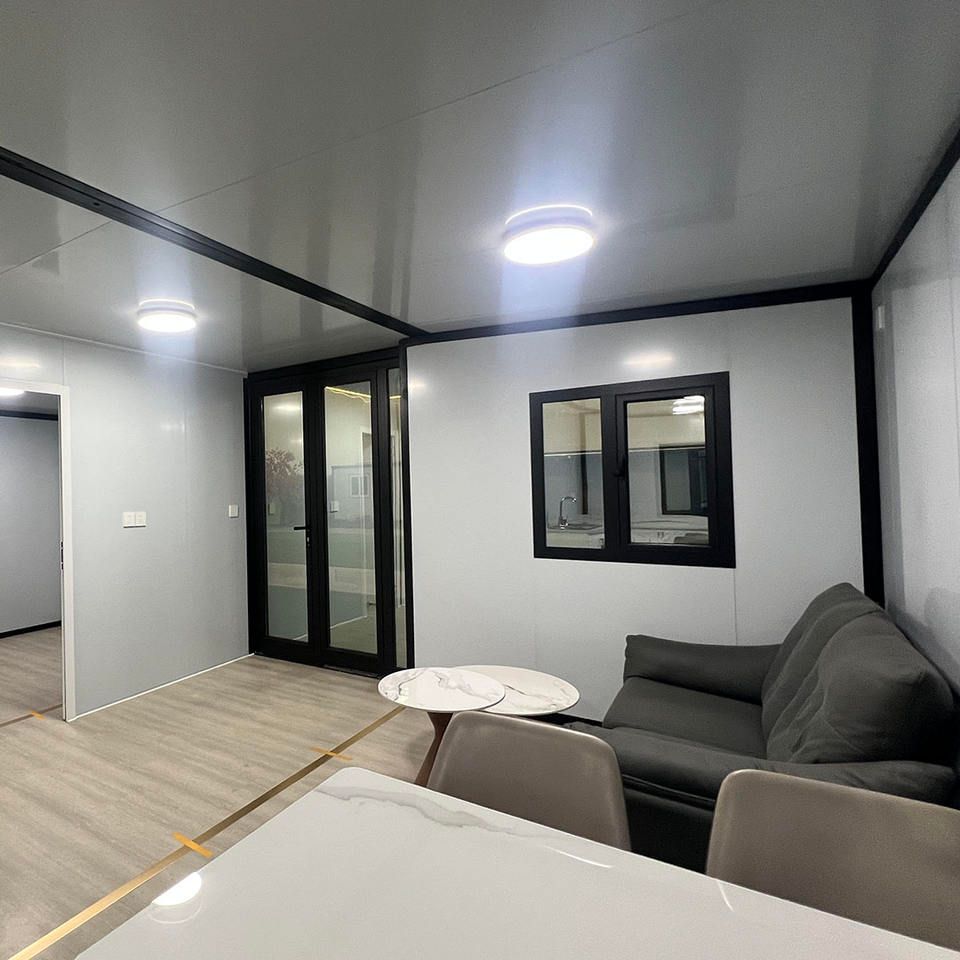
Its main structure is primarily made of steel frames, offering wind resistance, earthquake resistance, and corrosion resistance, enabling it to adapt to complex environments. During transportation, its volume can be compressed to less than 50% of its original size, significantly reducing logistics costs. The air-gap thermal insulation design effectively enhances sound and thermal insulation performance, ensuring residential comfort. Its appearance is flexible and diverse, supporting stacked use to meet different specification requirements. The modular layout design further optimizes space utilization, reducing shipping costs per unit by nearly 40%. For example, a 3m x 6m two-bedroom container house comes with tiled floors and a complete electrical system indoors; a 2m x 3m customized model uses a steel frame with corrugated metal panels, offering strong wind resistance, clean walls, and is ready for use upon plugging in.
II. Application Scenarios and Market Trends
Abroad, such houses have gradually expanded into the field of permanent buildings, widely used in business offices, tourist villas, and other scenarios, demonstrating their versatility and adaptability. Since China's reform and opening up, due to a surge in demand for temporary buildings, construction sites and rail transit sectors have become the primary application scenarios, with the market share of light steel structure modular houses increasing year by year, forming stable demand. Additionally, through protective treatments (such as anti-rust coatings) and aesthetic enhancements (such as painting), their visual appeal can be significantly improved to meet personalized needs.
III. Advantage Summary
The core advantages of movable container mobile houses lie in their efficiency, flexibility, and cost-effectiveness. Their rapid assembly feature shortens construction periods, while the steel frame and modular design reduce long-term maintenance costs. The compression of transportation volume directly reduces logistics expenses. Whether for temporary use or permanent renovation, they can achieve a balance between functionality and aesthetics through customized design, becoming a practical and innovative solution in the modern construction field.


