Movable Container House Factory
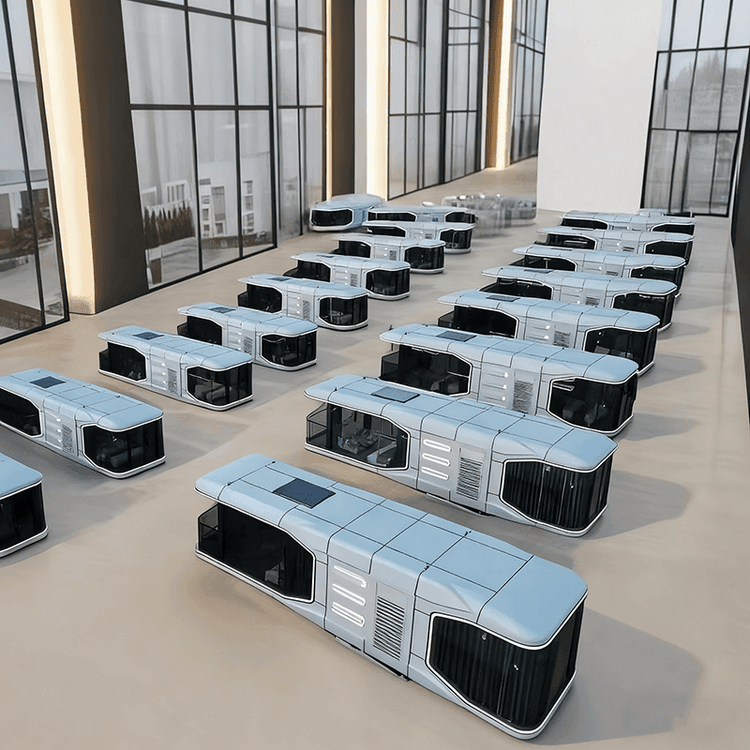
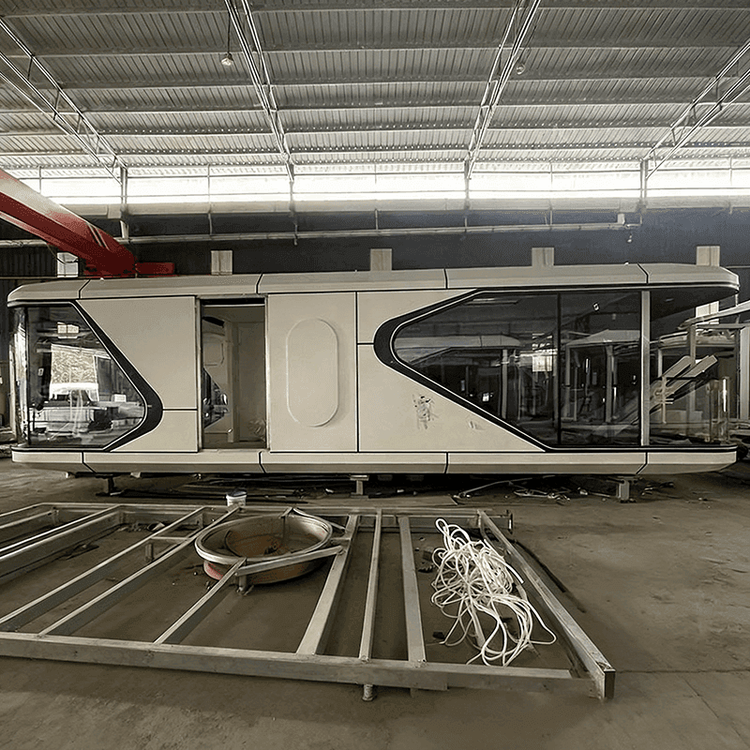
A movable container house factory is a construction production site that adopts modular building technology, completes the prefabrication of housing modules in the factory, and then transports them to the site for rapid assembly. The following is a popular science introduction from four aspects: production mode, technical characteristics, application scenarios, and industry trends.

Production Mode
The factory breaks down complete houses into standardized modules and completes more than 90% of the processes, including the main structure, water and electricity pipelines, and interior decoration, inside the factory. For example, a smart factory in Guangdong uses a 400-meter fully automated production line, with robots working in coordination to produce 50 steel structure modules per day, with manufacturing precision controlled within 1-2 millimeters. The concrete MiC production line in a Shenzhen industrial park produces a complete module every 20 minutes, with an annual delivery volume of 20,000-30,000 units, and the overall construction period is more than 60% shorter than that of traditional methods.
Technical Characteristics
1. Structural Stability
It adopts a full steel structure frame or high-strength weather-resistant steel, and ensures weld strength through fully automated welding processes. The products of Suzhou Zhongnan have been tested to have a frame deformation of only 2mm under strong winds of Level 12, far below the national standard limit of 10mm. Bolted or welded connections are used between modules to ensure structural stability after multiple disassemblies and assemblies.
2. Thermal Performance
The walls are filled with high-density insulation materials such as rock wool and polyurethane, and a multi-layer protective system is formed in combination with a moisture-proof layer and a ventilation layer. Tests show that in extremely low-temperature environments, auxiliary heating can maintain a comfortable indoor temperature, and in high-temperature environments, reflective coatings and ventilation designs effectively reduce the temperature.
3. Intelligent Production
It is equipped with intelligent equipment such as AGV automatic guided vehicles and welding robots to achieve full traceability of production data. Each module has an exclusive QR code identity label, and scanning it can retrieve all production records.
Application Scenarios
It covers dozens of scenarios such as engineering camps, commercial pop-ups, cultural and tourism accommodations, and emergency support:
- Engineering Field: Used as project departments and construction site command centers, it can complete the delivery of 1,000 accommodation modules within 3 months.
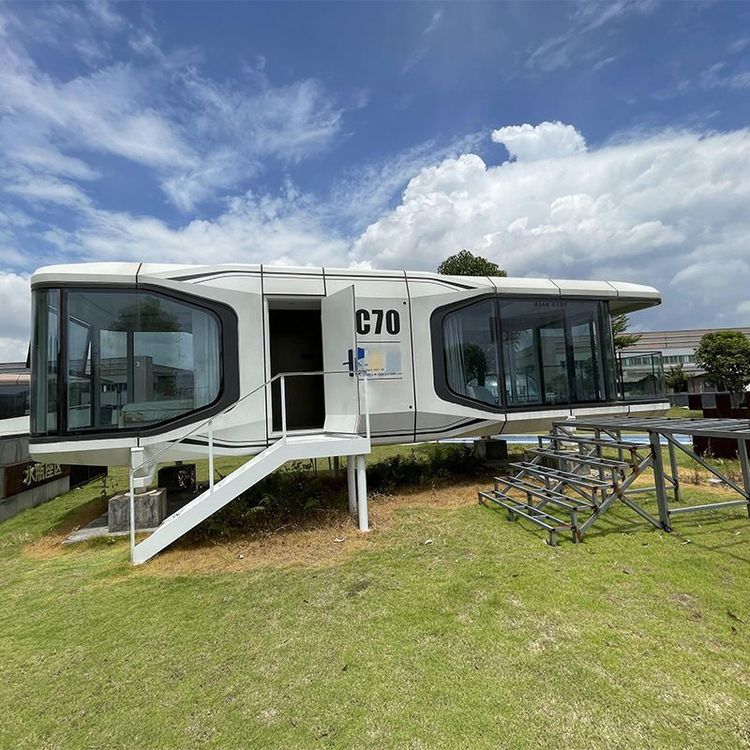
- Cultural and Tourism Field: The container民宿 (homestay) Apple Cabin adopts a curved exterior design, suitable for natural environments such as seashores and mountains.
- Commercial Field: Container shops meet temporary or long-term business needs through modular assembly.
- Emergency Field: It supports the rapid deployment of expandable office buildings, with the usable area increasing by 30%-50% after expansion.
Industry Trends
1. Low-carbon Circulation
The average number of disassembly and reuse times of products from leading enterprises reaches more than 8 times, and the amount of construction waste discharged is reduced by about 90%, which is in line with the policy orientation of green construction.
2. Cross-scenario Versatility
Through modular assembly, facade customization, and internal functional transformation, products expand from a single engineering scenario to multiple scenarios.
3. Intelligent Upgrade
BIM technology and IoT monitoring systems are integrated into the production process to achieve digital management throughout the entire life cycle from design to operation and maintenance.