
Back to blog
Article
Motorcycle Container House
Admin September 15, 2026
A motorcycle container house is a movable, modular form of housing that typically uses containers as its basic structural units. After being renovated and designed, it is used for storing motorcycles or as related functional spaces, with prices varying based on factors such as specifications, configurations, and materials. Here is information introduced from different perspectives:
Price Range
- Lower Price Range: Some customized container garages, movable and detachable assembly garages for motorcycles and cars, are priced around 150 yuan. However, such products may be relatively basic in terms of specifications, materials, or functions.
- Medium Price Range: Container mobile garages, detachable and assemblable multi-functional quick-assembly boxes for construction sites, motorcycle outdoor garage tool rooms, etc., are priced around 2000 yuan. These products may have certain improvements in functionality and durability, meeting more conventional usage needs.
- Higher Price Range: Some motorcycle container houses with more complex designs, more comprehensive functions, or using special materials may be more expensive. For example, container houses with creative designs, thermal insulation, and other functions, used for commercial displays or high-end living experiences, may cost tens of thousands of yuan or even more.
Product Features
- High Mobility: Based on the characteristics of containers, motorcycle container houses are easy to transport and hoist. They can be relocated multiple times as needed and are suitable for various places such as construction sites, courtyards, and commercial streets.
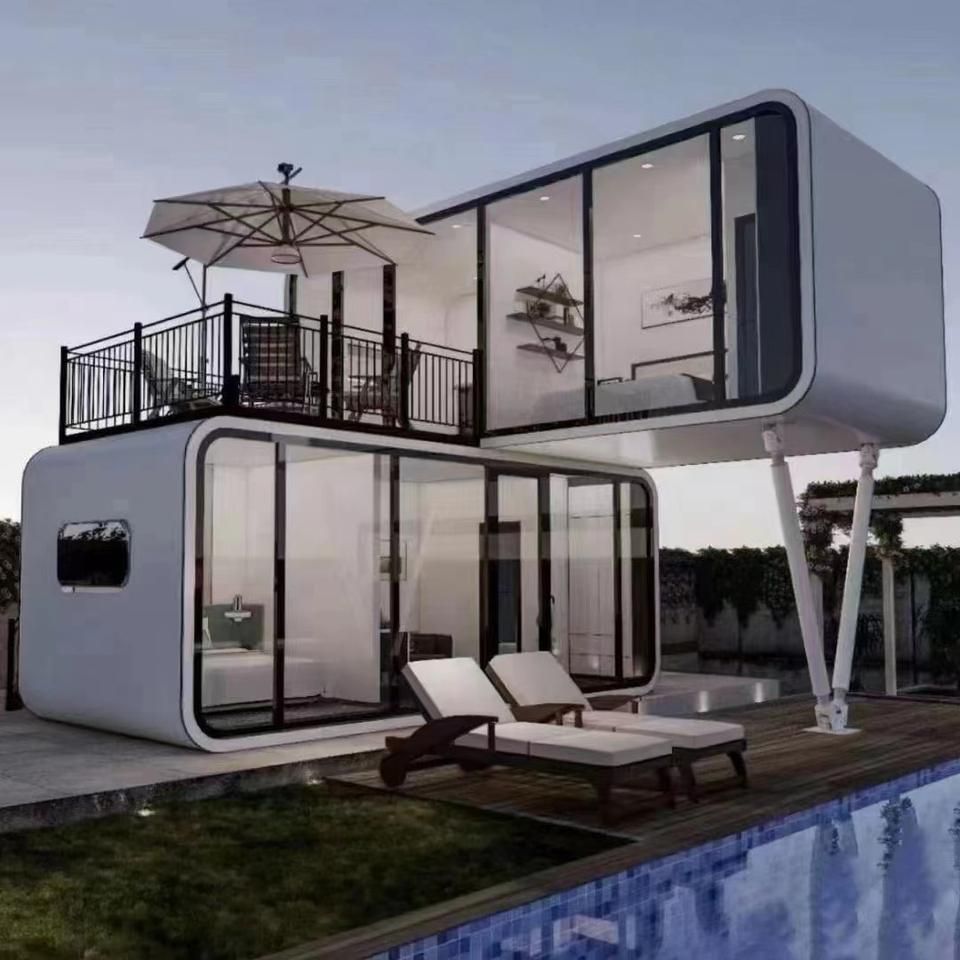
- Diverse Forms: Multiple single containers can be assembled vertically and horizontally to create architectural spaces that meet various usage requirements. They can be combined into buildings with different floors and layouts, and the internal partitions can also be freely disassembled and assembled to create large spaces that meet needs.
- Cost-saving: Components are produced in standardized factories, and their specifications are calculated before leaving the factory, reducing waste during on-site construction, lowering labor costs and labor intensity, and also reducing safety hazards.
- Environmentally Friendly and Energy-saving: Factory-based manufacturing and prefabricated construction involve no wet operations on-site, have a short construction period, and do not cause long-term or destructive impacts on the environment. Moreover, most of the materials can be recycled or reused, which aligns with the environmental protection concept of the "circular economy".



