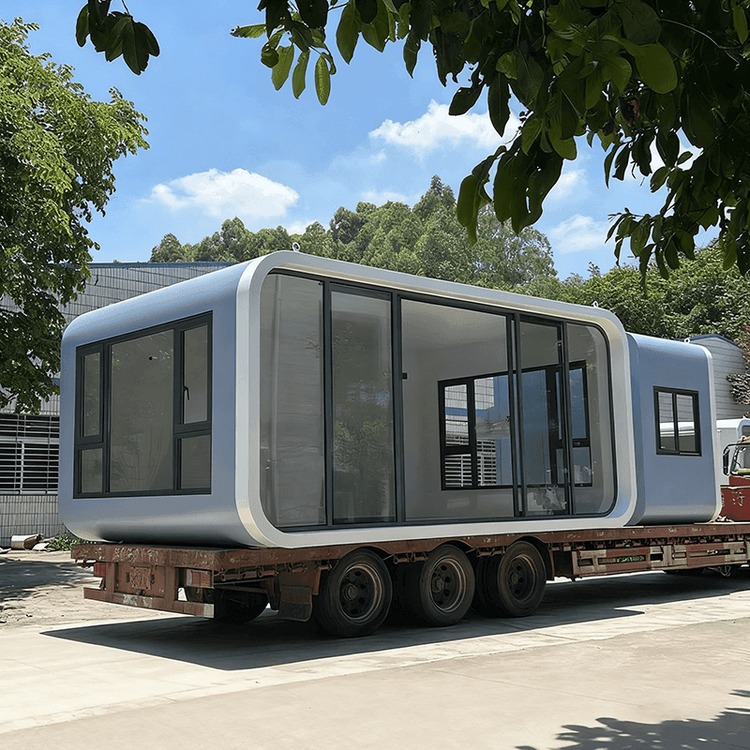
Modular Mobile Toilet Rental
Modular mobile toilet rental is a composite service system based on modular design, covering the entire process of design, production, transportation, installation, maintenance, and recycling. It features flexible adaptation, standardized management and control, and full-cycle services.

Physical Composition: Modular Design for Functional Integration
Modular mobile toilets consist of three core modules:
- Structural Frame Module: Utilizing high-strength lightweight alloys or special corrosion-resistant steel, it achieves rapid and precise connections through standardized interface designs. This design ensures overall structural stability while facilitating transportation and on-site assembly, and reduces requirements for site foundations.
- Enclosure and Functional Compartment Module: Comprising composite material structures for walls and roofs, it includes internal subdivisions such as toilet stalls, handwashing areas, and management compartments. Modules can be flexibly combined based on actual needs, for example, adding accessible toilet stalls or maternal and infant care stations to meet differentiated requirements across various scenarios.
- Infrastructure Integration Module: Integrates water circulation systems (such as water-saving flushing devices or waterless packaging technology), power and lighting systems (solar power or mains electricity access), and ventilation and deodorization systems (negative pressure exhaust or biological filters), ensuring independent operation without external piping, suitable for use in remote areas or temporary events.
Operational Process: Full-Cycle Management Ensures Service Efficiency
- Scenario Assessment and Solution Configuration: Based on parameters such as pedestrian traffic, site conditions (e.g., ground flatness, space constraints), and usage duration (e.g., short-term exhibitions or long-term construction sites), customize the number of modules and functional combinations. For example, high-traffic tourist attractions require an increased number of toilet stalls and intelligent queuing systems, while cold regions necessitate enhanced insulation materials and freeze protection designs.
- Modular Prefabrication and Pre-commissioning: After module production in the factory, conduct core functional tests (e.g., water and electricity systems, sewage pipe sealing) to ensure quality standards are met upon delivery. Pre-commissioning reduces on-site installation time and mitigates debugging risks caused by environmental factors.
- On-Site Assembly and Activation: Quickly assemble modules through standardized interfaces and connect water and electricity pipelines for immediate use. The assembly process can typically be completed within a few hours and supports subsequent module additions, removals, or positional adjustments, achieving “plug-and-play, adapt as needed.”
Core Advantages: Overcoming Limitations of Traditional Facilities
Compared to traditional fixed public toilets or simple temporary toilets, modular mobile toilets achieve scenario adaptation flexibility (e.g., complex terrains like mountains and deserts), quality standardization control (factory prefabrication reduces human errors), and full lifecycle services (lessors provide one-stop support for maintenance, cleaning, and recycling), making them the preferred solution for large-scale events, emergency rescue operations, and tourism development scenarios.