
Modular Mobile Toilet Materials
The material selection for modular mobile toilets is diverse, covering main frame, exterior cladding, interior filling, and other auxiliary materials, with each type having distinct characteristics in terms of performance, environmental friendliness, and applicability.
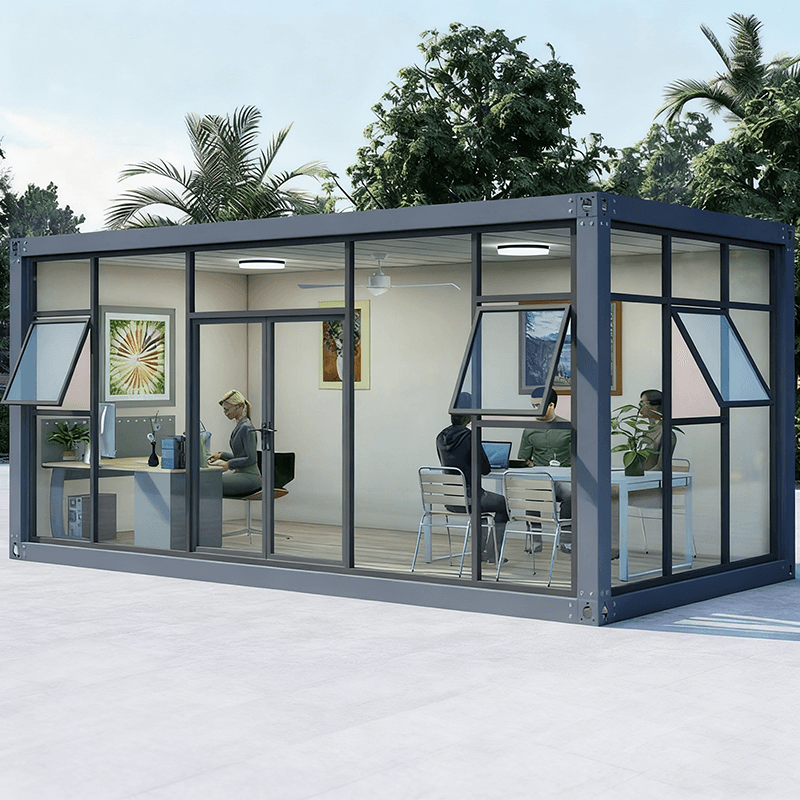
Main frame materials serve as the core supporting structure of mobile toilets. Commonly used metal materials include iron sheet 02 profiles and hot-dip galvanized steel keels (with main materials selected from Q235B and above-grade steel). These materials offer high strength and good stability, meeting the demands of long-term outdoor use. Some manufacturers use lightweight composite materials instead of traditional steel plates, which have advantages such as strong corrosion resistance and low thermal conductivity. This reduces energy consumption under extreme weather conditions (such as winter insulation or summer cooling) and decreases industrial waste by approximately 30% during production, aligning better with environmental requirements.
Exterior cladding materials need to balance strength and durability. The mainstream solution is color-coated steel plate edging, which undergoes galvanizing or coating treatment on its surface for effective rust prevention and features a smooth, easy-to-clean surface suitable for outdoor environments. Some products are paired with colored coated steel plates or composite insulation panels. The former enhances aesthetics through color design, while the latter improves thermal insulation through a multi-layer structure (such as metal + insulation layer + decorative layer), adapting to regions with significant temperature variations.
Interior filling materials are primarily used for thermal insulation. Typically, 5mm-thick foam material is filled in the interlayer. Its low thermal conductivity effectively reduces heat exchange between the interior and exterior, ensuring no condensation in winter and no stuffiness in summer, making it particularly suitable for use in extremely cold or hot regions.
Other materials focus on functionality and environmental friendliness. For example, some products attempt to use bio-based materials synthesized from recycled plastics and agricultural waste. These materials can be degraded through industrial composting after disposal, reducing long-term environmental impacts. Standard plastic windows are installed internally to ensure privacy while introducing natural light and reducing a sense of confinement. Metal locks provide basic security protection, and color-coated steel edging prevents sharp edges from being exposed, reducing usage risks.
In summary, the material selection for modular mobile toilets requires comprehensive consideration of structural strength, environmental adaptability, environmental friendliness, and user experience. The combination of different materials can meet diverse scenario demands.



