
Mobile Waterless Toilet
A mobile waterless toilet is an environmentally friendly toilet facility that does not require connection to a water supply network and can be moved as a whole. It is suitable for places such as stations, docks, and tourist attractions, especially areas without water and electricity or where fixed public toilets are difficult to cover.
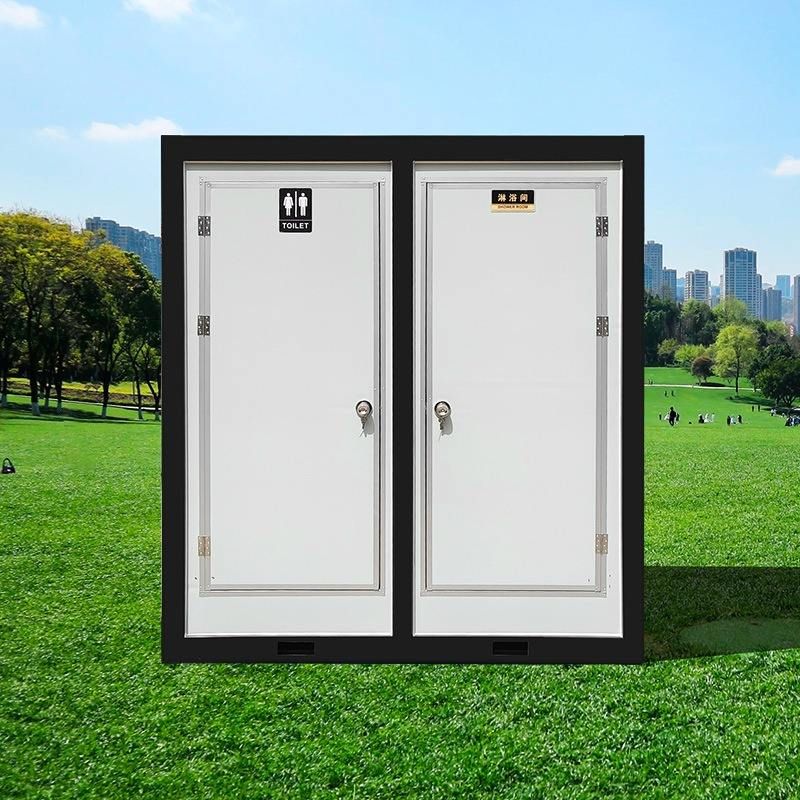
Core Features and Operating Principles
The mobile waterless toilet gets rid of its dependence on traditional water sources through biodegradation technology. It is equipped with a complex microbial community inside, which can operate stably at a low temperature of 40°C. It achieves harmless treatment by decomposing the organic matter in excrement. This process does not require water flushing; only regular addition of bacterial agents is needed to maintain the degradation efficiency, significantly reducing water consumption and sewage discharge.
Structural Composition and Type Classification
Its structure usually includes modules such as a fecal sewage storage tank (or disposal device), floor, sanitary ware, walls, roof, and mobile device. According to the sewage treatment method, it can be divided into two types:
- Waterless flushing suction type: It collects excrement into the storage tank through vacuum suction and is regularly cleared and transported by special vehicles. It is suitable for places with a large flow of people.
- Dry packing type: It uses biodegradable film bags to directly pack excrement without a storage device, making it more suitable for wild or temporary scenarios.
In terms of mobility, there are: - Lifting and handling type: It relies on lifting equipment for overall lifting and is suitable for short-distance transfer between fixed positions.
- Power towing type: It is equipped with axles or traction devices and can be towed by vehicles, offering higher flexibility.
Application Scenarios and Design Principles
This facility mainly serves scenic spots without water and electricity, wild work areas (such as geological exploration and construction sites), and emergency support scenarios (such as disaster relief and temporary needs for large-scale events). Its design follows three principles:
- Mobile convenience: It adopts a modular structure, which can be quickly disassembled, assembled, or moved as a whole to adapt to dynamic needs.
- Economic durability: The main materials are mostly lightweight and durable fiberglass or polyethylene, reducing transportation costs and extending service life.
- Environmental protection and ecology: The biodegradation process reduces chemical pollution, and some models are equipped with solar panels for power supply, further reducing energy consumption.
Advantages and Limitations
The advantage lies in breaking through the dependence of traditional public toilets on water and electricity networks, with a short installation period and low maintenance costs. However, it should be noted that the biodegradation efficiency is affected by temperature, and extreme low temperatures may reduce the treatment capacity. In addition, the storage tank has a limited capacity and needs to be regularly cleared and transported to avoid overflow risks.



